So it begins

Just this week, I have fabulous news that the lovely, lovely Readings Carlton are going to host the launch event for my novel The Pale. Such exciting news! So I’m spending this week making sure that I invite everyone I can think of, anyone who might be even remotely interested in having a glass of wine, hearing me read a page from the book, and watching me sign copies! More details as they come to hand 🙂

One of the best-est things about Readings (as if thousands of books, masses of music, fabulously useful book reviews and conversible, knowledgable staff isn’t enough!) is The Readings Foundation, to which they devote 10% of their profits. To date, Readings has contributed over $120,000 to causes that pormote literacy and education to the most disadvantaged groups in our society. Gotta love that!

Beastly ideas

The Pale (SO excited! very close to publication day!), as you might know, features dog/wolf-like creatures who can think, talk, debate, take action, and make decisions about how best to live in the damaged post-Cataclysm world they have inherited. These characters are called canini and they are very close to my heart.

Talking dogs is not such a new idea, I know, but I am forced to ponder my protagonists in the light of two books I have just read. (And in considering the canini’s part in the two planned sequels to The Pale!)

These two books are separated in genre (philosophy vs fantasy) and in time (2002 vs 2017), reflecting quite different understandings of the place of sentient non-humans in our lives and in the physical world.

In one, JK Rowling, channeling that delightful wizard Newt Scamander, wonders about the status of ‘beasts’ versus ‘beings’:

“We now ask ourselves, which of these creatures is a ‘being’ – that is to say, a creature worthy of legal rights and a voice in the governance of the magical world – and which is a ‘beast’?”*

In the other, philosopher Raimond Gaita outlines his thinking about the consciousness of animals, dogs in particular. Gaita avers that one fundamental difference between human consciousness and that of dogs is knowledge of death:

“Because animals have no reflective knowledge of death, they cannot dread it and if they could, they could not take comfort from the fact that they are not alone in their mortality. It is a fact utterly basic to human life that we are consoled by the knowledge that others suffer as we do and die as we must.”**

I know that the canini function more as beings than as beasts in The Pale, because they are certainly worthy of rights and of a say in their future. They also think about the value of their lives, the work of a good life, and the inevitability of death. The human-ish characters in The Pale – at least some of them – are perhaps more beastly. I need to ponder and reflect a bit more. The fundamental beast/being contrast is an idea that I am already exploring.


*Fantastic Beasts and Where to Find Them, Newt Scamander (JK Rowling), Bloomsbury, London, 2017, p. xviii.

xfantastic-beasts-where-to-find-them.jpg.pagespeed.ic.R-RHMJL09s

**The Philosopher’s Dog, Raimond Gaita, Text, Melbourne, 2002, p. 72.

 

That’s a nice shirt

There’s been a hiatus while I attended to large life events, but I’m hoping for more time and discipline now. At least I have a fresh source of stories from my mother’s new neighbourhood. Here’s a little tale she told me this week:

It’s breakfast time again. Marlene stalks across the carpet on her two canes and nudges her usual chair. Across from her, George lifts his eyes from contemplation of his plate of toast.

‘That’s a nice shirt,’ he says.

‘Oh, are you there?’ says Marlene, bending like a paperclip as she inserts herself between the chair and the table. ‘My daughter bought it for me.’

‘Did she visit?’

‘No, she sent it by helicopter.’

‘Huh.’

Marlene frowns at her plate. ‘Toast.’

Pamela approaches, bustling her wheeled chair in stilted lurches through the patterned axminster. ‘Move away!’ she warns the young nurse beside her. The nurse dispenses her characteristic wide smile, and helps Pamela manouever up to the table. ‘There now. I’ll get your coffee.’

‘Wait!’ calls Marlene. ‘Wait! There’s toast on my plate.’

‘Yes, that’s right, Marlene. You always have toast.’

‘And a banana! And a banana!’

‘Yes,’ replies the nurse, ‘but we have no bananas today.’

George lifts his chin, which he does when deeply moved. He sounds a note to get the key, and begins a loud and stirring rendition of ‘Yes, we have no bananas, we have no bananas today!’

Pamela says to Marlene between phrases, ‘That’s a nice shirt.’


Image from Wikimedia commons: By Poulsen, Harry – Item is held by John Oxley Library, State Library of Queensland., Public Domain, https://commons.wikimedia.org/w/index.php?curid=15009010


Diagnosis blues

This week has been quite a difficult one. We discovered that our mother has a brain tumour. While this explains all of the bizarre and inconsistent and unreliable behaviour that we’ve been noticing recently, it’s a bit of a shock.

Did I tell you how Mum was acting more and more strangely and refusing help? Well, one day a couple of weeks ago she took herself off to the doctor in a taxi (at a time when she should have been home for the cleaner – resulting in multiple phone calls with the next step being the police! – because she didn’t tell anyone she was going – but that’s another story). Mum went to ask if she had dementia, so the doctor ordered a CT scan that afternoon. The first I knew about it was a call from Mum saying I had to take her to the hospital for a brain scan. All the way there, she criticised her children as being too managing, too interfering, too nosy, and for sending too many helpers, and making too many phone calls, and ordering the wrong food to be delivered. She was certain that the brain scan would show no dementia and that after the diagnosis we could all just leave her alone, thank us very much. Very Greta Garbo.

The upshot is, after a lengthy scan and a trip back to the GP, that she has a meningioma which is not malignant in itself, but steadily growing and impacting on her brain function. Off we went to the neurosurgeon next day, who ruled out surgery (her bad health and a long recovery time) and any other treatment (tumour too large for radio). And a palliative care team has been allocated to us.

So it’s been  an interesting time, negotiating all of us siblings and our diverse opinions. Mum, on the other hand, is very stoic and quite serene, and says she’s much happier now that she knows. She is calling everyone in her address book to tell them she has a brain tumour!

Greta Garbo ‘Wild Orchids’ film still from Wikimedia Commons at https://commons.wikimedia.org/wiki/File:Garbo_wild_orchids.jpg?uselang=en-gb

Living on the edge

The older couple wriggled their way through to the front of the crowd. In only a few minutes, the aging rock star of their courting days would pass by in his elevated limo, beaming and waving, flashing the shiny ceramic imposter of his once-famous  smile. The old woman had prepared a small bunch of flowers to throw – nothing too heavy, for their idol was even older than they, and nobody wanted an incident: Aged Groupie’s Gladiolus Tribute Takes Out Star’s Eye. The crowd of younger fans eddied and heaved around them. The old man took her elbow, protecting her somewhat from the metal barrier that lined the roadway as well as the press of people behind.

A rising tide of sound marked where the star’s cavalcade was approaching from the left. As the wave of excitement rolled towards the old couple, a security guard unhitched the metal barrier. The pair suddenly found themselves staggering onto the roadway. As they disappeared under the great wheels of the big black car, the guard re-hitched the barrier.

Another group of fans squeezed their way to the front. Here’s the next lot, thought the guard, carefully folding her wings behind her. She looked over the crowd to the back, where new people joined the throng in an irregular pattern, not unlike the on-and-off disappearance of those at the front. Like lemmings, she thought, so eager for life that they fall right off the edge without even realising it.

She unhitched the barrier again, and waved another few people through.


Image: Public Domain, https://commons.wikimedia.org/w/index.php?curid=10587

A creation fable


‘Are you sure?’ asked the god.

‘Yes. I can’t face another day of ordinary conversation. I want everyone to know how much I am suffering!’

‘I can’t reverse this process,’ he warned.

‘And I can’t turn back the clock. Just get on with it!’ Marta yelled.

A short while later, she left the god’s garden, looking much the same as usual. Her long hair, pulled back from her face, was the same dull, unwashed brown. Her comely mouth turned down at the corners in the usual way. There was something fierce in her dark eyes, but that was usual too.

Marta tested the god’s work. Deliberately, she walked into the village market place. Her gaze fell upon a young mother, squatting on the cobbles while she helped her toddler with his slice of apple.

Immediately, the god’s will kicked into action. Across every inch of Marta’s skin, multiple fonts burst into words. Blue as veins, stark as cemetery epitaphs, the moving letters came together. Across her forehead, I am crying inside. On one cheek, I will never see her again. On the other, I hate my life. On her neck, Let me die too. Over her shoulders, I hurt too much. Pulsing from her forearm, Don’t talk to me. Down one thigh, Don’t pretend everything will be fine. Down the other, My heart is broken. Across her feet, My tears will never end. From the ends of her hair, No-no-no-no-no…

The words kept rising to the surface, spilling from Marta’s skin onto the cobbles, into the drains, down to the creeks, the rivers, the seas, and up again through the mists and fogs into the weeping clouds.

Grief is what they called this new creation.

Lost arts of the twentieth century: the rendezvous

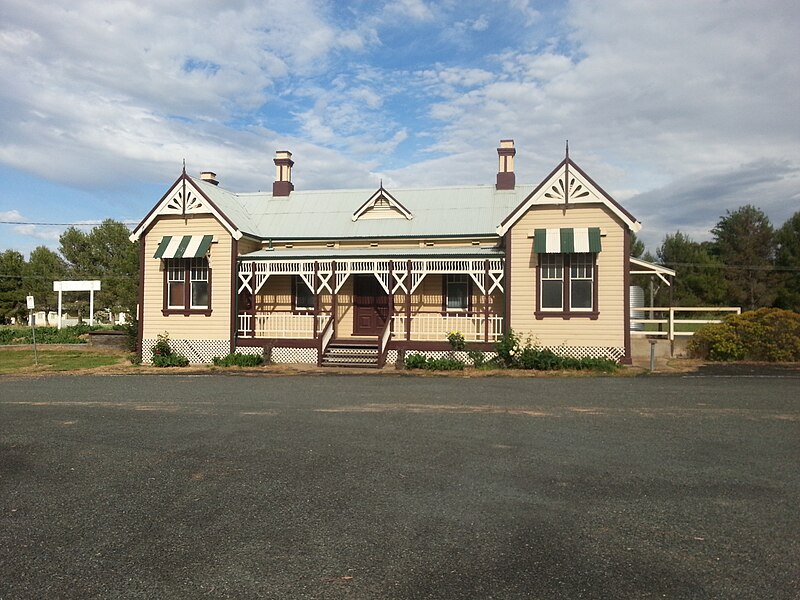
Back in the day, there were meeting places where you waited for your family or friends to come find you. Under the clock at the railway station, in front of the department store window (yes, ‘window’ singular), at the corner of the school. Eventually, Dad would come to drive you home from the station, or your friends would show up for your shopping expedition, or your little brothers would mooch up to be walked home.

File:Grenfell, NSW - Railway Station 1.jpg

No mobile phones, so no texts or emails or either, to let you know someone was late, or that they weren’t coming. I guess waiting is a bit of a lost art too. No phone to look at while you stood at the meeting place. (Of course, I always had a book at hand. Always.)

Meetings could be the highlight of your day, or your biggest disappointment. Being stood up by that cute guy I met at school dancing class, who promised to meet me at the bus stop the next week. Such an embarrassing and gauche moment!

On the plus side, at least he didn’t text me saying it was him, not me…

Notions like this complicate the writing process. It can be quite difficult to get into that space, that space where your characters don’t know what’s happening elsewhere, and can’t easily find out. Mind you, writing about the twentieth century is Historical Fiction after all. As a writer, having inhabited a previous era is no guarantee of being able to write it convincingly.

Ah well, back to the typewriter I guess…

Photo: Grenfell Station by Geez-oz from Wikimedia Commons https://commons.wikimedia.org/wiki/File:Grenfell,_NSW_-_Railway_Station_1.jpg

Renovating

Ginger Spoodle barked, as in, BARKED!!!! way too early on a weekend morning. Someone coming! Someone on our patch!

It was our favourite tradies. The builders had returned on Saturday morning to finish our bathroom and kitchen renovation. Their final task was to caulk every crevice and gap in the wall tiles, splashbacks, and on the floor. Within two hours, we were all systems go.

Time for our work to begin. Every box, drawer, shelf and cupboard in the place has to be unpacked, every item has to be cleaned and put in its new-or-old place.

Problem is that I have found too many things that I haven’t even missed during the weeks of renovation. Why do I have all these cups and spoons? That tray? This jug? The other thingy?

File:2503 - Athens - Temple of Athena Nike being restored - Photo by Giovanni Dall'Orto, Nov 11 2009.jpg

Time for a strict household EDIT (yep, it’s an anagram of diet!). Sure, it’s going to take a few days, but the end result will be worthwhile. The house will work better without the excess, unnecessary items.

And so will my writing. A lot of what I’ve written is scaffolding around the core story, scaffolding which has performed its task and can now be taken away. A few days’ housework may help me identify the flabby words when I get back to the manuscript.

Maybe I’ve been renovating my brain as well as my house.

Image by Giovanni Dall’Orto, via wikimedia commons at  https://commons.wikimedia.org/wiki/File:2503_-_Athens_-_Temple_of_Athena_Nike_being_restored_-_Photo_by_Giovanni_Dall%27Orto,_Nov_11_2009.jpg


In the city

I just pushed my way in.

That’s the first sentence I heard as I strode across the bridge over the Yarra on my way to a watercolour class. I’ve read about a writing exercise where you put together randomly heard phrases and create a story.

I just pushed my way in.

You can’t wear that.

Are you happy now? She’s crying.

Fifteen.

No, the next one.

wood.jpg

Maybe it’s a poem, or a flash fiction. I liked the words so much I almost walked against the traffic lights. I tried not to see the speakers. I’m imagining how those words would sound, how they would carry meaning, in different settings. When they are not on the bridge over the Yarra.

How would they sound in a snow-bound forest? On an ocean liner? On top of a mountain? In a derelict house? Outside the classroom? In the foyer of a bank? At the kitchen table? In a cafe? At the beach? On a train? In a waiting room? In the Tardis? While Vesuvius is erupting? At the Queen’s coronation? In a container full of refugees?

Perennial problem. Too many stories to tell. Stacked like logs in a pile. Which one to choose? I can’t tell them all 🙁