Last Word of the Week: Felicity Banks

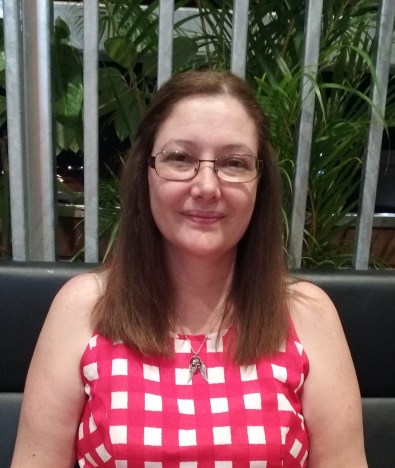
This week we are being totally charmed by the gorgeous Felicity Banks, the Australian author who channels the Antipodean Queen (how cool is that?) among other things. Felicity is also published by the impressive Odyssey Books.

Last Word of the Week: Welcome, Felicity. Can you tell us when  you wrote your first story?

Felicity: I can remember attempting my first novel when I was seven or so, during an idle afternoon at my grandparents’ house. It was about a family of cats, and the big drama was that Pamela (the mother) had gained weight. What unimaginable horror!

Then the amazing twist was that she wasn’t overweight after all. She was having kittens. There is no greater possible end to a story than brand new kittens.

LWOTW: A happy outcome indeed. What do you think of dreams, imagination, and planning?

It seems I was born to plan out my stories before I write them, given that I was outlining novels at age seven. Sometimes I write out pages and pages of character notes, maps, and so on. Most of the time I have about an A4 handwritten page of notes when I start writing a novel and if I’m having trouble with a scene I might write out another page of notes just for that scene. Sometimes things change dramatically partway through the story, and I’m fine with that. Once I had a weird dream and then woke up and started writing a novel that afternoon.

Imagining things is easy; real life is hard.

LWOTW: We’re with you there. What’s the highlight of your writing career so far?

It took me a long, long time to get published—fifteen years after finishing my first novel. At around the same time as my first novel was published, I discovered the world of interactive fiction (like “Choose Your Own Adventure” novels, but usually digital), and nowadays my writing is actually in demand. That is absolutely amazing, and I love it.

I really enjoy going to conferences and fairs, especially meeting people who’ve read my books and come back for more.

MonsterApprenticeCoverFB

LWOTW: That must be very affirming. What are you most busy with at the moment?

Trying to actually do the writing I’m meant to be doing! Which is precisely why I’m here, doing other things.

logo.thumbnail_Murder mystery 2 colour

LWOTW: Well, we’re glad you took the time out to talk with us. If you could say one thing to aspiring writers, what would it be?

Don’t! The average full-time writer in Australia earns only $12,000 per year.

But if you’re the type of person who thrives on being told not to do something, then the long years of rejection will be perfect for you. Or you can just write for fun (and if you get paid, great). That’s what I do.

FelicityPic

And the Last Word of The Week: What’s your favourite colour?

Green.

Thanks for speaking with us!

You can find out more about Felicity’s steampunk fantasy books here.

Felicity’s interactive writing can be found under the name Felicity Banks at the site here – but beware, it’s addictive!

Felicity’s latest book is a middle grade novel called The Monster Apprentice and features monsters AND pirates. You can find Felicity’s various pirate tales (some for children, some not) here.

Something to Say: Deborah Sheldon

Today we’re speaking with the Melbourne writer Deborah Sheldon.

Some of Deborah’s latest releases, through several publishing houses, include the noir-horror novel Contrition, the dark literary collection 300 Degree Days and Other Stories, the bio-horror novella Thylacines, the dark fantasy and horror collection Perfect Little Stitches and Other Stories (winner of the Australian Shadows Award “Best Collected Work 2017”) and the monster-horror novel Devil Dragon. Deborah’s short fiction has appeared in many well-respected magazines such as Quadrant, Island, Aurealis, SQ Mag, and Midnight Echo. Her work has been shortlisted for numerous Aurealis Awards and Australian Shadows Awards, long-listed for a Bram Stoker Award, and included in “best of” anthologies. Other credits include TV scripts, feature articles, non-fiction books, stage plays, and award-winning medical writing.

Deborah Sheldon

Something to Say: Welcome, Deb! That’s quite a list of achievements. What project are you talking about today?

Deborah: Award-winning press, IFWG Publishing Australia, is releasing my noir-horror novel, Contrition, today – September 3rd. The back-cover blurb reads:

In her late teens, Meredith Berg-Olsen had all the makings of a runway model. Now in her late forties, after everything she had been through – including horrors that John could only guess at – she looked bloodless instead of pale, skeletal instead of slender, more dead than alive…

John Penrose has two secrets. One is the flatmate he keeps hidden from the world: his high-school sweetheart, Meredith. His other secret is the reason he feels compelled to look after her.

Contrition is a horror story with noir undertones and an atmosphere of mounting dread.

STS: Is there one aspect of Contrition that you relate to the most – a favourite character, scene, effect? Can you tell us more about that?

My novel has two timelines: the present day and the 1980s. For the latter, I drew upon my own memories of high school for inspiration. If some of my old chums were to read Contrition, the basis of a few events might seem vaguely familiar. Since I hadn’t thought about my teenage years in a long, long time, it was interesting to sift through the memories, both good and bad. I think doing so gave the novel’s earlier timeline its rawness and pathos.

STS: What do you think drives you to pursue your creativity?

My brain is hard-wired to write. I started writing when I was a kid, and I’ve been a professional for 32 years. I’ll write until my dying day. There are two of me: the subjective self who lives this life; and the “observer” who squirrels away occurrences, feelings and thoughts to use in fiction. Every experience is potential fodder. I often reassure myself while going through a rough time, “Deb, elements of this will make good stories.” And it helps!

STS: That’s an interesting way to approach hard times. I like it! Now, many writers have described their processes using analogies – the famous Hemingway one, for example, in which he says that writing is simply a matter of sitting in front of the typewriter and staring at a blank page until you start to sweat blood. Others speak of stitching scenes together, following characters on a journey, immersing themselves in a storyline. What can you say about your process?

I see each writing project – whether it be a short story, novella or novel – as a kind of jigsaw puzzle. I know what “picture” I’m trying to create. I just need to find some way to put all the pieces in the correct order. I’m technique-driven. To use another analogy, I build a story like an engineer builds a bridge.

STS: Jigsaw-like, that’s excellent. Finally, what five words would you use to describe yourself as a writer?

Technical, productive, committed, pedantic, curious.

STS: Wonderful! Thank you so much for talking to us today, and all the best for Contrition!


Pictures

Author photo

Contrition cover

Links

Website: https://deborahsheldon.wordpress.com/

Goodreads: https://www.goodreads.com/author/show/3312459.Deborah_Sheldon

Facebook: https://www.facebook.com/Deborah-Sheldon-936388749723500/

Amazon Author Page: https://www.amazon.com/default/e/B0035MWQ98/ref=ntt_dp_epwbk_1?redirectedFromKindleDbs=true

Last Word of the Week: Kathryn Gossow

This week, I’m chatting with the intriguing Kathryn Gossow, whose YA novel Cassandra (published by the magical Odyssey Books) explores questions of future, knowledge, love, and fanily duties.

Last Word of the Week: Hi Kathryn! Tell us, when did you write your first story?

Kathryn: The first story I remember writing in primary school was about the moon and a little girl falling in love. When the moon had to return to the sky, it slipped out of the girl’s grasp and you can still see her hand print on the moon. I remember writing the line ‘forgotten like the man who invented matches’ which impressed my teacher. In grade 7, I wrote the end of year play. It was about a girl trapped on an alien planet at Christmas time. The aliens feel sorry for her and organise Christmas for her including an upside down tree and an electric dustpan for a gift.

LWOTW: What do you think of dreams, imagination, and planning?

Inspiration rests in our dreams and imagination, but have you ever had someone try and tell you about their weird dream? Dreams don’t confirm to storytelling conventions. On the other hand, have you ever read a washing machine manual? Too much planning and the heart that comes from the inspiration – the dream or imagination – loses its emotional impact. There needs to be a balance – like eating both your vegetables and your cake.

LWOTW: First time I’ve though of writing as a balance between vegetables and cake! Nice. What’s the highlight of your writing career so far?

This year, by far, it was having my book Cassandra short listed in the best fantasy novel category of the Aurealis Awards.

GOSSOW_KATHRYN

LWOTW: Fantastic achievement, Kathryn. Congrats! What are you busy with at the moment?

So crazy, crazy busy. I am working on my new book about a librarian who can heal people with books. I am editing my almost completed collection of short stories – The Dark Poet. I am also on the marketing train with my first book Cassandra. Then there is blogging and sending stories to magazines. I also have to dust my house, prune my stone fruit trees, buy a new thingamabob for my broken swivel mirror…do you really want the whole list?

LWOTW: I reckon that’s enough to be getting on with 🙂 If you could say one thing to aspiring writers, what would it be?

Put your bum in the chair and write. It won’t write itself.


You’re right there – and no one else will write it for you either. Thank you so much for your insights, Kathryn, and all the best with the writing. And the thingamabob of course.

Kathryn’s home page is at: https://kathryngossow.net/

Last Word of the Week: Patricia Leslie

This week, I’m very excited to speak with Patricia Leslie, who writes urban fantasy that blurs the edges of reality with a dashing mix of action and history. You might know her books Keeper of the Way, The Ouroboros Key, and A Single Light. If not yet, pop them on your TBR list 🙂

Last Word of the Week: When did you write your first story, Patricia?

Patricia: I remember loving the physical action of writing before I could form letters so probably not long after I started school. I was an enthusiastic creative writer all through school. Writing was my way of sharing the words I couldn’t articulate (I was very shy), making sense of all the ideas in my head, and planning. I’ve “always” written whether it be stories and silly poems, notes on books I’ve read, quotes, or plans for world domination – it has all come from the scratch of a pen on paper.

A good session of writing is exhilarating and I miss it when I’m caught up in the minutiae of a writer’s life – not to mention family and work life on top of that! Some days, it’s all I can do to raise the remote control to change the channel on the television and others I race home and spend hours on my iPad or with my notebook, writing and writing and writing.

IMG_0412

LWOTW: Interesting! Tell us, what do you think of dreams, imagination, and planning?

I have used some of my dreams (and nightmares) in my novels and short stories. One story I wrote called “Forward” is entirely based on a good/bad dream based on Whisper Magic, possession, and Fate. I’ve mentioned in other interviews that I’ve always been a committed day-dreamer and have concocted whole worlds, characters, and magics in my head. I use my downtime (usually right before I go to sleep) to imagine scenarios in the hope I’ll go on to dream about them. More often than not though my dreams are all about processing things that are happening in my life or feelings or anticipations.

Planning: I’m a list-maker so naturally I also plan, but once I start writing I just write. Some pieces are put aside until they are ready to fit into the overarching plan and some change the plan completely. Flexibility is the key to avoid inhibiting the flow of creativity.

LWOTW: I’m with you on the flexibility thing. And what’s the highlight of your writing career so far?

  1. Receiving a notification from Lending Rights Australia that I’m about to receive a payment! I do enjoy monetary surprises!
  2. But before that, there are two amazing moments: winning first place in a short story competition on my birthday and receiving my first publishing contract (which was also my scariest moment).

LWOTW: Prizes, birthdays and publishing contracts. How divine! What are you most busy with at the moment?

Promoting my latest novel, Keeper of the Way, which is Book 1 of Crossing the Line, and researching/writing books 2 & 3.

I’ve been updating my website, reinvigorating my previously sparse newsletter, writing lots of guest posts, and contacting book bloggers about reviews. As well, I’ve been organising speaking opportunities. Next on my To Do list is following up with bookshops.

LWOTW: Good luck! If you could say one thing to aspiring writers, what would it be?

Never give up

And the Last Word of The Week: What’s your favourite colour?

A light aqua/turquoise/green kind of hue

Beautiful! Thanks so much for sharing on Last Word of the Week.


You can find Patricia at https://www.patricialeslie.net/

Patricia Leslie’s books are available through all the usual online outlets

Last Word of the Week: K J Taylor

This week we are pleased and just a little bit excited to meet the author K J (aka Katie) Taylor. You can find out more about Katie’s fantastic (in every sense of the word) books here.

Last Word of the Week: Welcome Katie! Tell us, when did you write your first story?

KJ: In primary school, aged about six. I loved books so much that I started making my own – not just writing them but putting them together with pages, cover art, and even little publisher’s logos I made up. I still have them, and they’re adorable.

LWOTW: They sound divine. Maybe the world should see them. You must have been an imaginative kid. Tell me, what do you think of dreams, imagination, and planning?

Usually dreams are too silly and illogical to easily translate into novels, but I’ve had the odd one which inspired a book. Imagination is important too, though when it comes to writing – and especially in spec fic – sometimes it’s equally important to do as Terry Pratchett suggested and apply a lack of imagination. By which he meant to ask yourself the sorts of logical questions little kids ask because they haven’t learned that it’s not polite to ask those questions. Such as, if Death rides a horse, does the horse have to poop? Does it have a stable? What does it eat? Where did he get it from? Asking questions like that lead to far superior worldbuilding – lazier authors often just resort to explaining things away by saying “it’s magic” or “it’s like that because I say so”.

Some authors plan out their books; I’ve seen pictures on Facebook of terrifyingly elaborate diagrams with highlighter pens and sticky notes. This isn’t a technique that’s ever worked for me, but I do plan what I write – it’s just that the plan is in my head, and is therefore more flexible and loosely defined. I often don’t know how the book is going to end when I start writing it. However, going into a book with no plan at all is rarely a good idea and will generally lead to the story meandering all over the place, which was a problem I had a lot when I was younger and still occasionally encounter today.

LWOTW: Great advice for us spec fic folk! What’s the highlight of your writing career so far?

I’d say it was back in 2011 when I made my first and so far only appearance at ComicCon in San Diego, and a packed audience of more than three hundred people all cheering. I felt like a rockstar!

37007084_2085585378374786_3573232281386483712_n

LWOTW: That must have been completely amazing. So, what are you most busy with at the moment?

I’m currently working on a bunch of things, and at this particular moment I’m focusing on the final trilogy of the series I’m most well known for, which began with The Dark Griffin in 2009. There have been a few shall we say hiccups along the way – I had to find a new publisher after the bottom fell out of the fantasy market in about 2015 or so and publishers dropped most of their fantasy authors including me. Then the new publisher I found shut down without notice, so I had to start all over again. It’s been a major pain in the proverbial booty. Honestly, I find the writing side of the business easy. It’s the business side of the business that’s aged me horribly.

LWOTW: Haha, I would like to be so *horribly* aged 🙂  Now, if you could say one thing to aspiring writers, what would it be?

Don’t write for the fame and the money (or assume that there will be either). Write for the love of the craft, and because you have something to say. If your heart truly is in it, you’ll get to where you need to be in the end. It won’t be easy, but you’ll get there one way or another.

And the Last Word of The Week: What’s your favourite colour?

It used to be purple, but now it’s blue!

Thank you so much for sharing, Katie.


You can find all thing K J Taylor at www.kjtaylor.com

Katie’s Facebook page is at https://www.facebook.com/kjtaylorauthor/

And she tweets @WorldStitcher

Last Word of the Week: Julian Barr

Today I’m pleased to introduce you to Julian Barr, whose debut novel The Way Home has just been released by the awesome Odyssey Books.

At one stage, I taught the subject Backgrounds to English Literature at the University of Melbourne, so both the Iliad and the Odyssey loom large in my internal world. I’m excited to see them take on a new lease of life in Julian’s YA The Ashes of Olympus series!

cropped

LWOTW: Salve, Julian! Tell us, when did you write your first story?

I have the vaguest memory of writing a piece of Thomas the Tank Engine fanfic when I was really little, but I wrote my first original story when I was about seven. It was a thrilling tale of a boy who woke up to find himself transformed into a koala. In retrospect, it was a little bit Franz Kafka, only less surreal and creepifying.

LWOTW: And with not so much buzz, perhaps. What do you think of dreams, imagination, and planning?

For most writers, the first two come easy. The last part is harder. Planning is an acquired skill which ideally gets better with time and practice. We’re very lucky to live in an age when there are so many resources out there to assist.

LWOTW: I’ll have to find out what those are! What’s the highlight of your writing career so far?

When the email arrived from Odyssey Books with an offer of a contract for my debut novel. I was shaking as I read it, but so thrilled. The title is The Way Home, the first book of the Ashes of Olympus Trilogy. It’s a YA historical fantasy based on Greek mythology, in which a band of exiles must brave the wrath of the gods to find a place to call home. That said, seeing the talented Aussie artist (and old mate) Matt Wolf bring the illustrations to life was a definite highlight. See the header for an example of his extraordinary work.

TWH

LWOTW: I can’t wait to get my hands on it. What are you most busy with at the moment?

Edits on the second Ashes of Olympus book. I’m also working with the amazing archaeologist Dr Amelia Brown on an academic book. We are translating the early medieval sources regarding St. Nicholas. Yep, as in Santa. That started when I was researching an historical novel about St. Nick, but I was shocked to learn the sources hadn’t been translated into English. I was lucky enough to study Greek at uni, but I am a big believer in making research as accessible as possible. Since we started, a couple of collaborative translations have cropped up online, which is awesome, but this will be the first peer-reviewed translation with commentary. I also have a couple of other fiction projects in early stages, but they are a bit hush-hush at the moment.

LWOTW: How intriguing! If you could say one thing to aspiring writers, what would it be?

Remember the value of kindness. Take every learning opportunity. Be in it for the long haul. And you don’t have to be afraid.

And the Last Word of The Week: What’s your favourite colour?

Blue! No doubt due to the continuing influence of Thomas, haha.


Julian’s links:

Website/blog: jbarrauthor.com

Twitter: @jbarrauthor

Where to buy: The Way Home is available through all the major online booksellers by the time this interview is released. Or, even better, see if your local indie bookstore or library can get it for you!

Something to Say: Pernille Hughes

Something to Say is pleased to welcome Pernille Hughes, whose debut novel has just been released. So exciting. Brand spanking new book!

pernille writer pic 2 (1)Photo by I. Hughes

STS: Welcome, Pernille. This must be a thrilling time for you! Tell us something about your project.

My debut novel Sweatpants At Tiffanie’s was published on August 3rd. It’s a Romcom, a second-chance love story, a HEA story, and ‘getting up again when life punches you in the face’ story.

STS: That’s HEA as in Happily Ever After, yes?

It certainly is! Tiffanie Trent gets dumped by boyfriend Gavin on their 10th anniversary. Heartbroken and homeless, Tiff, a bookkeeper at an old-school boxing gym, figures that at least she has her job. But then the owner drops dead, leaving her floundering. When she then inherits the gym, Tiff, not sporty at all, needs to decide if she can take it on, defy the naysayers who say she can’t do it, and bring the club and her life into a better state of play.

STS: And Sweatpants At Tiffanie’s was just released last week on August 3rd. That’s awesome. Is there one aspect of the story that you relate to most – a favourite character, scene, effect? Can you tell us more about that?

As well as sharing Tiff’s reluctance to take part in physical exercise, I relate to her coming to see that she needn’t let others tell her what she is capable of. A teacher once said I couldn’t be a writer and I believed her, abandoning writing for about ten years. When I had my kids I turned back to the words to keep my brain clocking over and saw that actually I get to decide whether I am a writer or not. Tiff gets to examine her life too and understand that she determines what she can do, not others.

Pernille pic 3Photo by C. Knappe

STS: I’d like to meet that teacher now! What is it that drives you to pursue your creativity, despite that lack of encouragement?

Without wanting to come across as scary, the voices just rattle around in my head and need to come out onto the page. I’ve been making up dialogue since I was little, verbally playing out scenes either in my room, or say, if we were walking on holiday. Additionally I’m conflict shy and so always end up coming away from issues and spending the rest of the day making up what I should have said and wished I’d said. Writing stories is great for getting it out, although it doesn’t make me better at wading into conflicts.

What pushes me to get my writing out there is partially a desire to make others laugh with my words and also to get validation for them (so, I’m ‘giving’ and ‘needy’ at the same time…). Also, as a stay-at-home mum, words and my stories are my marketable commodity.

STS: Many writers have described their processes using analogies – stitching scenes together, following characters on a journey, immersing themselves in a storyline. What can you say about your process?

I visualise my process as sculpting. First I’ll write what I call a Vomit draft, just splurging words onto the page, only writing forwards and chronologically, not going back to correct anything, even if it means writing ‘something about XX, here’. That feels like choosing the material, like clay or stone.

The next draft will be looking at the ugly lump of words and deciding what the form of it is, what the essence of the piece will be and beginning to shape it. Each draft is then shaping the clay/stone until the sculpture is defined and the final draft will be the polishing. I like to have everything rounded off in my stories, ideally no loose ends, so when I’m asked to make edits, I find it really hard. In this analogy it’s like having to add an arm or something to a contained piece and then having firstly to make it look like it was always supposed to be there in the balanced piece and secondly smoothing the edges so no one can see the joins.

My stories start from an idea and then conversations around that idea come into my head. Until now my Vomit drafts have been extremely loosely plotted, after which I’ve found that when starting the first proper draft, I work best if I have a fully plotted plan and know the arcs of my key characters so that the choices they make from the start are true to their needs.

STS: That’s amazing. I love the name Vomit draft! Thank you for that – I’ll feel better throwing out great chunks of draft one now. Finally, what five words would you use to describe yourself as a writer?

Contemporary, Funny (hopefully), Plotter, Un-ambiguous (I’m not a fan of an ambiguous ending), Distraction-prone (ach, Twitter, you are my downfall…)

STS: Wonderful! Thank you so much for sharing your news with us today, Pernille, and I look for to a HEA future for your writing!

You can Find Pernille at the following links:

Twitter @pernillehughes

Facebook www.facebook.com/pernillehughesauthor

Pinterest www.pinterest.co.uk/pernillehughes

Bookbub; https://www.bookbub.com/profile/pernille-hughes

Pernille’s teeny tiny blog www.writingfromtheedgeofdistraction.blogspot.com


Here’s where to buy Sweatpants at Tiffanie’s:

HarperCollins www.harpercollins.co.uk/9780008307691/sweatpants-at-tiffanies/

Amazon www.hyperurl.co/sweatpantstiffanie

Itunes https://itunes.apple.com/gb/book/sweatpants-at-tiffanies/id1381181550?mt=11&ign-mpt=uo%3D4

Google Play https://play.google.com/store/books/details/Pernille_Hughes_Sweatpants_at_Tiffanie_s_The_funni?id=jd9SDwAAQBAJ

Kobo https://www.kobo.com/gb/en/ebook/sweatpants-at-tiffanie-s-the-funniest-and-most-feel-good-romantic-comedy-of-2018

Last Word of the Week: Shelley Nolan

Today we welcome Shelley Nolan to Last Word of the Week. Shelley joined the authors at Odyssey Books in 2017. Her next novel will be published later this year.

20161001_192128 (2)

LWOTW: Welcome, Shelley! Tell us, when did you write your first story?

Shelley: I’m sure there were earlier pieces for school or fun but I started what I consider to be my first real story when I was sixteen, during computer class on a Wednesday afternoon. Intergalactic Heroine for Hire featured a teenage heroine who looked remarkably like my best friend at the time and she even had the same name. Sharon was accidentally transported to another world where she had to defeat a bunch of brain eating aliens before she was able to return home. It was another ten years before I finished that first draft and it was pretty bad, I must say. One day I hope to go back to it and see what my matured writer’s brain can do with the story.

LWOTW: I hope you do! It sounds like a great plot. What do you think of dreams, imagination, and planning, Shelley?

I am a perpetual dreamer, my head in the clouds most of the time as I explore what if scenarios. I think that is an essential part of being a fiction writer, especially when it comes to writing speculative fiction. I fuel my imagination by reading as widely and as often as I can, losing myself in other authors’ imaginary worlds. As for planning, I get an idea and start jotting down notes and then I get to a point where I feel reading to start writing. I have been trying to plan more but often find the story carries me away on a new tangent as I write it. Love it when that happens.

LWOTW: I agree, reading is very good food for writers. What’s the highlight of your writing career so far?

For me, holding my first book in my hands and knowing that I created it was a huge highlight. That a publisher had seen something in my story and been willing to release it to the world was an amazing feeling. I’d had plenty of family and friends tell me my stories were good, but the vindication of having a complete stranger, someone in the industry, tell me they thought I could write was a big confidence booster.

LWOTW: It’s a great feeling. So, what are you most busy with at the moment?

I’ve been working on a paranormal fantasy novella series and am currently revising the fourth in the series. I’m also eagerly waiting for the release of Dark Justice, my first book to be published with Odyssey Books, and jotting down notes for more books set in the same world.

LWOTW: If you could say one thing to aspiring writers, what would it be?

We have all been there. We all have ups and downs with our writing careers and experience moments of self-doubt and can benefit from advice from those who are further along than us. So find your tribe, writers you like and trust to join you on your writing journey. I have made friends with some amazing people at writing festivals and other events over the years. We now share our stories for critique, give help when needed and receive it in return. In my experience, authors love helping other authors, so get out of your writing cave and find people you admire, like and respect and you will become part of a wonderful community.

And the Last Word of The Week: What’s your favourite colour, Shelley?

RED. Bold and vibrant. I love the brightness and the way it captures the attention. Red is the ultimate extrovert, a contrast to my introverted nature. I have a red kettle, toaster, handbag and flask. Even my filing cabinet is red.

Awesome! Thanks so much for sharing, Shelley.

You can find Shelley and her wonderful books at the links below:
And you can buy Shelley’s work through the following links: https://www.amazon.com/Arcane-Awakenings-Books-Novella-Book-ebook/dp/B07DPBDVSP/

Last Word of the Week: Mat Larkin

This week LWOTW is very happy to welcome the intriguing Mat Larkin, author of the newly released middle grade novel The Orchard Underground. Mat has a very inventive imagination – as I know from working with him on a project in the past – so I’m expecting some unusual responses … Read on with caution and delight …

Last Word of the Week: Greetings, Mat! When did you write your first story?

Mat: When I was seven, I wrapped a small, brown, corduroy belt-loop in a note and left it on the kitchen counter. The note read: ‘Dear Mum, this piece fell off my pants. Can you fix it please? Love Mathew.’

That story was a lie. I cut it off with scissors. Don’t tell my mum.

The first honest fictions I wrote were little stories when I was around nine. They all had Doctor Who in them. I wrote them while wearing a duffel coat with a recorder in the pocket that I pretended was the sonic screwdriver.

I could tell you I got over that phase, but I now know someone who writes for Doctor Who and the envy is scalding.

LWOTW: What do you think of dreams, imagination, and planning?

Mat: A really good therapist once told me, ‘enjoy your dreams, survive your nightmares, wake up, walk away and leave them be. Your subconscious is out of your reach for a reason. Keep it that way.’

It’s profound, wise advice, and I absolutely never follow it. Dreams don’t make sense — that’s not what they’re for — but they’re so damn compelling, so tantalisingly just a fingertip beyond our reach that our big, twitchy, far-too-curious human brains don’t stand a chance to resist.

I still can’t make sense of them, though. Why would Daryl Somers even want me to have orang-utan arms for legs?

Imagination is play, and I lost the habit of play until my son was born. He taught me to write by asking me to get down on the floor and stare for hours at a spinning top, to clamber into a cardboard box with him, to draw wings on that box and fly in it with him to Neptune, to stare at Venus together until the actual real photons that bounced off another planet were lodged forever in our retinas. Space travellers we welcomed.

My son taught me to play, and to write.

Planning is creative. I plan a novel by playing with my characters, writing their backstories, wondering what’s around the corner of the last street of the world I just invented, writing all my plot points on system cards then shuffling them to look for better patterns.

I mean it’s also a load of financial, professional and record-keeping tediousness, but it’s easy to forget in all that to keep a creative element in the more mechanical parts of your creative practice.

LWOTW: System cards! Wow, I’m impressed. They obviously work well. What’s the highlight of your writing career so far?

Adults have been very nice about The Orchard Underground, and that’s very nice. But I’ve been visiting a lot of the middle-grade book clubs run by Melbourne bookshops, and there is no substitute, as a middle-grade writer, for sliding politely past the adults and talking to kids.

The kids I’ve met have been incredible. They’re engaged, thoughtful, creative, rowdy and very much full of their own ideas about my story and characters. It’s been exciting to hear girls tell me they love my female protagonists Attica Stone and Slotcar, but almost more exciting to hear boys tell me the same thing. Boys finding non-male heroes is a big deal for me.

So the highlight of my writing career so far is this drawing of Attica Stone, which was done on the spot for me at a book club. I can’t begin to describe what it’s like to see my character appear like magic on the notepad page of a ten year-old girl who loves her.

attica-stone

LWOTW: That’s wonderful! (I love Attica too – apologies for being an adult. I’m sure my child-self would have adored her, but I had to make do with A Little Bush Maid, who could at least ride horses, muster cattle, and fight bushfires as well as cook…) What are you most busy with at the moment?

Here’s my list

  1. A prequel to The Orchard Underground, working title: The Chameleon Thief
  2. Visiting schools, book clubs and anyone else who’ll have me to meet kids, talk about stories and hear their sensational ideas about double-decker ladders and rocket trees
  3. Reminding people that The Orchard Underground exists, is a cracking read, has a sloth in it and is available in good bookshops everywhere at a very reasonable price
  4. Writing on mental health for SANE Australia, a fantastic organisation that supports people affected by complex mental illness.

mat-kids

LWOTW: If you could say one thing to aspiring writers, what would it be?

Two years ago I was uncertain whether I could make this career work. I kept going. Don’t give up.

Ten years ago I wrote an entire novel that never got published, and thought that was pretty much it for me. It wasn’t. Don’t give up.

Even with a book on shelves I frequently have moments when I feel like I’m not as good as proper writers. I don’t listen. Don’t give up.

I got a contract for my first novel eleven years into my writing career, at age 42. It’s never too late. Don’t give up.

The first draft of The Orchard Underground was extremely ropey, and so is the first draft I’m working on now. Publishers expect this. It’s okay. Don’t give up.

I absolutely bloody love this job and never want to do anything else. Don’t give up.

Don’t. Give. Up.

LWOTW: Fabulous advice! And the Last Word of The Week: What’s your favourite colour?

I’m reading Terry Pratchett with my son at the moment, so: octarine.

LINKS
You can follow Mat at matlarkin.com

Mat tweets  @matchtrick

And you can read my review of Mat’s book The Orchard Underground on Goodreads.

Last Word of The Week: Vacen Taylor

In LWOTW, writers share their thoughts about the craft and business of writing, with tips for aspiring writers and inspiration for all booklovers.

Today I am pleased to introduce you to the imaginative, inspirational and thoughtful Vacen Taylor, author of the Starchild series.

IMG_5702 (2)

LWOTW: When did you write your first story?

Vacen: I imagine that would be in grade one but perhaps not my best work. My first published story was written in 2009. It was a sci-fi flash fiction story written for an American e-zine.

LWOTW: What do you think of dreams, imagination, and planning?

In the stages of sleep, I love the fact that dreams are involuntary. Dreams today are still not entirely understood but they have been the subject for many writers, both scientific and academic. They have also been the stimulus for many famous stories. However, if I’m talking about hopes and dreams, having a yearning for something to manifest into reality, then I believe cherishing ambition from our imagination is vital for writers. But fantasising about the future won’t help us unless we work hard to fulfil those dreams. Of course, not all dreams come true, well, not always the way our visions might have created them in our imagination.

Speaking of imagination and forming new ideas, I believe it is the most creative resource we can own. Nothing is more powerful than our imagination. I can’t remember who said this but, if we can imagine it we can create it. True on most counts. And usually that requires a plan.

Ah, planning is a two-edged sword for me. Gardener or architect? I’m a gardener when it comes to a lot of my writing and not so much of an architect. So, I receive the seeds through my imagination. I plant them. I water them and watch them grow. The exception to that is screenwriting. I plan the script using a beat sheet. This works well for me when writing a feature film or short film script.

However, if I’m writing an essay for university then it is most definitely planned. Poetry and novels I allow to flow creatively.

LWOTW: What’s the highlight of your writing career so far?

I’ve had a few different highlights over my career so far. Signing my first publishing contract was a huge goal but the highlight of that came when I received my first box of books. #BoxOfBooksDay Yay!

Winning the 2016 Best Short Screenplay “Foiled” at The Good Dog International Film Festival was a highlight. Then receiving a commendation in the 2018 British International Film Festival was an amazing highlight.

IMG_5491

Another highlight was having my #8wordstory up on the GOA billboards around Brisbane and the Gold Coast.

IMG_3458

LWOTW: That’s a lot of great highlights already! What are you most busy with at the moment?

I balance my time between a few different forms of writing. Poetry. Novels. Screenwriting. Short stories. At the moment essay writing for a university is taking up a little more time than creative writing. However, I include my creative writing into my schedule each day.

IMG_3354

LWOTW: If you could say one thing to aspiring writers, what would it be?

The answer to this question keeps changing every time I’m asked it. And I’ll tell you the reason why.

A writer continues to grow and change psychologically, biologically, spiritually and socially throughout their life. Psychological change might include learning how to reflect on our personal experiences and successfully introducing change to our life. Of course, we don’t have control over biological change, but this change cannot be ignored because our body grows older. We are often challenged by that change. This change can affect how a writer might view his or her work, the subjects they write about and the way they write. Spiritual change is different for everyone. It happens to some early in their life and for others it comes as they mature or age. Over time our social and behavioural patterns change. Our culture and social norms might change, either involuntary or voluntary, but they do change.

So year by year my answer to this question changes because I’m changing.

The answer this year is…

  1. Don’t look sideways. By that I mean don’t compare your work to others.
  2. Write your way until you fall into your voice.
  3. Learn through experience. Nothing teaches you about life like experience.
  4. Become familiar with speaking about your work. This is often harder than you think.


And the Last Word of The Week: What’s your favourite colour?

PINK


You can follow Vacen on

Facebook: https://www.facebook.com/Vacen-Taylor-Author-233611656699562/

Instagram: https://www.instagram.com/vacentaylor/

Pinterest: https://www.pinterest.com.au/vacentaylor/

Twitter: https://twitter.com/VacenTaylor

Website: www.vacentaylor.com

To read more about the Starchild Series: www.starchildseries.com