
Something to Say: Pernille Hughes

Something to Say is pleased to welcome Pernille Hughes, whose debut novel has just been released. So exciting. Brand spanking new book!

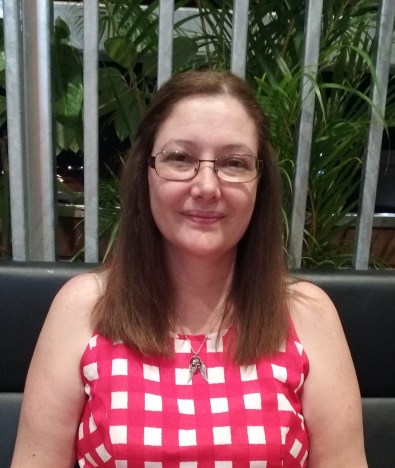
pernille writer pic 2 (1)Photo by I. Hughes

STS: Welcome, Pernille. This must be a thrilling time for you! Tell us something about your project.

My debut novel Sweatpants At Tiffanie’s was published on August 3rd. It’s a Romcom, a second-chance love story, a HEA story, and ‘getting up again when life punches you in the face’ story.

STS: That’s HEA as in Happily Ever After, yes?

It certainly is! Tiffanie Trent gets dumped by boyfriend Gavin on their 10th anniversary. Heartbroken and homeless, Tiff, a bookkeeper at an old-school boxing gym, figures that at least she has her job. But then the owner drops dead, leaving her floundering. When she then inherits the gym, Tiff, not sporty at all, needs to decide if she can take it on, defy the naysayers who say she can’t do it, and bring the club and her life into a better state of play.

STS: And Sweatpants At Tiffanie’s was just released last week on August 3rd. That’s awesome. Is there one aspect of the story that you relate to most – a favourite character, scene, effect? Can you tell us more about that?

As well as sharing Tiff’s reluctance to take part in physical exercise, I relate to her coming to see that she needn’t let others tell her what she is capable of. A teacher once said I couldn’t be a writer and I believed her, abandoning writing for about ten years. When I had my kids I turned back to the words to keep my brain clocking over and saw that actually I get to decide whether I am a writer or not. Tiff gets to examine her life too and understand that she determines what she can do, not others.

Pernille pic 3Photo by C. Knappe

STS: I’d like to meet that teacher now! What is it that drives you to pursue your creativity, despite that lack of encouragement?

Without wanting to come across as scary, the voices just rattle around in my head and need to come out onto the page. I’ve been making up dialogue since I was little, verbally playing out scenes either in my room, or say, if we were walking on holiday. Additionally I’m conflict shy and so always end up coming away from issues and spending the rest of the day making up what I should have said and wished I’d said. Writing stories is great for getting it out, although it doesn’t make me better at wading into conflicts.

What pushes me to get my writing out there is partially a desire to make others laugh with my words and also to get validation for them (so, I’m ‘giving’ and ‘needy’ at the same time…). Also, as a stay-at-home mum, words and my stories are my marketable commodity.

STS: Many writers have described their processes using analogies – stitching scenes together, following characters on a journey, immersing themselves in a storyline. What can you say about your process?

I visualise my process as sculpting. First I’ll write what I call a Vomit draft, just splurging words onto the page, only writing forwards and chronologically, not going back to correct anything, even if it means writing ‘something about XX, here’. That feels like choosing the material, like clay or stone.

The next draft will be looking at the ugly lump of words and deciding what the form of it is, what the essence of the piece will be and beginning to shape it. Each draft is then shaping the clay/stone until the sculpture is defined and the final draft will be the polishing. I like to have everything rounded off in my stories, ideally no loose ends, so when I’m asked to make edits, I find it really hard. In this analogy it’s like having to add an arm or something to a contained piece and then having firstly to make it look like it was always supposed to be there in the balanced piece and secondly smoothing the edges so no one can see the joins.

My stories start from an idea and then conversations around that idea come into my head. Until now my Vomit drafts have been extremely loosely plotted, after which I’ve found that when starting the first proper draft, I work best if I have a fully plotted plan and know the arcs of my key characters so that the choices they make from the start are true to their needs.

STS: That’s amazing. I love the name Vomit draft! Thank you for that – I’ll feel better throwing out great chunks of draft one now. Finally, what five words would you use to describe yourself as a writer?

Contemporary, Funny (hopefully), Plotter, Un-ambiguous (I’m not a fan of an ambiguous ending), Distraction-prone (ach, Twitter, you are my downfall…)

STS: Wonderful! Thank you so much for sharing your news with us today, Pernille, and I look for to a HEA future for your writing!

You can Find Pernille at the following links:

Twitter @pernillehughes

Facebook www.facebook.com/pernillehughesauthor

Pinterest www.pinterest.co.uk/pernillehughes

Bookbub; https://www.bookbub.com/profile/pernille-hughes

Pernille’s teeny tiny blog www.writingfromtheedgeofdistraction.blogspot.com


Here’s where to buy Sweatpants at Tiffanie’s:

HarperCollins www.harpercollins.co.uk/9780008307691/sweatpants-at-tiffanies/

Amazon www.hyperurl.co/sweatpantstiffanie

Itunes https://itunes.apple.com/gb/book/sweatpants-at-tiffanies/id1381181550?mt=11&ign-mpt=uo%3D4

Google Play https://play.google.com/store/books/details/Pernille_Hughes_Sweatpants_at_Tiffanie_s_The_funni?id=jd9SDwAAQBAJ

Kobo https://www.kobo.com/gb/en/ebook/sweatpants-at-tiffanie-s-the-funniest-and-most-feel-good-romantic-comedy-of-2018

Last Word of the Week: Shelley Nolan

Today we welcome Shelley Nolan to Last Word of the Week. Shelley joined the authors at Odyssey Books in 2017. Her next novel will be published later this year.

20161001_192128 (2)

LWOTW: Welcome, Shelley! Tell us, when did you write your first story?

Shelley: I’m sure there were earlier pieces for school or fun but I started what I consider to be my first real story when I was sixteen, during computer class on a Wednesday afternoon. Intergalactic Heroine for Hire featured a teenage heroine who looked remarkably like my best friend at the time and she even had the same name. Sharon was accidentally transported to another world where she had to defeat a bunch of brain eating aliens before she was able to return home. It was another ten years before I finished that first draft and it was pretty bad, I must say. One day I hope to go back to it and see what my matured writer’s brain can do with the story.

LWOTW: I hope you do! It sounds like a great plot. What do you think of dreams, imagination, and planning, Shelley?

I am a perpetual dreamer, my head in the clouds most of the time as I explore what if scenarios. I think that is an essential part of being a fiction writer, especially when it comes to writing speculative fiction. I fuel my imagination by reading as widely and as often as I can, losing myself in other authors’ imaginary worlds. As for planning, I get an idea and start jotting down notes and then I get to a point where I feel reading to start writing. I have been trying to plan more but often find the story carries me away on a new tangent as I write it. Love it when that happens.

LWOTW: I agree, reading is very good food for writers. What’s the highlight of your writing career so far?

For me, holding my first book in my hands and knowing that I created it was a huge highlight. That a publisher had seen something in my story and been willing to release it to the world was an amazing feeling. I’d had plenty of family and friends tell me my stories were good, but the vindication of having a complete stranger, someone in the industry, tell me they thought I could write was a big confidence booster.

LWOTW: It’s a great feeling. So, what are you most busy with at the moment?

I’ve been working on a paranormal fantasy novella series and am currently revising the fourth in the series. I’m also eagerly waiting for the release of Dark Justice, my first book to be published with Odyssey Books, and jotting down notes for more books set in the same world.

LWOTW: If you could say one thing to aspiring writers, what would it be?

We have all been there. We all have ups and downs with our writing careers and experience moments of self-doubt and can benefit from advice from those who are further along than us. So find your tribe, writers you like and trust to join you on your writing journey. I have made friends with some amazing people at writing festivals and other events over the years. We now share our stories for critique, give help when needed and receive it in return. In my experience, authors love helping other authors, so get out of your writing cave and find people you admire, like and respect and you will become part of a wonderful community.

And the Last Word of The Week: What’s your favourite colour, Shelley?

RED. Bold and vibrant. I love the brightness and the way it captures the attention. Red is the ultimate extrovert, a contrast to my introverted nature. I have a red kettle, toaster, handbag and flask. Even my filing cabinet is red.

Awesome! Thanks so much for sharing, Shelley.

You can find Shelley and her wonderful books at the links below:
And you can buy Shelley’s work through the following links: https://www.amazon.com/Arcane-Awakenings-Books-Novella-Book-ebook/dp/B07DPBDVSP/

Last Word of the Week: Carmel Bendon

This week LWOTW interviews Carmel Bendon, whose debut novel Grasping at Water (great title!), will be released in the coming weeks.

2018-02-19_0014 - Copy
(Author photo by Uber Photography)

Grasping at Water combines “mystery, history and discovery” in a way that will make readers question how they look at life.

LWOTW: Hello, Carmel, lovely to meet you. Tell us, when did you write your first story?

Carmel: My father and step-grandfather were both great story-tellers and, from when I was very young, they always took time to read to me and tell me stories. And they encouraged me to tell my own stories, long before I could even write. So that joy in sharing stories was always there. The first story I actually remember writing was when I was about seven years old. It was titled “Charlie the Chimp” and it was about a very smart chimpanzee who built his own fabulous treehouse in which the central room was a library.

LWOTW: A library! Excellent idea. What do you think of dreams, imagination, and planning?

Dreams are a connection to the unconscious.

Imagination is the yearning of the spirit.

Planning is the harnessing of our brain power.

Those three together – dreams, imagination, planning – (and underpinned by love), are the essential foundations of a good life, and the necessary “ingredients” of all great stories, of all writing that truly communicates.

LWOTW:  What’s the highlight of your writing career so far?

For many years I was an academic and, in that capacity, wrote a number of chapters and articles in my field. One of my books (Mysticism and Space) was very well received (and reviewed) and that was a highlight as it represented the culmination of quite a few years of research and hard work. Since I’ve turned my attention to writing fiction, the acceptance of my novel Grasping at Water by publisher Odyssey Books was definitely a highlight. For me, now, the whole writing process is a highlight because I see it as such a privilege to be able to tap into my creative as well as my logical side every day at my desk.

LWOTW: That’s impressive! What are you most busy with at the moment?

As my novel Grasping at Water is due out in September, I am busy with the admin and promotion that goes with it.

LWOTW: Grasping at Water will be published later this year. Can you tell us a little more?

Here’s the description:

“What if everything I had believed all my life was revealed to be completely wrong?”

When a young, unidentified woman is pulled alive and well from Sydney Harbour in 2013, the connections to another woman – found in similar circumstances forty years earlier – present psychiatrist Kathryn Brookley with a terrible decision as the events of the present and past begin to mirror each other and the gap between truth and illusion shrinks. When the young woman goes further and declares that she has lived continuously since coming to ‘understanding’ in the 14th century, her vivid accounts of life, love, childbirth, and loss in the Middle Ages seem so authentic that they test Kathryn’s scientific objectivity to the limit. As Kathryn delves she discovers that she is not the only one whose habitual assumptions about life have been torn asunder by an apparent experience of the miraculous in connection with the mystery woman.

GrapsingAtWater

LWOTW: That sounds very mysterious. If you could say one thing to aspiring writers, what would it be?

Read!

And the Last Word of The Week: What’s your favourite colour?

PURPLE.


Carmel’s Links

Website:       https://carmelbendon.com/

Twitter:        @CarmelBendon

Instagram:   @carmelbendon

Last Word of the Week: Mat Larkin

This week LWOTW is very happy to welcome the intriguing Mat Larkin, author of the newly released middle grade novel The Orchard Underground. Mat has a very inventive imagination – as I know from working with him on a project in the past – so I’m expecting some unusual responses … Read on with caution and delight …

Last Word of the Week: Greetings, Mat! When did you write your first story?

Mat: When I was seven, I wrapped a small, brown, corduroy belt-loop in a note and left it on the kitchen counter. The note read: ‘Dear Mum, this piece fell off my pants. Can you fix it please? Love Mathew.’

That story was a lie. I cut it off with scissors. Don’t tell my mum.

The first honest fictions I wrote were little stories when I was around nine. They all had Doctor Who in them. I wrote them while wearing a duffel coat with a recorder in the pocket that I pretended was the sonic screwdriver.

I could tell you I got over that phase, but I now know someone who writes for Doctor Who and the envy is scalding.

LWOTW: What do you think of dreams, imagination, and planning?

Mat: A really good therapist once told me, ‘enjoy your dreams, survive your nightmares, wake up, walk away and leave them be. Your subconscious is out of your reach for a reason. Keep it that way.’

It’s profound, wise advice, and I absolutely never follow it. Dreams don’t make sense — that’s not what they’re for — but they’re so damn compelling, so tantalisingly just a fingertip beyond our reach that our big, twitchy, far-too-curious human brains don’t stand a chance to resist.

I still can’t make sense of them, though. Why would Daryl Somers even want me to have orang-utan arms for legs?

Imagination is play, and I lost the habit of play until my son was born. He taught me to write by asking me to get down on the floor and stare for hours at a spinning top, to clamber into a cardboard box with him, to draw wings on that box and fly in it with him to Neptune, to stare at Venus together until the actual real photons that bounced off another planet were lodged forever in our retinas. Space travellers we welcomed.

My son taught me to play, and to write.

Planning is creative. I plan a novel by playing with my characters, writing their backstories, wondering what’s around the corner of the last street of the world I just invented, writing all my plot points on system cards then shuffling them to look for better patterns.

I mean it’s also a load of financial, professional and record-keeping tediousness, but it’s easy to forget in all that to keep a creative element in the more mechanical parts of your creative practice.

LWOTW: System cards! Wow, I’m impressed. They obviously work well. What’s the highlight of your writing career so far?

Adults have been very nice about The Orchard Underground, and that’s very nice. But I’ve been visiting a lot of the middle-grade book clubs run by Melbourne bookshops, and there is no substitute, as a middle-grade writer, for sliding politely past the adults and talking to kids.

The kids I’ve met have been incredible. They’re engaged, thoughtful, creative, rowdy and very much full of their own ideas about my story and characters. It’s been exciting to hear girls tell me they love my female protagonists Attica Stone and Slotcar, but almost more exciting to hear boys tell me the same thing. Boys finding non-male heroes is a big deal for me.

So the highlight of my writing career so far is this drawing of Attica Stone, which was done on the spot for me at a book club. I can’t begin to describe what it’s like to see my character appear like magic on the notepad page of a ten year-old girl who loves her.

attica-stone

LWOTW: That’s wonderful! (I love Attica too – apologies for being an adult. I’m sure my child-self would have adored her, but I had to make do with A Little Bush Maid, who could at least ride horses, muster cattle, and fight bushfires as well as cook…) What are you most busy with at the moment?

Here’s my list

  1. A prequel to The Orchard Underground, working title: The Chameleon Thief
  2. Visiting schools, book clubs and anyone else who’ll have me to meet kids, talk about stories and hear their sensational ideas about double-decker ladders and rocket trees
  3. Reminding people that The Orchard Underground exists, is a cracking read, has a sloth in it and is available in good bookshops everywhere at a very reasonable price
  4. Writing on mental health for SANE Australia, a fantastic organisation that supports people affected by complex mental illness.

mat-kids

LWOTW: If you could say one thing to aspiring writers, what would it be?

Two years ago I was uncertain whether I could make this career work. I kept going. Don’t give up.

Ten years ago I wrote an entire novel that never got published, and thought that was pretty much it for me. It wasn’t. Don’t give up.

Even with a book on shelves I frequently have moments when I feel like I’m not as good as proper writers. I don’t listen. Don’t give up.

I got a contract for my first novel eleven years into my writing career, at age 42. It’s never too late. Don’t give up.

The first draft of The Orchard Underground was extremely ropey, and so is the first draft I’m working on now. Publishers expect this. It’s okay. Don’t give up.

I absolutely bloody love this job and never want to do anything else. Don’t give up.

Don’t. Give. Up.

LWOTW: Fabulous advice! And the Last Word of The Week: What’s your favourite colour?

I’m reading Terry Pratchett with my son at the moment, so: octarine.

LINKS
You can follow Mat at matlarkin.com

Mat tweets  @matchtrick

And you can read my review of Mat’s book The Orchard Underground on Goodreads.

Last Word of The Week: Vacen Taylor

In LWOTW, writers share their thoughts about the craft and business of writing, with tips for aspiring writers and inspiration for all booklovers.

Today I am pleased to introduce you to the imaginative, inspirational and thoughtful Vacen Taylor, author of the Starchild series.

IMG_5702 (2)

LWOTW: When did you write your first story?

Vacen: I imagine that would be in grade one but perhaps not my best work. My first published story was written in 2009. It was a sci-fi flash fiction story written for an American e-zine.

LWOTW: What do you think of dreams, imagination, and planning?

In the stages of sleep, I love the fact that dreams are involuntary. Dreams today are still not entirely understood but they have been the subject for many writers, both scientific and academic. They have also been the stimulus for many famous stories. However, if I’m talking about hopes and dreams, having a yearning for something to manifest into reality, then I believe cherishing ambition from our imagination is vital for writers. But fantasising about the future won’t help us unless we work hard to fulfil those dreams. Of course, not all dreams come true, well, not always the way our visions might have created them in our imagination.

Speaking of imagination and forming new ideas, I believe it is the most creative resource we can own. Nothing is more powerful than our imagination. I can’t remember who said this but, if we can imagine it we can create it. True on most counts. And usually that requires a plan.

Ah, planning is a two-edged sword for me. Gardener or architect? I’m a gardener when it comes to a lot of my writing and not so much of an architect. So, I receive the seeds through my imagination. I plant them. I water them and watch them grow. The exception to that is screenwriting. I plan the script using a beat sheet. This works well for me when writing a feature film or short film script.

However, if I’m writing an essay for university then it is most definitely planned. Poetry and novels I allow to flow creatively.

LWOTW: What’s the highlight of your writing career so far?

I’ve had a few different highlights over my career so far. Signing my first publishing contract was a huge goal but the highlight of that came when I received my first box of books. #BoxOfBooksDay Yay!

Winning the 2016 Best Short Screenplay “Foiled” at The Good Dog International Film Festival was a highlight. Then receiving a commendation in the 2018 British International Film Festival was an amazing highlight.

IMG_5491

Another highlight was having my #8wordstory up on the GOA billboards around Brisbane and the Gold Coast.

IMG_3458

LWOTW: That’s a lot of great highlights already! What are you most busy with at the moment?

I balance my time between a few different forms of writing. Poetry. Novels. Screenwriting. Short stories. At the moment essay writing for a university is taking up a little more time than creative writing. However, I include my creative writing into my schedule each day.

IMG_3354

LWOTW: If you could say one thing to aspiring writers, what would it be?

The answer to this question keeps changing every time I’m asked it. And I’ll tell you the reason why.

A writer continues to grow and change psychologically, biologically, spiritually and socially throughout their life. Psychological change might include learning how to reflect on our personal experiences and successfully introducing change to our life. Of course, we don’t have control over biological change, but this change cannot be ignored because our body grows older. We are often challenged by that change. This change can affect how a writer might view his or her work, the subjects they write about and the way they write. Spiritual change is different for everyone. It happens to some early in their life and for others it comes as they mature or age. Over time our social and behavioural patterns change. Our culture and social norms might change, either involuntary or voluntary, but they do change.

So year by year my answer to this question changes because I’m changing.

The answer this year is…

  1. Don’t look sideways. By that I mean don’t compare your work to others.
  2. Write your way until you fall into your voice.
  3. Learn through experience. Nothing teaches you about life like experience.
  4. Become familiar with speaking about your work. This is often harder than you think.


And the Last Word of The Week: What’s your favourite colour?

PINK


You can follow Vacen on

Facebook: https://www.facebook.com/Vacen-Taylor-Author-233611656699562/

Instagram: https://www.instagram.com/vacentaylor/

Pinterest: https://www.pinterest.com.au/vacentaylor/

Twitter: https://twitter.com/VacenTaylor

Website: www.vacentaylor.com

To read more about the Starchild Series: www.starchildseries.com


Last Word of the Week: Laura E Goodin

And so it begins! The first instalment of the Last Word of the Week project is here.

In LWOTW, writers share their thoughts about the craft and business of writing, with tips for aspiring writers and inspiration for all booklovers.

Today I am thrilled to welcome the dynamic, witty, redoubtable Laura E Goodin as my inaugural interviewee.

goodin_headshot3_medium

LWOTW: When did you write your first story?

Laura: I may have been…seven? It was about…my stuffed animals? Something like that.

LWOTW: What do you think of dreams, imagination, and planning?

That’s just about all I ever do think about: dreams, imagination, and planning. For me, the words are very nearly synonymous, and all three are as indispensible as breathing. My dreams and my imaginings are generally the first stages of planning for either my next real-life adventure or my next piece of writing. Or both.

LWOTW: What’s the highlight of your writing career so far?

While I’ve been lucky to have had lots of amazing writing adventures in a startlingly short time, from my first sale (a story accepted in Antipodean SF, although no money changed hands) to my first paid sale (a story in the Canterbury 2100 anthology from the Canberra Speculative Fiction Guild), from my six tempestuous weeks at Clarion South to entering the hall to receive my PhD in creative writing. But I think the highlight among many highlights has been the four-city launch tour I did when my first novel came out in 2016. Friends and family members from Melbourne, Canberra, Wollongong, and Sydney came to celebrate what they all knew was the dream of a lifetime for me, finally come true. I was particularly overwhelmed by the turnout in Wollongong: we’d recently moved away to Melbourne, and I’d sort of wondered if I might have gone out of sight and out of mind. But the room was PACKED with people I loved and missed, and their goodwill and pride filled my heart to bursting.

Goodin Wollongong launch Photo by Heather ONeill_larger

LWOTW: What are you most busy with at the moment?

I wish I could say it’s writing the next novel. But really, it’s keeping my editing business going and promoting my two existing novels. However, I’m taking steps to shift the balance back toward writing. I’ll never be less busy, but I’m getting to the point where, after a tough couple of years, I’ve got a bit of leeway to allocate my time in ways that favor the writing a little more. That said, I also maintain a complex program of extracurricular activities, some of which augment the editing business (I’m a professional fencing instructor and I teach writing whenever I get the chance) and some of which are necessary because they feed my soul a rich diet of magic and melodrama (that would be the bellringing), and some of which I do because I just plain like doing them (cooking and going to the gym would be examples).

LWOTW: If you could say one thing to aspiring writers, it would  be…?

I would sit them all down and I would stare at them until they began to shift uncomfortably. Then I would say in a hollow, sepulchral voice, “You will never be satisfied with what you write. You will always be convinced that everything you write is shit. You must write it anyway. You must. The shittiness is irrelevant.”

And the Last Word of The Week: What’s your favourite colour?

A rich, mossy, velvety green. The green of the soft, shaded carpet at the water’s edge. The green of contemplation and calm. The green I remember from the woods and mountains of my childhood.

LWOTW would like to thank Laura for her thoughtful answers, and also for being brave enough to go first! Love your work, Laura!

Links to Laura:

Laura’s web site: http://www.lauraegoodin.com

Laura blogs at: https://lauraegoodin.blogspot.com

You can find her on Facebook at: https://www.facebook.com/Laura.E.Goodin.Writer/

And Laura tweets @lauragoodin

Novels: Laura suggests that it’s best to search Amazon for After the Bloodwood Staff and Mud and Glass. Better yet, ask your local indie bookstore or library to get them in!

Image credit: The great photo of Laura signing her book was taken by Heather O’Neill.


Cover me, I’m going in…

Into bookshops, of course.

Scandinavian bookstores to be exact, some of which are worth the investment of several hours. Although all these shops have sections where English books are stacked and shelved in their dozens, I found myself drawn to the local language books. Here I confirmed that, for better or worse for us authors, potential readers DO judge a book by its cover.

The conventions of genre in imagery help us to distinguish crime from fantasy from romance from historical fiction from military memoirs from poetry, and so on. Classics with new, interesting covers (like those in the header image) live on the strength of their titles and authors. Newer fiction must usually play by the rules, although that doesn’t necessarily mean playing in the same well-worn rut.

For example, I like this new fantasy cover for the prolific (and wonderful) Brandon Sanderson‘s The Final Empire (first published 2006). This cover clearly references the genre but presents a more up to date, fresh, arty take on it. You could think that its first imprint was at least ten years later.

IMG_3288In a watercoloured, simplified way, all the genre markers appear. Fantasy city: check. Mysterious being: check. Spooky question to set up the fantasy premise: check. Weird misty atmosphere: check. Potential to adapt for the later books in the series: check. And is there a suspicion of snow on those towers … Jon Snow? GOT readers say: ‘my kind of book’, as do Harry Potter and LOTR folk. Probably, as do fantasy readers in general.

And here’s a novel clearly set in or around the time of the First World War. Clearly. It also features the poppy on the spine, so you know the genre even when it’s facing the wall.

follettIt’s Ken Follett’s Fall of Giants in Norwegian. Even if we hadn’t noticed the guns and the sepia-tinted photo, that poppy gives it away. Are those soldier-photos and poppies clichéd? I guess yes, but they also act as immediate identifiers for readers who are eager to read something similar to books they have already enjoyed.

Now what about family sagas and romance? Evidently (from my observations), a reader wants to see a woman on the cover, most often with her back to us, contemplating her situation. Her attitude and costume communicate the historical period covered in the novel:

IMG_3289.jpg

Many crime stories also feature women, usually with their backs turned to us, walking into danger. Women? Of course, I should say ‘girls’ for that genre 🙂

My own WWI novel will be published later this year, and I am agonising over what might make a good cover – to poppy, or not to poppy? – being the main question. Do I need a rising sun to mark it as Australian? And a woman in historical costume to signify that it is a family-based romance as well as a war story? My brains are on the rack.

If you have any brilliant ideas for what I could suggest to my publisher, please leave me a comment below!

PS All photos taken by me.


Coming soon: the Last Word of the Week

Good news, readers and writers!

From the first Friday in July, we are starting a new project called the Last Word of the Week (LWOTW). Every Friday, a different writer will join me for a Q&A about the craft and business of writing.

I’m very much looking forward to getting started with all these clever, generous folk.


Image Credit: The Garden of Chenenceau, by Clare Rhoden


Five questions, a writing exercise, and a picture

Today’s wonderful image is from WallUp Wallpaper Images

Today I had the pleasure of speaking to some creative writing students at Victoria University, in the western suburns of my hometown Melbourne.

Being trapped in the spotlight in a room full of other writers felt a bit daunting, so instead of just reading from my book and then expecting discussion, I structured my given hour around reading, writing, questioning and visualising fiction.

In this post, I’ll look at the questions I prepared and the answers we discussed. These are the five questions I am most often asked since The Pale was published:

  1. Where do you get your ideas?
  2. What made you want to write about this?
  3. How did you go from a short story to an 80,000 word novel?
  4. How did you find a publisher?
  5. How do you sell books?

My ideas come from the real world and from dreams. (I find my dream stories have had better success in finding publication – but that topic is for another post!) In the case of The Pale, in 2014 I had a dream that I was locked inside a wire compound and that there was a crying baby on the ground outside the gate. Nobody would let me go out to pick up the baby, and eventually it was left to my old German Shepherd dog, 15-y-o Dinny, who arrived suddenly at the baby’s side and rescued it.

The morning after the dream, I wrote the first draft of Man/Machine/Dog, which was published in Overland 215, Winter 2014.

What made me want to write about this dream was the refugee crisis, in particular Australia’s response, which I continue to find deeply distressing. (More information at the Refugee Council of Australia.)

From short story to novel took me almost a year and I did this mostly by writing backstory for all the characters. I created a writing exercise around this for the students which I will outline in a later post.

Finding a publisher was a pitted path. After the story was published, a start-up sci-fi publisher asked about the novel (which I had not written!). The first draft, which I sent to them, was seriously under-done and rightly rejected. Many revisions later, after learning more about the industry by attending workshops at Writers Victoria, I searched for a publisher willing to accept unsolicited submissions electronically (who wants to pay postage on a novel-sized project?). I sent a much re-worked version to Odyssey Books and was thrilled to be accepted for publication. I have some tips for organising and surviving your submissions – but that too is for a later post.

Selling books is quite hard. There is so much excellent competition out there, and marketing is not a core skill for me. It took me quite some time to grow a writerly skin which allowed me to submit my writing (poor shivering creature!) to publishers, and I am aiming now to grow a marketing persona. There are a number of associated activities that authors can undertake to help sell their books, and I will outline some of these in a later post. I can’t do everything, but I can always do something to help my book get into the hands of readers.

Speaking of which (shameless plug alert), if you’re in the market for a gripping read in dystopian sci-fi, you can buy The Pale here, or at the usual places, like Booktopia or Amazon.


Deep Blue cover reveal: I can’t wait

Here’s a great cover reveal for a new instalment in Jane O’Reilly’s Second Species trilogy – Deep Blue, the sequel to Blue Shift.

Add this blurb, and it’s yet another book I can’t wait to get my hands on!

Jinnifer Blue opens her eyes to find herself in a ship that is the source of her darkest nightmares. Her plan to expose the horrific truth behind the government’s secret Second Species programme has failed, and now she’s being turned into a weapon by her worst enemy . . . her mother.

At the other end of the galaxy Caspian Dax, ferocious space pirate and Jinn’s sometime lover, is facing an even more terrifying fate. He’s being forced to fight in the arena on Sittan, a pitiless, ruthless alien landscape where blood is the only prize that matters. They will use him, destroy him, change him.

Jinn has only one chance – to go to Sittan and find Dax before his mind is completely destroyed. She must rely on her friends and one old enemy, leave her beloved ship the Mutant behind, and travel to a hostile planet. But hardest of all, she must keep faith that when she finds Dax, there will be something left of the man she knew.

One thing’s for sure: the fight has only just begun