It’s Here! People Like Us by Louise Fein

People Like Us by Louise Fein

Earlier this year I had the great good fortune to review an astonishing debut novel: People Like Us by Louise Fein. You can read my review here, where I describe this as a heartbreak of a book. It’s so much more, and I recommend you read it too.

People Like Us is being released worldwide this month, and I’m thrilled to have Louise on board in this special Something to Say post. Here she isto tell us a bit about the background of the novel and how is came to be published.

Welcome, and congratulations on your novel, Louise. It must be exciting to finally have it launched, even into a world filled with strangeness. Can you tell us a bit about the process and the story behind the story?

Louise: I’m delighted to announce the publication of my debut novel, People Like Us (in the USA, it has a different cover and the title Daughter of the Reich). Like so many authors, having a book published has been my ultimate lifelong dream. As a child, my ambition was to become an author and I spent many hours writing stories, usually based around the subject of ponies. But then I grew up, needed to earn a living and the appeal of ponies dwindled (well, only a little), so the writing took a back seat for a while.

The appeal of ponies never really dies. But you did get back to writing?

The writing bug never left me, and over the years I wrote ideas for novels, poems, diaries and stories, in and around work and family commitments. But I never fully committed to writing a novel until I finally took the plunge and began a master’s degree in creative writing at St Mary’s University, London. It was then that I began work on People Like Us. My idea, initially, was that I would have the novel finished alongside the MA in a year. How naïve I was!! The first draft took around two years to complete, after I ditched the first attempt half-way through my MA year. But it was just that. A first draft. It required a lot more work, many re-drafts, and a good deal more research, until finally I had a manuscript ready for submission to agents.

I haven’t found the agent road an easy one to travel. How did you get on with it?

It took essentially another year to find an agent. There were many rejections, but I also had interest from some and that spurred me on to keep going and keep submitting. I carefully selected agents I would really like to represent me, and I was very lucky that one of my favourite agents liked my work. Much of the agenting and publishing world works very slowly, but sometimes it moves at the speed of light. I sent my manuscript to the agent who is now my agent one Friday afternoon, and I heard back from her the very next morning that she loved my book. The same process happened when I went on submission to publishers. Within a week there was interest from a publisher in the UK and then I went on submission to the US and there was interest the same afternoon. In the end the book was pre-empted by William Morrow (imprint of Harper Collins).

That’s such a great story! Rejections to instant acceptance – definitely the stuff of dreams.

My dreams had more than come true, they had exceeded all my imagination. On top of that, I have also had some wonderful foreign translation deals (eight to date) and these really have been the icing on the cake. So what I would say to any unpublished authors out there: Keep going: keep improving your work, keep submitting. What feels like an impenetrable wall can be breached. I was hooked off the slush pile and knew nobody in the publishing or agenting world at all. It is all possible, but it’s a long game.

That’s such an affirming story, thank you, Louise. Now about the book…

So, a little bit about People Like Us. It’s a story of  forbidden love, set in the tumultuous backdrop of 1930s Leipzig. The novel is told from the point of view of Hetty, a young girl who has grown up on a diet of Nazi propaganda and is hungry for a part to play in Hitler’s thousand-year Reich. Until, that is, she encounters Walter, a friend from her past, a Jew. As the thirties spiral ever deeper into anti-Semitic fervour, Hetty and Walter’s developing relationship puts her beliefs into stark conflict and danger forces them to make choices which will change their lives forever.

People Like Us by Louise Fein

I believe you have a family connection to this story?

The book was inspired by the experiences of my father’s family, Leipzig Jews, most of whom fled Germany for England or America during the 1930s. Whilst the story and the characters are fictional, the setting is authentic, and it is based around real events. My father died when I was only seventeen and he never spoke of his experiences of living in Nazi Germany.

Instinctively, I knew the book should be fictional, but its form and content were shadowy. I read Mein Kampf and learned about the experience of growing up under Nazi rule; I travelled to Leipzig and met with experts; devoured family papers and listened to the memories of survivors. The characters of Hetty and Walter came to me, and with them their story. The more I read, the more interested I became in trying to understand how a democratic, civilised nation could, in just a few short years, overthrow democracy, demonise the Jews (and others), and descend into a violent, fear-filled fascist state who aimed to exterminate the Jewish race. I felt my story would be powerful if told from the point of view of a young, innocent girl, brought up to fear and hate perceived difference. What could possibly change her beliefs?

It’s a story of the fragility of freedom, and the ease with which one group can de-humanise another to the extent of un-imaginable horror. But it is also the story of friendship, hope, and above all, the power of love.

It’s a very important book, I think, and I’m so glad that you wrote it. Thank you for telling us about the release, and I look forward to speaking with you again soon about how it’s going. Stay safe, Louise!

You can discover Hetty and Walter’s story here:

UK

https://www.amazon.co.uk/People-Like-Us-Louise-Fein/dp/1789545005

https://www.waterstones.com/book/people-like-us/louise-fein/9781789545005

https://www.hive.co.uk/Product/Louise-Fein/People-Like-Us/23814992

Australia

https://www.harpercollins.com.au/9781789545012/people-like-us/

https://www.amazon.com.au/People-Like-Us-Louise-Fein/dp/1789545013

USA

https://www.amazon.com/gp/product/0062964054

https://www.barnesandnoble.com/w/daughter-of-the-reich-louise-fein/1132922940?ean=9780062964052

https://www.harpercollins.com/9780062964052/?utm_campaign=aps&utm_medium=athrweb&utm_source=aps

The Stars and Anzac Day

This week, we will mark Anzac Day in Australia and New Zealand. For the first time in over a century, there will be no attending official services. The pandemic changes how we mark historic events, just as it changes how we celebrate or grieve personal events. I’m aiming to be up at 6am next Saturday, to watch dawn from my front garden and to think about the enduring legacy of war, and how world events affect us here Down Under.

Just in time, there is a fabulous new review of my WWI Anzac story.

My heartfelt thanks to Baffled Bear Books for this brilliant, thoughtful review of The Stars in the Night.

The Stars in the Night is indeed a tale of enduring love. This review is well worth a read. I’m very grateful to find such wonderful readers!

https://baffledbearbooks.com/2020/04/18/stars-in-the-night-by-clare-rhoden-a-story-of-broken-lives-and-enduring-love/

Christine Bell, No Small Shame

No Small Shame by Christine Bell

Christine Bell’s historical novel No Small Shame has just been released, making hers the first fully online book launch of my experience. Christine has 35 short fiction books published for children including picture story, chapter book and YA titles. Her short stories have won national writing competitions and been published in various anthologies. No Small Shame tells the story of immigrant Mary O’Donnell who arrives in Australia on the brink of WWI. Meticulously researched though it is, the story’s strongest points are its engaging and relatable characters.

No Small Shame by Christine Bell

Welcome, Christine, and congratulations on the excellent reception of No Small Shame. Thank you for sharing some words with me today. Let’s see what set you off on your writing journey. What was your favourite book as a child?

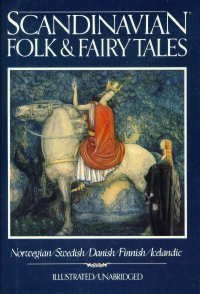
Christine: When I was in grade four, our teacher Miss Yule possessed the most beautiful illustrated story book I’d ever seen. It was a large, full colour book called Best Scandinavian Fairy Tales. Every couple of days she would read from our current story and hold up the divine full-page illustrations. Once a week, a child was allowed the very special privilege of taking the precious book home overnight to read. It seemed an interminable wait until it was my turn. I could barely breathe for excitement that evening while I turned the pages and read as much as I could. Later, I read surreptitiously by torchlight, carefully turning the pages under the sheet. It broke my heart when at the end of the term, Miss Yule left our class to get married, taking her beautiful story book with her and depriving me of a second overnight read. I’ve never forgotten that book.

Scandinavian Folk & Fairy Tales

And never forgiven Miss Yule, no doubt. Or those conventions that made marriage and teaching incompatible! Are there any secrets hidden in your writing?

There are no secrets as such, but there are always guns on the wall. Small moments that may not mean much at the time of writing, but must inevitably have a purpose. I have a scene in No Small Shame, aboard ship, where Mary is forced to have her hair cut off due to a plague of nits. The scene shows the conflict with her mother, but Mary’s hair also comes to have a deep symbolism throughout the novel. When I first wrote the scene, it was more to show shipboard life and I was concerned in the early drafts if it was earning its place. But as the novel progressed, Mary’s hair became a metaphor that echoes right to the final scene.

Guns on the wall! Eek! What’s the best response you’ve ever had to your writing?

Just before No Small Shame was officially released, a writer friend emailed me from the bookshop carpark after getting caught up reading it. She emailed again, a day later, half-way through, to say how much she was loving it, and that I’d painted such a picture with words and drawn the characters so well that she felt she knew them. The next day she contacted me to say that she’d cried through the final five chapters, loved the book, and how could we get it made into a movie. It’s an author’s dream to have a reader connect so emotionally to your story and to have it come alive in their mind.

That’s wonderful feedback. Do you write full time?

I write virtually full time. My children have all grown up and left home, and I’m most fortunate to have the financial support of a partner. Royalties from my many children’s short fiction titles, together with my annual PLR and ELR payments* help financially too, even all these years after the titles were published. I work in our business part-time too, but the majority of days I can be found at my writing desk.

*Note: public and electronic lending rights, from when books are borrowed from libraries. Note 2: Support authors! Borrow books from libraries!

Excellent! Is it easy for you to meet other writers?

I’ve had lots of opportunities to meet many fellow writers through writing groups, events, conferences, masterclasses and workshops. I’ve also completed two tertiary qualifications, including a Master of Creative Writing, where I met writers who’ve become good friends. I also served as the Assistant Co-ordinator for the Society of Children’s Book Writers and Illustrators Vic (SCBWI) for five years where I made a lot of friends and connections in the kid-lit community. I’ve connected with lots of writers through Facebook and Twitter. My social media is predominantly all about writing, publishing, books, and related topics, and I’ve always found the online writing community incredibly supportive and friendly.

I agree, the #WritingCommunity is great. Where do you write?

My office looks over our rather lovely, tranquil back garden where I can hear the birds, see them playing in the bird bath, and watch the change of seasons. A couple of years ago, after a spinal surgery, I purchased an electric standing desk and combined with another long desk, it forms a fabulous L-shaped workspace. One full wall is floor-to-ceiling white bookshelves, and, adding a red filing cabinet and splashes of red on the bookshelves and desk, I have a bit of a colour theme going. The wall opposite features a huge framed map of the Somme, the setting of my current work-in-progress; plus a large original illustration from my children’s book, Snozza; a messy corkboard of memorabilia and treasured mementoes; as well as various artefacts related to my current work . It’s a lovely space that I had such fun decorating to truly inspire and reflect what I’m writing.

Do you have launch parties for your books?

I never had a launch party for my children’s books, so I was very excited to plan an instore event at Readings Hawthorn to release No Small Shame. It was rather a large shame that the event was cancelled due to Covid-19, but I quickly became aware of the possibility of launching the book online, via Facebook. I was still very keen for acclaimed author and writing buddy Alison Goodman to launch the book. This was a little problematic since we were to be in separate houses due to this time of isolation. We decided that a pre-recorded launch was probably the only way to go. I really wanted a live, spontaneous component though. But even as I advertised it, I wondered if the live stream would work. Short story, with a little tech advice and after a practice mock event, it worked very well and No Small Shame was launched on the 2nd April. I was really thrilled that I was able to see so many friends, family and fellows present in the event comments, questions and congratulations. For anyone who’d like to view the launch, I’ll include the Youtube links: Book launch https://youtu.be/LHXC4OJvKTI. Live stream https://youtu.be/c4sJ9vamIzI.

Ooh, and readers can have a little look at your writing office on the YouTube link! Thanks, Christine; I’m very much looking forward to reading No Small Shame, and to your next book, which is also set around the time of the First World War.

Christine’s links:

Website:              https://christinebell.com.au

Twitter:                https://twitter.com/chrisbellwrites

Facebook:            https://www.facebook.com/chris.bell.77377

Instagram:           https://www.instagram.com/christinembell

Book links:

Readings: https://www.readings.com.au/products/30505748/no-small-shame

Dymocks: https://www.dymocks.com.au/book/no-small-shame-by-christine-bell-9781920727901

Booktopia: https://www.booktopia.com.au/no-small-shame-christine-bell/book/9781920727901.html

Amazon: https://www.amazon.com.au/No-Small-Shame-choice-forever-ebook/dp/B07WQYNC2G

Bringing history to life with Caroline Warfield

Discovering Diamonds (independent reviews of historical fiction) first led me to award winning author Caroline Warfield, because her book Christmas Hope seemed a perfect match for my own The Stars in the Night. (Put them together for a perfect present!) Caroline excels at family-centred romance set in the Regency and Victorian eras.

Caroline has been many things: traveller, librarian, poet, raiser of children, bird watcher, Internet and Web services manager, conference speaker, indexer, tech writer, genealogist—even a nun.

She reckons she is on at least her third act, happily working in an office surrounded by windows where she lets her characters lead her to adventures in England and the far-flung corners of the British Empire. She nudges them to explore the riskiest territory of all, the human heart.

Welcome, Caroline, and thank you for speaking with me on Last Word of the Week. Can you tell us about the first book you read for yourself—or bought for yourself?

Caroline: All writers are avid readers—we have to be. I don’t remember not reading so this question is hard. A more vivid memory isn’t so much the first book I bought for myself but the moment I liberated myself from the children’s section of the public library. The door to that building was in the center, and for years I turned to the right to the children’s section when I came in. One day at twelve I turned left instead of right.  No one stopped me—it was a heady and powerful feeling. The book I took out that day was Jane Eyre.

How wonderfully liberating. What words of advice would you give an aspiring author?

The best advice I ever got was simple. If you want to be a writer, you have to write. Just sit down and do it. What is more to the point, keep doing it every day. Don’t diddle, talk, or dream about it. Do it.

Carol Roddy

Do it. Of course! Is writers block a thing for you?

Yes, although it is usually less dramatic than a complete block. I will cruise along writing 1-2000 words a day on a book, hit a speed bump and come to a screeching halt. Some of it is that I can’t envision the next steps of the plot, but I’m learning that the underlying issue is usually that I’ve failed to get well enough acquainted with the characters—their personality, life, wounds, scars, underlying goals…that sort of thing.  Once I know them well, and I’ve put them in a situation, the writing flows. When I hit a wall, it is time to go back to character charts and backstory for a while.

Character charts – why didn’t I think of that?! What’s the best response you’ve ever had to your writing?

My favourite praise is “I was up all night finishing your book.” SIGH


That is high praise indeed. Lovely! Your focus is on historical novels – how much research is involved in your writing?

Heaps—especially when I allow some impulse to set characters down in a setting and historical situation about which I know little. The worst was the time I sent a character to India and realized I knew nothing about the East India Company, the country itself or its culture. Research, research, research.

With a fabulous reason to do more of our favourite thing – reading! Do you get feedback about your story, before it’s published?

Always. I drop little excerpts of my WIP to reader groups on Facebook as I write, and I always get it to beta readers before I do one final self-edit before sending it to the publisher.

That sounds like a good feedback system. What’s your writing goal for the next twelve months?

I’m doing something a little different this year. I have two projects in process at once. Because readers like series, and they don’t like long waits between books, I’m holding on to finished manuscripts. But I’m writing two series at once. The first is a new set of books in my British Empire series using sons and daughters of characters in my earlier books. We’re up to about 1840 in that saga. Book one is finished in rough draft. That one, The Price of Glory, takes place primarily in Egypt and Nubia.  The other series is more of a traditional Regency world, it covers two interrelated families around a coaching inn in a village in the English Midlands. The hero of book one in that series is half-brother to both families, the innkeeper’s and the earl’s, who has been called home reluctantly in 1817 after leaving for good (he thought) fifteen years before.  My goal for 2020 is to have the two books in the Empire series and one in the other finished, with two other stories well under way

That’s a big year you have in front of you, but it sounds fascinating. What’s your favourite genre to read?

I read historical books. Mysteries, romance, straight up fiction, non-fiction, biographies—if its historical it will find its way on to my to-be-read pile.

I bet we have a few overlapping favourite authors. Where do you get inspiration or ideas from?

Often, ideas come to me from travel.  I once sat in a café in Rome and asked myself whether I could set a Regency novel in Rome. Turns out I could and Dangerous Secrets has become one of my favourites. I also rely on reading, on my own previous books, and, of course, bits of historical trivia.

Do you plan your books, or do you listen to your muse?

I rely entirely on the girls in the basement. I fill them with settings, history, and characters and they give me back stories. If I do my preliminary work regarding characters and setting, and we agree on some key turning points, the girls and I, it works. Over-planning puts them to sleep.

What a delightful process! Is it easy for you to meet other writers?

Not always but it is vital. Since I moved to the urban wilds of eastern Pennsylvania I no longer belong to a local chapter. Luckily, I have made some excellent friends online. We brainstorm, read each other’s work, and encourage one another. Every year we produce a collection of new stories with interrelated story elements. One year it was a house party overrun with kittens (Holly and Hopeful Hearts). One year it was a Valentine’s Day ball (Valentines from Bath). This year, timed for Valentine’s Day, it is Fire & Frost in which all five stories converge at the 1814 frost fair on the frozen Thames.

How marvellous! I must say, Caroline, I love your work. Thank you so much for sharing today.

You can see Caroline’s wonderful works one her bookshelf at https://www.carolinewarfield.com/bookshelf/

You can find more about the stories in Fire & Frost and links to various retailers here: https://bluestockingbelles.net/belles-joint-projects/fire-frost/

You can find all Caroline’s books here: https://www.carolinewarfield.com/bookshelf/

You can follow progress, find excerpts, and learn about her characters here: https://www.facebook.com/groups/WarfieldFellowTravelers/


Caroline’s other links:

Website

Amazon Page

Good Reads

Facebook

Twitter

Newsletter

BookBub

YouTube


Kate Murdoch in the Grove, where status is survival

The Orange Grove by Kate Murdoch

The very talented Kate Murdoch exhibited widely as a painter both in Australia and internationally before turning her hand to writing. Her short-form fiction has been published in various literary journals in Australia, UK, US and Canada.

Her debut novel, Stone Circle, a historical fantasy novel set in Renaissance Italy, was released by Fireship Press in December 2017. Stone Circle was a First in Category winner in the Chaucer Awards 2018 for pre-1750’s historical fiction. You can see my review of Stone Circle here.

Kate’s second novel, The Orange Groveabout the passions and intrigues of court mistresses in 18th century France, was published by Regal House Publishing in October 2019. I absolutely love the cover! Isn’t it gorgeous?

9781947548220-Frontcover kern

Kate was awarded a Katherine Susannah Pritchard Fellowship at the KSP Writers’ Centre in 2019 to develop her third novel, The Glasshouse.

Welcome, Kate, and thanks for speaking with me today. Can you tell us something about yourself that you think anyone who reads your book/s really ought to know?

Kate: I’m an artist turned writer so I write visually. I’m also fascinated by human motivation, the complex relationship between peoples’ past and present circumstances/traumas, and their actions.

An artist! That explains a great deal. What is your favourite scene from your own writing? Why?

Hard to say but I wrote a black mass scene in The Orange Grove and that was fun both in terms of imagery and in creating a menacing atmosphere.

It must be! If I told one of your characters (you get to choose which one) that they were imaginary, how would they respond?

Duchesse Charlotte: What a heinous thing to say. I am most certainly real, and if you don’t believe me I’ll throw a vase at your head and set one of my Bichons on you!

Brilliant! Well done, Duchesse! Can you think of any books and/or writers who inspired you on your path to be an author? Can you tell us about that?

Kate Grenville has been an inspiration for the way in which she can, with few words, create vivid imagery and layered emotional nuance.

Gabriel Garcia Marquez has also been an influence and inspiration for my writing. His lyrical style, detailed description and romantic themes made an impact as did his ability to move me.

A couple of iconic writers there; great inspiration. Now take yourself back ten years – what would you like to tell yourself?

Relax a little. You can direct things more than you realise. Appreciate all the positives and more of them will arrive.

profile 2 large

Relax. Of course. What’s next for you in the world of writing?

I’m on the second draft of my third novel, The Glasshouse, about a girl orphaned in the Messina earthquake of 1908 and adopted by a wealthy Palermo family. I’ve also started work on a dual-timeline novel set in World War Two Croatia and 1960’s Melbourne, told from the perspective of three generations of women.

I’m doing a number of events for The Orange Grove and am looking forward to talking with readers.

And The Orange Grove is garnering some very enthusiastic reviews. Congratulations! I have it on my summer reading list. Now finally: Who would you be if you were a fictional character – one of yours, or someone else’s?

I’d quite enjoy being Romain de Villiers, the tarot reader in The Orange Grove. Aside from his money problems, he does what he likes, has numerous love interests and moves between the château at Blois and Versailles, mixing with lots of interesting people across the classes.

He sounds very interesting indeed. Thanks so much Kate for speaking with me today. Meet you in the Grove!


The Orange Grove:

When status is survival, every choice has its consequence.

Blois, 1705. The chateau of Duc Hugo d’Amboise simmers with rivalry and intrigue.

Henriette d’Augustin, one of five mistresses of the duc, lives at the chateau with her daughter. When the duc’s wife, Duchesse Charlotte, maliciously undermines a new mistress, Letitia, Henriette is forced to choose between position and morality. She fights to maintain her status whilst targeted by the duchesse who will do anything to harm her enemies.

The arrival of charismatic tarot reader, Romain de Villiers, further escalates tensions as rivals in domestic politics and love strive for supremacy.

In a society where status is a matter of life and death, Henriette must stay true to herself, her daughter, and her heart, all the while hiding a painful secret of her own.


Kate’s Links:

Website:  https://katemurdochauthor.com/

Blog: https://kabiba.wordpress.com/

Facebook: https://www.facebook.com/katemurdochauthor/

Twitter: https://twitter.com/KateMurdoch3

Pinterest: https://www.pinterest.com.au/katemurdoch73/

Instagram:  https://www.instagram.com/katemurdoch2/

Goodreads: https://www.goodreads.com/book/show/47583097-the-orange-grove

And The Orange Grove buy links:       

Regal House Publishing: https://regalhousepublishing.com/product/the-orange-grove/

Booktopia: https://www.booktopia.com.au/the-orange-grove-kate-murdoch/book/9781947548220.html

Angus & Robertson: http://bit.ly/2LmLy2U

Readings: https://www.readings.com.au/products/30372648/the-orange-grove

Boomerang Books: https://www.boomerangbooks.com.au/the-orange-grove/kate-murdoch/book_9781947548220.htm

Amazon: mybook.to/TheOrangeGrove

Book Depository: https://www.bookdepository.com/Orange-Grove-Kate-Murdoch/9781947548220

Kobo: https://www.kobo.com/nz/en/ebook/the-orange-grove-5

Barnes and Noble: https://www.barnesandnoble.com/w/the-orange-grove-kate-murdoch/1132202645?ean=9781947548220

Waterstones: https://www.waterstones.com/book/the-orange-grove/kate-murdoch//9781947548220

Foyles: https://www.foyles.co.uk/witem/fiction-poetry/the-orange-grove,kate-murdoch-9781947548220

Blackwells: https://blackwells.co.uk/bookshop/product/The-Orange-Grove-by-Kate-Murdoch-author/9781947548220


Sue Paritt, writer with feeling!

Books by Sue Parritt

Ardent Australian author Sue Parritt (who was born in England) has penned an impressive collection of novels across genres: future dystopia, WWII history, and contemporary fiction for a start. Sue’s writing is all about humanity and how we interact with each other. Providing great characters, detailed settings and fascinating plots, Sue Parritt is a writer to follow wherever she leads.

Author Sue Parritt
Author Sue Parritt

Welcome, Sue. I’m thrilled to be able to speak with you today. Can you tell us something about yourself that you think anyone who reads your book/s really ought to know?

Sue: I am a feisty sixty-nine-year-old, passionate about peace and social justice issues. My goal as a fiction writer is to continue writing novels that address topics such as climate change, the effects of war, the harsh treatment of refugees, feminism and racism.  I intend to keep on writing for as long as possible, believing the extensive life experiences of older writers can be employed to engage readers of all ages.

I’m totally with you, Sue! Writers must write, and from the heart. What is your favourite scene from your own writing? Why?

The scene in my fourth novel, ‘Chrysalis’ p.311 where my protagonist, Jane leaves the comforting cocoon of her sixty-year life to face an unknown future.

“Water seeped into Jane’s shoes as she disembarked at Heathrow central bus station. Stepping away from the puddle, she waited impatiently for luggage to emerge from bus bowels. At least the rain had stopped and grey clouds parted to reveal a washed-out sky of palest blue. She tilted her face, felt a hint of warmth to come. The perpetual promise of spring, new life, new growth and in this her sixty-first year, an opportunity for complete renewal. In an instant she had unzipped, cast-off, dashed over to a nearby rubbish bin and tossed her old jacket inside.

            And there was a butterfly underneath, damp wings trembling in straw-coloured sunlight as she prepared to take flight.”

This scene reflects my feelings on taking early retirement eleven years ago to concentrate on creative writing.  I took a risk giving up paid work but have no regrets. Like Jane in the final sentence of ‘Chrysalis,’ “today I know for certain true freedom lies within and I alone can birth its endless possibilities.”

How wonderful! How brave! If I told one of your characters (you get to choose which one) that they were imaginary, how would they respond?

Sannah the Storyteller, protagonist ‘Sannah and the Pilgrim.’  “As a storyteller I am familiar with the imaginary. An articulate speaker, I employ both voice and body to weave a spell around my audiences, make them believe whatever the government dictates. But never forget that in my clandestine role of Truth-Teller, I share the truth about Earth’s degradation with readers and other characters to evoke essential action.”

Sannah is a great character, very brave, compassionate and intelligent. Can you think of any books and/or writers who inspired you on your path to be an author? Can you tell us about that?

I have always read widely, however some of my preferred authors are:  Helen Garner, Margaret Drabble, Mary Wesley, Sebastian Faulks, Ian McEwan, Kate Grenville, Anita Shreve, Joyce Carol Oates and Elizabeth Jolley.

From my days as a sickly child reading Dickens in my grandparents’ kitchen, I have found inspiration in fiction. Each narrative presents a microcosm of lives and worlds, providing for me not only a rich reading tapestry but also the stimulus to create my own stories.

We share some favourite authors too. I just knew it would be fun to speak with you! Take yourself back ten years – what would you like to tell yourself?

Have faith in your writing, learn your craft and never give up no matter how many rejections you receive.

Great advice. What’s next for you in the world of writing?

Back to the future for my eighth novel, working title ‘The Doorkeeper.’ Set in Safety Beach on the Mornington Peninsula in 2100, this novel will deal with overpopulation and extended life expectancy in an increasingly climate-challenged world and the inhumane solutions adopted by a government determined to rid Australia of unproductive citizens. My protagonist will be forced to take up a position as a Doorkeeper, one of the hated individuals that choose who will be granted a continued lifespan or be euthanised.

Yikes, that sounds all too scarily possible. And finally: Who would you be if you were a fictional character – one of yours, or someone else’s?

I would be ‘Jo’ in ‘Little Women’ – the tomboy, the writer, the one that isn’t afraid to flout the conventions of a society that seeks to confine her.

Dear Jo! What a role model! Thank you so much for talking with me, Sue, and all the best for your future writings!


Sue’s Links:

Sue’s website is at www.sueparritt.com

You can find her on Facebook at: https://www.facebook.com/SueParrittAuthor/

Gill Thompson and her joined-up writing

The Oceans Between Us by Gill Thompson cover

Today I’m speaking with Gill Thompson. Gill has spent most of her career lecturing in English at sixth form level, but her hankering to write fiction has never gone away. She enrolled in and completed a Masters in Creative Writing at the University of Chichester, and says it was the best thing she ever did.

Gill understands both ends of the writing process: the planning and editing required to produce a text, and the reading and analysis it takes to appreciate it. She says she is now finally fully joined up! The writers among you will find her website full of wonderful writing tips, and the readers will be very interested in her wonderful historical novel The Oceans Between Us about the post-WWII child migrant process. So relevant in today’s context of the movement of people seeking refuge and safety, and with a foot firmly in both the UK’s and Australian social history.

The Oceans Between Us cover image
The Oceans Between Us by Gill Thompson

Welcome to Last Word of the Week, Gill! It’s lovely to have you. Can you tell us something about yourself that you think anyone who reads your book/s really ought to know?

That’s a difficult one! My book is about a child migrant from Britain to Australia just after World War Two. I don’t have any personal connections with that story (I’m old, but not that old!) – and in fact I agonised for quite some time about whether it was my place to tell it – but the support I received from ex migrants, and from The Child Migrants Trust, the charity that reunites parents and children, gave me the encouragement to go ahead. The fact that many people have written in their reviews of the book that they are grateful to have found out about this event makes me feel I’ve done the right thing.

My only common ground with the novel is that it is about a mother separated from her son. A few years ago, our son set off on what we now call his ‘gap decade’ (!) as he found a way to combine work and travelling. He is now settled in Bucharest where he met the girl of his dreams and they are getting married next month. I am happy for him, but I know how my character Molly feels at being separated from her child. It’s really hard! I certainly think I wrote those scenes from the heart.

Separation, especially for an unknown time, is really hard! What is your favourite scene from your own writing? Why?

I submitted three chapters from the novel as my dissertation for the Creative Writing M.A I undertook in order to help me write the best book possible. I remember describing a scene from that section that I was particularly proud of to my husband. Instead of giving me the approval I desired, he pointed out that I had missed an essential part of the plot. We argued about it for ages. I went away and sulked, then reluctantly conceded he had a point and finally, begrudgingly, I  rewrote it. To this day, that scene, which features my protagonist Molly acknowledging that her son Jack must have died in the bomb blast that destroyed their home, is one of my favourites. It was clearly right to put it in. I’m not going to tell my husband that though!

Oooh, a marital secret, how exciting :-). If I told one of your characters (you get to choose which one) that they were imaginary, how would they respond?

What an interesting question! (Don’t people always say that when they don’t know the answer?!) I think it would have to be an indigenous Australian girl called Rosie. Whilst I was researching the story of the child migrants, many of whom were falsely told they were orphans in order to lure them to Australia, I came across an eerily parallel account of the ‘Stolen Generation.’ These were Aboriginal children, taken from their parents as part of the White Australia policy. In my story, Jack and Rosie meet and bond through their common experience of loss. Having seen Timberlake Wertenbaker’s play Our Country’s Good, (based on the Thomas Keneally novel of the same name) and read Bruce Chatwin’s The Songlines, I’d become fascinated by the rich spiritual life of indigenous Australians, particularly their belief in the power and role of dreams. I’ve tried to convey this through my characterisation of Rosie who sometimes has supernatural insights. Of all my characters I think she would have understood the slender line between reality and fantasy and wouldn’t feel threatened by being told she was fictitious.

That’s a really great answer – and it actually makes Rosie more real to me! But more about you: can you think of any books and/or writers who inspired you on your path to be an author? Can you tell us about that?

I love the novels of the late Helen Dunmore. She had such skill at writing compelling human stories against the backdrop of historical events. I wouldn’t place myself in the same league as her but she is definitely a big influence. I read quite a lot of Tim Winton’s books when I was researching my story as I think he conveys the landscape and atmosphere of Western Australia so well. My central character, Molly, loses her memory so I read a few stories about memory loss such as ‘Pieces of Light’ by Charles Fernyhough and ‘Briefing for a Descent into Hell’ by Doris Lessing. I also love Maggie O’Farrell’s dexterity with words and the way she gets inside people’s minds so convincingly. Finally, Anne Tyler has an amazing ability to convey huge life issues within seemingly inconsequential events. I can only dream about writing as well as any of these authors, but they have certainly given me something to aspire to.

Ah, we have a lot of reading tastes in common! Lovely. Now, take yourself back ten years – what would you like to tell yourself?

Ten years ago my parents had both recently died and my husband was in the middle of a decade of ill health which he was seemingly unable to recover from and which doctors were baffled by. I was trying to care for him whilst supporting our family with my job as a teacher. I’d wanted to write since I was very young but life always got in the way. My father had written text books on Photography but always had a secret ambition to write a novel. I think he passed that on to me! Although he died in 2001, I was able to enrol on my Creative Writing M.A with some of the money he left me. It was hard at times, with Paul so ill, but I managed to scrape through it, and my novel ‘The Oceans Between Us’ started to evolve.

Eventually Paul recovered and I had the space to give the manuscript more of my attention. It took me nine years before it was published but I am so glad I stuck at it. I often wish I could travel back to 2009, when life felt so bleak, and tell my former self that my dream of writing a novel really would come true, and that life really would get better. I wish my father had known how my writing aspirations would end up.

That’s a great story, and I have some similar experiences and feelings. What’s next for you in the world of writing?

I have now written a second novel, ‘The Child on Platform One,’ about a mother and daughter separated by war, which comes out next March. It’s gone through two rounds of edits so I just have the proof reading to do and then it’s finished. To be honest, I don’t have a single idea for book three at the moment. I think the creative well has run dry! I am going to give myself the summer off. We have our son’s wedding to prepare for and my daughter and her husband are having an extension built so I have a feeling they will be bringing our two adorable granddaughters to stay with us on and off through July and August so I will have plenty to keep me busy. I am hoping inspiration will strike by the autumn though so that I can get writing again. I think I would miss it if I didn’t.

Oh, yes, I do hope there’s more to come! And finally: Who would you be if you were a fictional character – one of yours, or someone else’s?

I am currently obsessed by Eva, the protagonist of my second novel. She is a musical prodigy living in Prague during the late 1930’s. Later, when she is taken into a concentration camp, she uses her musical talents to mount a defence against the Nazis. I don’t have a musical bone in my body but I am fascinated by the power of creativity to triumph over adversity.

What a great creation, and a good choice. Thank you so much Gill for sharing with me today on Last Word of the Week.

Gill’s important links:

Website: http://www.wordkindling.co.uk

Twitter: @wordkindling

History speaks through S.C. Karakaltsas

Sylvia Karakaltsas writes cracking historical novels – you can see my review of her fabulous and moving book A Perfect Stone here. I’m thrilled to have the chance to meet up with her, especially as we have discovered that we both live in Melbourne and can now be coffee mates!

Welcome, Sylvia. Can you tell us something about yourself that you think anyone who reads your book/s really ought to know?

I guess the main thing is that I write historical fiction and short stories. My short stories are not, however, historical. If anything they tend to be contemporary fiction based on current day observations. 

The two historical fiction novels I have written are both set in 1948 so I guess you could say, I like 1948. It’s not so much the year that’s fascinating but the time just after the war when there was still so much turmoil in the world and I find it rich for stories.

I think you have a great grasp of the period. What is your favourite scene from your own writing? Why?

I don’t necessarily have a favourite scene as such but there are scenes which have moved me.. In Climbing the Coconut Tree, two Australians were murdered on a Pacific island and the funeral scene for me was quite emotional to write. 

In A Perfect Stone, there are scenes where young children are killed and writing them moved me to tears. Putting myself right in the scene affects me so much that the scenes are, I think, very powerful. 

If the author is moved, then the scene has power indeed. Now, if I told one of your characters (you get to choose which one) that they were imaginary, how would they respond?

I think Jim from A Perfect Stone would growl and tell me in no uncertain terms how ludicrous I am.  After all he can be cantankerous. He’d probably then add that he liked my new haircut.

He definitely would! He’s such a character! Can you think of any books and/or writers who inspired you on your path to be an author? Can you tell us about that?

I’ve always loved reading. When I was a young girl, I devoured anything by Enid Blyton – who hasn’t? My goal had never been to be a writer, I had other things I wanted to do and the only constant was my love of reading. 

 I came to writing just over five years ago and dug into the books and the authors I had loved to study the art of writing. Inspiration came from Anthony Doer, Sonya Hartnett, Emily Bitto, Hannah Kent, Sophie Laguna and Nicole Hayes. Nicole in particular guided me with all three of my books I have the utmost admiration for her incredible skills. 

That’s a great road for an author. Take yourself back ten years – what would you like to tell yourself?

Getting older is so much better than everyone said and that you never stop learning and growing.

How lovely to hear. What’s next for you in the world of writing?

I am well into my next novel. The character, Lucille, seems to be writing her own story despite me trying to send her in lots of directions. She pulls me right back where she wants to go and guess what, we’ve landed again in 1948. I just shake my head and wonder where she’ll take me next. 

And finally:Who would you be if you were a fictional character – one of yours, or someone else’s?

I’d probably be Helen from my novel A Perfect Stone. Although she’s probably more tolerant and nicer to her father Jim than me. 

There’s a lot of Helen in you, I think. Or maybe vice versa! Thank you so much for sharing with us on Last Word of the Week. Coffee next week?

S.C. Karakaltsas Links

Sylvia’s website: https://sckarakaltsas.wordpress.com/

A Perfect Stone: https://sckarakaltsas.com/my-books/a-perfect-stone/

Climbing the Coconut Tree: https://sckarakaltsas.com/my-books/climbing-the-coconut-tree/

Instagram: https://www.instagram.com/skarakaltsas/

Twitter: @SKarakaltsas

Ann Brady speaks the Last Word

Ann Brady Dear Friends cover

Author Ann Brady, who writes historical fiction and also engaging children’s books, is my guest today on Last Word of the Week. Ann is a wonderful mentor of other writers and her caring and wise attitude can be seen in many of her books. She is adept at creating engaging characters and attractive worlds. Ann lives in Cardiff but has been known to visit antipodean shores…

Ann's Picture sm

LWOTW: Hello Ann, how nice to meet you. Can you tell us about when you first realised that you are a writer?

Ann: I’m not really sure when the idea of being a writer first came to me. I have always been able to write whether it be fiction or fact. Perhaps that’s down to my open mind and my wild imagination as well as my being pedantic in wanting to research things deeply and clearly. I do know I have always been able to write.

I love the combination of an open mind and a wild imagination! Do you rely more on imagination, dreams, or planning?

I take whatever life throws at me. Sounds silly but for me life delivers such wonderful scenarios that you only need to use your own imagination to create stories. For example, many of the Little Friends Children Picture Book Stories come from my having seen children’s reactions or behaviours. Children are wonderful sources for stories.

woodlands christmas

Endlessly inspiring, I agree. What’s the highlight of your writing career so far?

Everyday. I just love being part of the writing world. More so in recent years as I have learnt so much more in relation to publishing. Mentoring other writers, especially younger ones, has been a delight and there is nothing more satisfactory than seeing the look of delight on a youngster’s face when they see their work in print. Even someone as young as five.

That’s wonderful! What are you most looking forward to at the moment?

Developing my knowledge and passing this on through the new workshops that I am creating. Unlike a lot of people, I believe in sharing and am not jealous of their success. Perhaps that due to my age or just the fact that I have achieved so much I am happy in my own skin.

Great to hear. I’d love to hear more about those workshops. If you could say one thing to aspiring writers, what would it be?

Persevere, be patient and grow a thick skin. There are a lot of people out there who are very willing to be criticise thinking they know the answers and yet they haven’t got a clue. If they had they would be the ones I would be saying this to.

Oh, yes, a thick skin is very necessary! And finally: Who would you be if you were a fictional character?

Wow this was a hard one as I’m not sure who I would be. I think it would have to be a woman who is as strong as I am now. Who doesn’t put up with any nonsense and one who could be successful regardless of the time or era she lived in? If I were a factual character, I suppose the closest I could come might be Queen Elizabeth 1 or maybe Queen Victoria. Both were strong no nonsense women determined to be equal to men. Now that sounds a bit weird, even to me ha ha!!

It sounds like a very good choice to me! Thank you so much Ann for speaking with me today.


Ann’s important links:

www.ann-brady.co.uk

www.littlefriendsbooks.co.uk

www.dearfriendsbook.co.uk

Twitter: @AnnBradyWriter

Facebook: https://www.facebook.com/AnnBradyBooks

The Sealwoman’s Gift by Sally Magnusson

Sealwoman's gift by Sally Magnusson cover

This story is based on what is (to non-Icelanders) a little-known piece of history: Turkish pirates raided Iceland in the 17th century to capture slaves – slaves for sale in the open markets.
Slavery was big business at the time. Many colonial powers were raiding Africa and any poorly-defended island or beach they could find to capture people for the slave market. Horrifying but true. Exploitation that was open and ‘fair game’ to the slave traders who thought nothing of capturing humans for sale. Slavery continues in many places and across many societies, and I wonder whether we are more civilised or less civilised than our predecessors just because we push it out of sight. But back to the book!

Sealwoman

The evocation of Icelandic life is wonderful, and I was fully immersed in the characters (who are based on historical figures hinted at in old records) and their reactions to the raid. Asta, the preacher’s wife who is our main interest, is quite complex and not always as obedient and hard-working as she ‘could/should’ be, according to the standards of the village and the time. She is a bit of a dreamer, and that helps her survive the horrific events of the raid, the repulsive sea journey, birthing a child onboard, the slave market and her life in captivity (which is not as grim as it might have been).

There is a also a bit about the politics of Iceland and a fair bit about seafaring. I didn’t find the sea pirates very sympathetic although it is clear that we get many sides of the story. I didn’t quite feel Asta’s attraction to her captor, who had sold off her son and kept her young daughter in his harem, but the scenes of her inner struggles with her circumstances were intriguing.

A lot remains unresolved at the end of this story, but this is a great way into Icelandic history. Highly recommended.