No Small Shame by Australian author Christine Bell (I recently interviewed Christine about the book) follows the story of Mary O’Donnell from her childhood home in a Scottish mining village, through emigration on a cramped sailing ship to Australia and life during the tragedy and disruption of the First World War and beyond. The shadows of poverty, gendered roles, and class/religious divisions reach far into the future.
The young Mary has her hopes fixed on childhood favourite Liam, but their eventual marriage occurs under circumstances that cast a dark shadow across both their lives. When Liam goes to war, Mary discovers another focus for her life in Tom, but the cost to her and her child is daunting. Throughout her story, we discover that Mary’s mother is a repressive and dominating influence, who demands that her daughter’s life should be no wider than her own journey of hardship and struggle – the lot of a woman. This is an influence that Mary must escape to truly grow into her own person.
While this is overall a somewhat sombre story, the emotional stakes are high for Mary, and reading this story as a latter-day woman who has had access to education and gender freedom unknown to our historical sisters, my heart grieved for her lost potential and the blighting of many of her chances at happiness. On the other hand, Mary is a heroine who always seeks a better life and keeps her eyes on the horizon, looking for better days to come.
Part of the story is about decisions and their consequences, but Mary is treated tenderly despite what her family would call mis-steps. It sometimes feels as though Mary gets few chances to smile, but she is admirable in the way she shoulders responsibility for her own choices and where life leads her.
Backed by meticulous research and giving a detailed recreation of the places, habits, and speech of the time, this is a highly readable novel that will please lovers of stories where life is reflected accurately, where engaging and believable characters must come to terms with the real events and the barriers they face while still making the best they can of themselves and their circumstances. There are no easy solutions, but amid the sadness there is plenty of hope, resilience, effort and love.
Patricia J. F. Worth is a French-English translator and private tutor of English and French. Trish received her master of translation studies from the Australian National University, Canberra, where she focused on nineteenth-century French literature and recent New Caledonian literature.
Apparently this degree forced her to spend copious amounts of time in France!
I’m very glad to be able to speak with Trish today about the complex mind games she plays with 19th century French fiction, because translation for an English-speaking audience of the 21st century is a mammoth feat of writing in itself. Read on to discover the heavy-lifting required to bring these books to life for us.
Welcome, Trish, to the Last Word of the Week. Can you tell me why is writing important to you? Trish: Because I don’t like talking.
Ha! Great answer! What words of advice would you give an aspiring author?
Submit short stories to journals, keep submitting them until they’re accepted. If a story is rejected, send it to another journal the same day. Don’t wait.
Oh, that’s such good advice. There is a home for quality writing somewhere, and persistence really counts. What’s the best response you’ve ever had to your writing?
A reviewer of Spiridion, my translation of George Sand’s novel of the same name, said:
“I feel that someone needs to point out what an important publishing event this English translation of George Sand’s Spiridion (1839) constitutes.”
Since I didn’t ask for this review, it’s even more precious as a word of praise. And it confirms that my chosen life-filler – to find and translate some of the fantastic forgotten French writing of the 19th century – is worthwhile.
Spiridion by George Sand, translated by Patricia Worth
It’s a fabulous niche to get busy in. Can you tell me about the time you decided you are a writer? Once when a former French lecturer read my translation of a story (after having harshly critiqued a dozen earlier), he was uncharacteristically generous in his comments, and finished by saying “You’re a writer.” That was when I knew.
It does help to get that sort of feedback, I agree. How much research is involved in your writing? More than anyone (other than another literary translator) would believe. Since I can’t make anything up and my words have to mean precisely what the author meant, the research is never-ending. After reading the original text and deciding firstly that I’m capable of translating it and secondly that other readers will love it as much as I do, I then read everything available about the author, I read some of his/her other works, I search for any of them in English translation. I have to buy books from second-hand bookshops in France because they’ve often been out of print for decades. There are always obscure or outmoded words and expressions that send me digging deep to find their original definition; this can involve not only Internet research but visits to libraries and visits to French experts. And as I work my way through the translation there are countless occasions when I stumble across a word that the present English equivalent doesn’t seem to fit. This is when old dictionaries are opened, to find how the words have changed their meaning over time. And then there are the many trips I’ve made to France to walk and write in streets resembling those in my stories. When translating more modern literature, specifically from New Caledonia, I read a lot about the colonial history and the ongoing social tensions, I read all the arguments for both sides, the indigenous Kanak and the French settlers, and watch interviews and read news articles relevant to the story I’m working on. The New Caledonian author whose writing I translate lets me ask her questions. But I’m on my own when it comes to long-dead authors.
All about Stories to read by Candlelight, by Jean Lorrain, translated by Patricia Worth
How do you get feedback about your book before it’s published? Until now, for the past eight years, I’ve had a trusty and willing reader, a retired academic with time to read my drafts (for free) and spend an hour or two with me discussing the changes needed. But he has just died. Over the years, to give him a break, I’ve asked a few other French speakers to help, but they always stress they have limited time available. It looks like I might have to start paying someone for their time…
Oh, and it sounds like you need someone quite specialised, too. That must be tricky What’s the scariest thing you’ve ever done? To do the Honours year in French I had to spend a semester in France. I was middle-aged and hadn’t been overseas for 20 years, and now I had to go to a strange country and live alone, leaving my husband and three teenage sons here to fend for themselves. I feared my undergraduate-level French would not be good enough. I was scared out of my wits before I left. But if I had chickened out I would not be translating French literature today.
Stories to Read by Candlelight, by Jean Lorrain, translated by Patricia Worth
That’s an amazing achievement, I’m impressed. What kind of reader would like your books? Readers of quirky old writing. Those interested in 19th-century France, 19th-century fantasy. Readers looking for delicious French writing (in English translation) from the era of Baudelaire, Flaubert and Hugo. Readers interested in New Caledonia and Vanuatu and stories from colonised Pacific islands.
Thanks so much for speaking with me today, Trish. Your work is absolutely fascinating!
Yoon Ha Lee is a Korean-American writer of science fiction and science fantasy. YHL has a B.A. in math (maths to those of us in Australia) from Cornell University and an M.A. in math (yes, maths) education from Stanford University. Yoon loves to explore mathematics for story ideas. His fiction has appeared in several revered sci-fi & fantasy (SFF) publications such as F&SF, Tor.com, and Clarkesworld Magazine, and his stories have been chosen several times for “The Year’s Best…” anthologies.
Earlier this year I was fortunate enough to review Yoon’s fabulous book, Hexarchate Stories, an instalment in his much-loved Machineries of Empire series. I introduced my review with this sentence:
Prepare to be amazed and captivated by this collection of science fiction delights…
Imagine my pleasure when Yoon agreed to be interviewed for the Last Word of the Week!
Welcome, Yoon, and thank you for speaking with me today. You’ve been widely published and have quite a name in SFF circles. What words of advice would you give an aspiring author?
YOON: There is a lot of writing advice out there. Realize that every writer is different, and that advice that works for one person may not work for another. There’s often no harm in trying something to see if it works for you, but if the advice doesn’t work, there’s likely nothing wrong with you. It’s intended for a different kind of writer, that’s all. Take what works and discard what doesn’t.
That’s very reassuring. Do you have a go-to routine for writing?
First I make tea. Then I sit down to write, except my tortoiseshell cat, Cloud, jumps up and blocks the keyboard. I pet her until she decides that she’s had enough worship and wanders off. Only then do I get started. Really, worshipping a cat is one of the most pleasant ways to brainstorm anyway. She interrupts me at intervals for more petting, which is a great way for me to take typing breaks!
I think I need another blog series called ‘authors and their feline muses’! How much research is involved in your writing?
It depends on the story! In a sense I’m constantly researching, because I keep an eye out for ideas and interesting facts as I read or browse the internet or listen to conversations. Some stories are mostly invention, so they don’t require me to research anything specific. On the other hand, my forthcoming novel Phoenix Extravagant is set in a fantasy version of Korea during the Japanese occupation, and its protagonist is a painter, so I spent six months reading everything I could get my hands on about Korean archaeology and art history. Spoiler: it’s hard to find much on those topics in English; I am indebted to my mom for helping me find books!
Ah, a secret research assistant. Excellent! How do you deal with plot holes – if you ever have any!
First, I go to my husband and whine at him, usually with the words, “Joe, my novel is brokedy.” Then I make him take me to a cafe, where I explain why my story isn’t working (and probably the other patrons are giving us weird looks because we’re talking about nanomachines or undead generals or whatever). He brainstorms with me and comes up with a solution. I ask him to type it up and email it to me. I read the email. Then I ignore his suggestions and do something completely different. Strange as this method sounds, it works!
I must try it! I can’t get my husband to read my books until they arrive in paperback form. How you get feedback about your story before it’s published?
I have a trusted group of friends whom I ask to beta read for me. There’s usually a few people willing to volunteer at any given point in time. Some of them are writers, some of them aren’t. Every beta reader has different strengths and weaknesses, so I try to get a few different viewpoints. For example, my husband is a physicist, so he’s great at finding logic holes. Character arcs, not so much.
The Candlevine Gardener & Other Stories by Yoon Ha Lee
Good plan. What’s your writing goal for the next twelve months?
Right now I’m working on a science fantasy short story for the Silk & Steel anthology. I’m a novice fencer attending the Red Stick School of Fencing in Baton Rouge, so there will be dueling! My duelist character is going to be much more competent than I am–what else is wish-fulfillment for?
I’m currently under contract for a sequel to my kids’ Korean mythology space opera, Dragon Pearl, so I’m excited to be working on that after the short story’s done. I love space opera so it’s going to be fun returning to that genre. That’s due in October. And after that, who knows?
Ninefox Gambit by Yoon Ha Lee (Machineries of Empire #1)
That’s quite a program! And you’re the third SFF author I’ve met who also fences… What’s your favourite genre to read?
I have two right now–nonfiction and tabletop roleplaying games (RPGs). The world is full of weird and fascinating facts; my shelves have books on linguistics, military history, music theory, and other delights. As for the RPGs, I’m a gamer with an interest in game design, so I love looking both at older settings like TSR’s Planescape (a Dungeons & Dragons campaign setting) as well as indie RPGs like Monsterhearts 2 or Tiny Frontiers.
Are you planning to write any graphic novels?
I’d love to give it a go; I’ve experimented with one- and three-panel gag strips in the past. My current project, sort of in the nature of a warm-up, is a 22-page comic adaptation of my short story “The Battle of Candle Arc,” originally published in Clarkesworld Magazine (http://clarkesworldmagazine.com/lee_10_12/). I have a script, thumbnails, and color test, so the next step will be to do the pencils. Trying to make a story work in a visual format is extremely interesting. I’m personally looking forward to drawing exploding starships because, please, don’t we all?
What would be a dream come true for you?
This is a very long shot, but I would be thrilled if someone made an animated TV adaptation of Ninefox Gambitor even all of Machineries of Empire. I suspect that doing it as live-action would be cost-prohibitive because of all the “magical” special effects and space battles, but maybe animation would ameliorate that? It’s nice to dream, anyway!
A wonderful dream – I’d love to see that! Thank you so much for the chat. You’re an inspiration.
For me, emotional health is something that needs attention during the pandemic arrangements. We’re fortunate here in Australia to be comparatively low in infection rate, with few deaths and relatively relaxed restrictions. That doesn’t mean that world-changing times aren’t tough to deal with, from social distancing and home schooling to serious economic consequences for many people.
I’ve whittled my thoughts down to the three top considerations that support my emotional balance: flexibility, empathy, and creativity. Today I’m going to unpack just one of these a little in case something is useful for you too. You may have your own go-to places that give you comfort and strength. I’d love to hear your tips!
Disclaimer: despite my excessive education, I am not a psychologist. These tips are from lived experience – age and the school of trial and error – plus a few years of studying psychology, communication, management and history…
Clare’s Flexible Thinking Tips
This year, we are all travelling in a vehicle that hasn’t yet been fully described, let alone having a user’s manual. That makes it even more important to be flexible. Rules change more often than I find comfortable, and that can increase my anxiety. Without certainty about what will happen next, it’s easy to become stuck in my thinking.
Stuck thinking increases anxiety – you know that feeling when your usual chair in the lecture theatre is already taken? – while flexible thinking entertains the possibility of difference without stress.
You may have heard my long-time mantra: I can’t do everything, but I can always do something. These days, many of my usual activities and routines are no longer possible or are radically changed. I try to cultivate a flexible mindset to help deal with the frustration and sadness about what we’ve lost. Here are four strategies I have used lately to promote and strengthen my flexible thinking.
I hope you can share some others to build my store of healthy thinking habits.
Ask what if?
This is a regular trick of writers: what if someone ordered a coffee and found a tiny poodle in their cup? That’s OK for stories, but for everyday we need different what ifs. I use this these days with cooking ingredients (what if I use peanut butter in this cake instead of marmalade?), household chores (what if I don’t iron anything?), desk work (what if I turn off emails until after lunch OMG!!!), exercise (what if I walk anti-clockwise around the block today?). What if we have our main meal in the middle of the day? What if we eat on the verandah? What if I read a story to the dog? What if I move that painting into the other room? I like the way this activity changes up my mind set.
Say there might be another way.
And then look for it. Of course, this depends on the task that you are tackling. In writing, I sometimes get out of a stuck place by leaving a large blank space and creating a “final” sentence, and later trying to make the two ends meet. Putting a task aside and doing something different for a while helps too. It’s also helpful to ask for a second opinion when something isn’t working out right – another brain will probably have another mindset. I also like to think about the past and the future – history and possibility – by wondering how this task was done in the old days, or how it might be tackled next century, or on another planet (yep, too much imagination!).
Take a breath and think what’s the worst that could happen?
This can seem a dangerous ploy, but often I find myself stressing about something that, in the bigger scheme of things, just isn’t all that important. My sense of perspective can get seriously askew when I’m trying to do something that needs concentration and keep getting interrupted (EG: self-imposed writing deadline + barking dog). Breathe IN-2-3-4, HOLD-2, OUT-2-3-4, HOLD-2. I do that a couple of times. That gives me space to recalibrate. In my example, the worst that could happen is that I miss my home-made deadline. The best that could happen is that I actually get a new storyline out of the situation: hmm, busy writer ignores barking dog and misses the moment when the zombie breaks down the door…
Deliberate sabotage.
Weird, I know. This is related to the ‘what if?’ strategy, but uses a physical cue to change up my mindset. It’s kind of like playing a prank on myself so I get jolted out of my usual thinking rut. I have often used this trick in the past to mix up my routine thoughts on purpose. For example, I used to deliberately choose the longest queue in any circumstance, telling myself to use the time for taking notice of where I was, the people around me, and the mood of the place – all useful exercises for writers at any time, and quite good mindfulness exercises for anyone. These days I avoid queues completely, so I try other things like putting my phone at the other end of the house, taking the long route anywhere, reading and writing in unusual places like the garage or the back garden, and changing my furniture around. I do that quite a lot, actually! Last week, I turned my desk 180% so that I now face the door not the window. Is it better? I wouldn’t have thought so, but for the first time since the pandemic was declared, I wrote two new pieces of fiction. Was it the desk move that sparked me? Just maybe!
And I can’t wait to change my desk back again. 🙂
I hope some of these crazy ideas make sense and are helpful. In the meantime, stay safe and wash your hands. Next week, Last Word will return with another author Q&A. See you then.
Josh is an author, poet, musician, music journalist, teacher, voice actor and event manager, and a very entertaining interviewee. His CV includes being almost devoured by a tiger in the jungles of Malaysia, nearly dying of a collapsed lung in the Nepalese Himalayas, and once fending off a pack of rabid dogs with a guitar in the mountains of India. He has an unnatural fondness for scrabble and an irrational dislike of frangipanis.
Naturally enough, Josh’s answers to my questions are particularly amazing, and this interview reflects his clever sense of the absurd and the precious. Josh is a wordsmith worth noting, because you will never look at the printed page in quite the same way.
You probably won’t be able to, because there’s every chance it will self-detonate before your very eyes. Either that or turn into a not-very-helpful imp.
19.5 Spells disguised as Poems by Josh Donellan
Great to meet you, Josh, and congratulations on the publication of 19½ Spells. And thanks for reading some of them on your website here – that’s great! Can you tell me why is writing important to you?
Josh:Ani DiFranco once said “I was a terrible waitress, so I started to write songs.” I think I feel the same way, except I write stories instead of songs and instead of being bad at hospitality I was bad at (insert many different jobs here).
Ah, that means you really are a writer. Great. What was your favourite book as a child?
In a language that only you can speak, no doubt. That one had me reaching for Wikipedia: ‘an illustrated codex written in an unknown writing system’! Are there any secrets hidden in your writing?
Yes, if you read everything I’ve ever written you’ll find I’ve encoded the secret to eternal life using a secret cypher that can only be understood once you’ve posted really nice reviews on goodreads and recommended my books to all your friends.
That sounds like a good plan! What’s the best response you’ve ever had to your writing?
“This is the best book I’ve ever read, but it should have had Dr Who in it.”
That’s the way I feel about most books, truly. Why are you the perfect person to write your books?
Because everyone else who has tried has descended into madness and now spends their days rocking back and forth, murmuring about eldritch horrors and the heinous price of printer refill cartridges.
Or the scarcity of flour and toilet rolls, possibly. What would be a dream come true for you?
This week, we will mark Anzac Day in Australia and New Zealand. For the first time in over a century, there will be no attending official services. The pandemic changes how we mark historic events, just as it changes how we celebrate or grieve personal events. I’m aiming to be up at 6am next Saturday, to watch dawn from my front garden and to think about the enduring legacy of war, and how world events affect us here Down Under.
Just in time, there is a fabulous new review of my WWI Anzac story.
My heartfelt thanks to Baffled Bear Books for this brilliant, thoughtful review of The Stars in the Night.
The Stars in the Night is indeed a tale of enduring love. This review is well worth a read. I’m very grateful to find such wonderful readers!
Christine Bell’s historical novel No Small Shame has just been released, making hers the first fully online book launch of my experience. Christine has 35 short fiction books published for children including picture story, chapter book and YA titles. Her short stories have won national writing competitions and been published in various anthologies. No Small Shame tells the story of immigrant Mary O’Donnell who arrives in Australia on the brink of WWI. Meticulously researched though it is, the story’s strongest points are its engaging and relatable characters.
No Small Shame by Christine Bell
Welcome, Christine, and congratulations on the excellent reception of No Small Shame. Thank you for sharing some words with me today. Let’s see what set you off on your writing journey. What was your favourite book as a child?
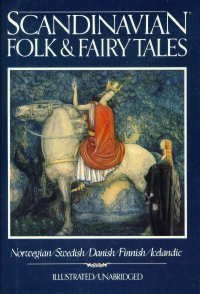
Christine: When I was in grade four, our teacher Miss Yule possessed the most beautiful illustrated story book I’d ever seen. It was a large, full colour book called Best Scandinavian Fairy Tales. Every couple of days she would read from our current story and hold up the divine full-page illustrations. Once a week, a child was allowed the very special privilege of taking the precious book home overnight to read. It seemed an interminable wait until it was my turn. I could barely breathe for excitement that evening while I turned the pages and read as much as I could. Later, I read surreptitiously by torchlight, carefully turning the pages under the sheet. It broke my heart when at the end of the term, Miss Yule left our class to get married, taking her beautiful story book with her and depriving me of a second overnight read. I’ve never forgotten that book.
And never forgiven Miss Yule, no doubt. Or those conventions that made marriage and teaching incompatible! Are there any secrets hidden in your writing?
There are no secrets as such, but there are always guns on the wall. Small moments that may not mean much at the time of writing, but must inevitably have a purpose. I have a scene in No Small Shame, aboard ship, where Mary is forced to have her hair cut off due to a plague of nits. The scene shows the conflict with her mother, but Mary’s hair also comes to have a deep symbolism throughout the novel. When I first wrote the scene, it was more to show shipboard life and I was concerned in the early drafts if it was earning its place. But as the novel progressed, Mary’s hair became a metaphor that echoes right to the final scene.
Guns on the wall! Eek! What’s the best response you’ve ever had to your writing?
Just before No Small Shamewas officially released, a writer friend emailed me from the bookshop carpark after getting caught up reading it. She emailed again, a day later, half-way through, to say how much she was loving it, and that I’d painted such a picture with words and drawn the characters so well that she felt she knew them. The next day she contacted me to say that she’d cried through the final five chapters, loved the book, and how could we get it made into a movie. It’s an author’s dream to have a reader connect so emotionally to your story and to have it come alive in their mind.
That’s wonderful feedback. Do you write full time?
I write virtually full time. My children have all grown up and left home, and I’m most fortunate to have the financial support of a partner. Royalties from my many children’s short fiction titles, together with my annual PLR and ELR payments* help financially too, even all these years after the titles were published. I work in our business part-time too, but the majority of days I can be found at my writing desk.
*Note: public and electronic lending rights, from when books are borrowed from libraries. Note 2: Support authors! Borrow books from libraries!
Excellent! Is it easy for you to meet other writers?
I’ve had lots of opportunities to meet many fellow writers through writing groups, events, conferences, masterclasses and workshops. I’ve also completed two tertiary qualifications, including a Master of Creative Writing, where I met writers who’ve become good friends. I also served as the Assistant Co-ordinator for the Society of Children’s Book Writers and Illustrators Vic (SCBWI) for five years where I made a lot of friends and connections in the kid-lit community. I’ve connected with lots of writers through Facebook and Twitter. My social media is predominantly all about writing, publishing, books, and related topics, and I’ve always found the online writing community incredibly supportive and friendly.
I agree, the #WritingCommunity is great. Where do you write?
My office looks over our rather lovely, tranquil back garden where I can hear the birds, see them playing in the bird bath, and watch the change of seasons. A couple of years ago, after a spinal surgery, I purchased an electric standing desk and combined with another long desk, it forms a fabulous L-shaped workspace. One full wall is floor-to-ceiling white bookshelves, and, adding a red filing cabinet and splashes of red on the bookshelves and desk, I have a bit of a colour theme going. The wall opposite features a huge framed map of the Somme, the setting of my current work-in-progress; plus a large original illustration from my children’s book, Snozza; a messy corkboard of memorabilia and treasured mementoes; as well as various artefacts related to my current work . It’s a lovely space that I had such fun decorating to truly inspire and reflect what I’m writing.
Do you have launch parties for your books?
I never had a launch party for my children’s books, so I was very excited to plan an instore event at Readings Hawthorn to release No Small Shame. It was rather a large shame that the event was cancelled due to Covid-19, but I quickly became aware of the possibility of launching the book online, via Facebook. I was still very keen for acclaimed author and writing buddy Alison Goodman to launch the book. This was a little problematic since we were to be in separate houses due to this time of isolation. We decided that a pre-recorded launch was probably the only way to go. I really wanted a live, spontaneous component though. But even as I advertised it, I wondered if the live stream would work. Short story, with a little tech advice and after a practice mock event, it worked very well and No Small Shame was launched on the 2nd April. I was really thrilled that I was able to see so many friends, family and fellows present in the event comments, questions and congratulations. For anyone who’d like to view the launch, I’ll include the Youtube links: Book launch https://youtu.be/LHXC4OJvKTI. Live stream https://youtu.be/c4sJ9vamIzI.
Ooh, and readers can have a little look at your writing office on the YouTube link! Thanks, Christine; I’m very much looking forward to reading No Small Shame, and to your next book, which is also set around the time of the First World War.
I first met Meg Mundell during last summer’s Australian bushfire crisis – a virtual meeting as we looked around at the devastation of the land, livelihoods, homes, habitat and wildlife, and the deaths. We engaged in a group called Writing for the Environment. Now I’m speaking with Meg again, in the early stages of another unprecedented, life-changing event, this one the global Covid19 pandemic, now so close to everyone’s home.
Author Meg Mundell (Joanne Manariti Photography)
Meg Mundell is a writer and academic. Born and raised in New Zealand, she lives in Melbourne with her partner and young son. Her second novel, The Trespassers was named Readings ‘Fiction Book of the Month’ for July 2019, and has been optioned for a TV series. Her first novel is the critically acclaimed Black Glass (2011), and Things I Did for Money (2013) is her debut short story collection.
Meg also runs the project ‘We Are Here’, using creative writing to explore understandings of place with people who have experienced homelessness (www.homelesswriting.org). She’s the editor of We Are Here: Stories of Home, Place & Belonging (Affirm Press, Nov 2019), a world-first collection of writings by people who have known homelessness.
A fascinating guest!
Welcome to Last Word of the Week, Meg. Can you tell me why writing is important to you?
MEG: Writing helps me to make sense of the world – the whole strange, confusing, wondrous and mysterious mess of existence. I also enjoy the craft of knocking out words, with all its frustrations and small satisfactions: the feeling of making something. Putting letters on the page, wrangling with a line, breathing life into a character, hacking out a parallel universe using the beautiful tool of language…it makes me feel alive.
How wonderful – great writing images there. Can you tell me about the time you decided you are a writer?
It wasn’t a conscious decision, more something I just knew from very early on. There’s one vivid memory. When I was a preschooler my parents would sometimes take me to work with them, and at my dad’s workplace there was this room full of typewriters. I’d sit there for ages banging out misspelled words, just enjoying the sight of the letters slamming onto the page. One day my dad’s workmate poked his head in. “You’re very busy,” he said. “Are you going to be a secretary when you grow up?” I remember the question annoyed me. “No,” I said. “I’m going to be a writer.”
A secretary, LOL. How much research is involved in your writing?
A lot! I love research. But it’s easy to get sucked down wormholes. Sooner or later you have to stop researching, just dive in and write the damn thing. Working on my latest novel, The Trespassers (UQP 2019), I spent hours researching sailor’s tattoos, sea monster myths, marine pollution, Irish and Scottish slang, future fuel scenarios, pandemic containment strategies, bioterrorism, the psychology of germophobia… My browser history looked so dodgy: how long does a body take to rot at sea? What drug stops hallucinations? How do you kill someone with a crowbar?
Early on in the research process, I also visited the Point Nepean Quarantine Station, on the Mornington Peninsula in Victoria. It’s an amazing site – beautiful, idyllic, but with this undercurrent of trauma, grief and sadness. Echoes of all the suffering this place has seen, especially in the immediate aftermath of its creation back in 1852. Visiting that site was a key moment that inspired me to write the novel.
Port Nepean Quarantine Station (Meg Mundell)
Perfect preparation for the world we live in, too. I love your search history. What five words would best describe your style?
Great words. What’s the scariest thing you’ve ever done?
Crewed a boat from New Zealand to Australia in my 20s, with zero sailing experience and a sleazy cowboy of a captain who refused to let us wear life jackets. Two friends invited me along. For the whole nine days I was seasick, and so heavily dosed up on Scopolamine that I started hallucinating: I heard mermaids singing and had long conversations with flying fish.
Each of us did an 8-hour watch, steering over these huge ocean swells, 8 or 9 metres high at times, with only a thin wire clip-line connecting us to the boat. Out on the open sea, you’re nothing. Steering up and down those waves, trying to keep the boat upright, was the scariest thing I’ve ever done. Sheer terror, but hugely exhilarating. That trip planted the first seeds of The Trespassers.
The Trespassers by Meg Mundell
That sounds absolutely terrifying, but what a fantastic basis for a story. Congratulations on the TV option for The Trespassers, too. A thrilling achievement What’s your writing goal for the next twelve months?
Figure out a plan for my next book – non-fiction, I think. Publish some academic articles, a couple of essays, maybe some long-form journalism. And like always, write some dubious poetry nobody will ever lay eyes on.
It’s great that you have something just for you. I believe writers have private voices too. What do you think about covers, and do you have any say in yours?
Covers matter a lot to me: my brain really latches on to images. So far I’ve been extremely lucky to have been allowed a lot of input on this front. I love the cover we ended up with for The Trespassers: that jellyfish is so eerily gorgeous, almost otherworldly. Menacing, but delicate too. It suggests so much.
Yes, it’s absolutely perfect. Where do you get inspiration or ideas from?
Places: their different moods and atmospheres, the things they’ve witnessed. Human beings: their words and actions, their hidden selves, the things they come up against and how they cope. Love and compassion: the way they’re thrown into stark relief during dark times. Injustice: things that make me angry. Dreams, memories, poems, photographs, paintings. Exploring old abandoned buildings. Glimpsing other lives through a train window. Words and phrases, mysterious patterns. A certain slant of light, a strange doorway, a word carved into a tree. A funny incident. It all goes into a big compost heap in my brain. It’s a mess in there, but there’s always material if you dig around.
That’s a beautiful piece of writing in itself – a prose poem about inspiration. Thank you! Do you write in more than one genre?
Always. In my fiction I like to plunder elements from different genres – literary fiction, thriller, crime, spec fic, even historical fiction. I tend to resist rigid categories, and enjoy playing with genre conventions – using those tools to create something slightly off-kilter, something fresh and hopefully surprising.
And succeeding. Thank you so much for speaking with me today, Meg, and more power to your pen.
Camilla Downs is a writer, a poet, and nature lover on a journey full of new learning. Camilla has fresh eyes, an open heart, and a thirst for discovery , and she shares all this through her writing. A single mother of two amazing children, she and her kids are into their fourth year of living-in-a-tiny-home adventure. Camilla recently published her 4th book, Words of Alchemy. In speaking with Camilla, I sense that she finds writing both a gift to others and a source of peace for herself. What a great find in these days of uncertainty.
Welcome, Camilla, and thanks for speaking with me on Last Word of the Week. Why is writing important to you?
Writing has been a sanity saving bridge, in processing life experiences, in being a single parent, in being a parent to a special needs child, in making decisions. Writing has been my way of sharing what I’m experiencing, getting it out of my head, being comforted, assured, cheered on, and, at times, receiving direction.
Author Camilla Downs and family
It’s definitely a two-way street. What’s the best response you’ve ever had to your writing?
The best response is a compilation of the responses in which others share how my writings have inspired or helped them in some way. There’s nothing better than receiving a message or review that lets me know that my writing was useful to someone.
What five words would best describe your style?
Wild, unfiltered, from the heart.
Delightful! Do you write for yourself or for a particular audience?
To date, I have always written for myself. Writing is how I process and experience life. The feedback received when sharing what I write is what encouraged me to pursue publishing the content.
What’s the scariest thing you’ve ever done?
Making the decision fourteen years ago to leave my marriage, becoming a single parent to two children; 1 year old and 5 years old at the time. I had no idea how I would manage, how I would survive. They are 14 years old and 18 years old now. It is through sheer grit, determination, letting go of the fear of asking for help, and not feeling shame for accepting and receiving help, that we’ve made it successfully to this point.
What a huge moment that must have been. What’s your favourite genre to read?
I have made shifts throughout my reading years. As a child and teenager I was all about fiction and horror. As an adult I shifted to mysteries, reading every book Agatha Christie had written, ending with her autobiography. Then I shifted to only business books, autobiographies and biographies of successful people. Reading then shifted to non-fiction books in the self-help, mind, body, spirituality type books. With the latest shift being opening back up to the fiction genre, along with memoirs and books about writing.
That’s pretty comprehensive, indeed. Where do you get inspiration or ideas from?
My latest book, Words of Alchemy, was largely inspired by Nature, and the many walks I took during the time it was written.
Words of Alchemy by Camilla Downs
Is it easy for readers to find your book/s?
Yes, I believe so. My books can be found on my website or on Amazon.
If you could write a note to someone about to read your book, what would
you say?
This is such an interesting thought and question. When readers buy a book directly from me, I actually do include a personalized note when signing the book, in addition to a creative message hidden within the book. I have incredible fun doing this!
I would say, “May the perfect words within this book, touch your heart, at the perfect moment. Love, Camilla”
That’s lovely. Do you write in more than one genre?
My first book is a memoir of my journey to acceptance of myself, and acceptance of becoming a single parent to two children, one with special needs, one a genius (who is most likely on the spectrum).
The second book, for which I am simply a contributor, is my daughter’s book. I collected her writings, organized them, wrote the introduction, edited, proofed, and published the book. Her book was intentionally not professionally edited so as to share her unique view with the reading world. A photo I took of her was used for the cover of the book. It is in the fiction genre as it is a collection of her short stories and poetry from 5 years old to 15 years old.
The third book, I am also simply a contributor, as it is a photography book of photos my then 8 year old son took. I organized the book, wrote the introduction, and he and I chose quotes to pair with the sections of the book.
My latest book to publish is a poetry memoir of the last 6 years of my life.
What an amazing collection! Truly inspirational, Camilla.
Thank you once again, Clare, for having me be a part of your wonderful blog! All the best to you.
My pleasure! Here’s more about Camilla’s latest book of nature-inspired poems:
The poetry of nature, the poetry of healing, the poetry of appreciation, the poetry of love … in one beautiful book.
In Words of Alchemy, Camilla Downs invites you to walk with her to share her love of Nature and Life through a heartfelt free-verse poetry memoir.
During her daily strolls she is mindfully present as she delves into life in the raw and experiences her heart’s observations.
Camilla embraces what happens when she opens her heart and invites the written words to flow. The Alchemy of Love and Healing is what happens.
Praise for Words of Alchemy
“Words of Alchemy, a heartfelt new collection by Camilla Downs, lives up to its namesake in numerous ways. Downs spans the broad range of nature, healing, love, and parenting, while making sure we have a little fun along the way. And the bridge she creates from the mindfulness of how we see the world at large to the poetry of everyday life is certainly worth a stroll or two across its borders.” – Thomas Lloyd Qualls, Award-winning author of Painted Oxen
“This poetry collection offers contemplative words, soothing thoughts and peace to the reader.” – Sue Bentley, Bestselling author of Second Skin
“Camilla Downs shares truth, vulnerability and wisdom in her Words of Alchemy collection, inviting readers to be inspired, contemplate and dive into her world of self-awareness and growth.” – G. Brian Benson – Award-winning author, actor and spoken word artist
“These poems take you on a calm and loving walk through the verses of the author’s thoughts. Alchemy is a perfect word for the title as Camilla Downs understands nature; connecting with its magical, medicinal qualities and beauty which she conveys throughout her poetry.” – Ailsa Craig, Author of The Sand Between My Toes
“Words of Alchemy is a chronicle of hope. These poems are an encouragement, especially when we are feeling at our lowest, to keep seeking the light that is our way forward, and focus on the real. This collection is a walk through the positive nature of life. Camilla Downs is to be commended.” – Frank Prem, Author of free-verse memoir Small Town Kid
About Camilla:
Camilla Downs is a bestselling author, indie publisher, mentor, and mom. Nature and life experiences are a constant source of inspiration for her writing. She enjoys living a minimalist lifestyle, practicing meditation and mindfulness, reading, going for walks, and capturing nature’s essence with photographs. Camilla is the founder of MeetingtheAuthors.com and lives in Northern Nevada with her two kids.
Elizabeth Ducie is a full-time writer from Devon. Although she wrote prize-winning fiction at school, she went on to study science and have a career as a manufacturing consultant, technical writer and small business owner, publishing pharmaceutical text books and editing a technical journal during that time.
Her debut novel, Gorgito’s Ice Rink, was published in 2014, and she then wrote a series of thrillers set in the sometimes murky world of international pharmaceuticals: Counterfeit!(2016), Deception!(2017) and Corruption! (2018).
Elizabeth also writes and lectures on The Business of Writing, teaching business skills for writers running their own small business, and has published a set of books under that name.
Elizabeth Ducie, writer
Welcome, Elizabeth. You have a fascinating background for a novelist. Are there any secrets hidden in your writing?
Elizabeth: When I wrote Counterfeit!, my sister Sheila challenged me to bring some of the characters from my previous novel into the story. And there are occasionally references to real incidents from my travelling days, although usually heavily fictionalised.
Your secrets are safe with me! How do you feel about reviews?
There are many beliefs about the impact reviews have on the algorithms of Amazon and other platforms, but I’m not convinced. There are too many exceptions out there to allow me to believe in a magic number, a threshold above which exciting things start to happen.
But, as a way of hearing what readers think, they are invaluable. I only wish more people would consider posting them. Even a negative review is better than dead silence.
Yes, the silent echo chamber is unnerving. Is there anyone in your past who’d be surprised at your writing?
There was a biology teacher who took me to one side at the start of the upper fifth year (equivalent to year 11) and told me there were girls in the year who were going to do well, but I wasn’t one of them, so I wasn’t to get my hopes up! It still rankles, more than fifty years on. I would love to send her a signed copy of each of my books to make her eat her words.
Yikes! Oh, I hope that was her way of motivating you and not her true opinion! How much research is involved in your writing?
So far, most of my fiction has been set in places I used to work (Former Soviet Union countries, Latin America, Africa) so a lot of the research was done on the hoof. However, my novels tend to have historical flashbacks, for which I do quite a bit of research. But only when I’m editing. I don’t let lack of knowledge interrupt the flow during the first draft.
Gorgito’s ice rink by Elizabeth Ducie
Ironically, my latest book is set in South Devon where I’ve lived for the past thirteen years. I’m doing far more research for that than any of the internationally-based ones.
That’s ironic, but good to know. What do you think about covers, and do you have any say in yours?
Covers are critical, especially for fiction, where they are a major signpost to the reader on what they can expect from the book. I am independently-published and therefore have absolute say over my covers. When I’m teaching, I always empasise that an indie book should be indistinguishable from a traditionally-published one in terms of appearance and quality of the finished product. This means having a professionally-designed cover. I use Berni Stevens for all my novels. I developed my own covers for The Business of Writing, but I used a Canvatemplate, which still means the original design is professionally produced.
I completely agree about covers – I believe most readers DO judge a book by its cover. I’m interested in your books aimed at writers, too. Is it easy for you to meet other writers?
They say that writing is a solitary occupation, but I find it’s all too easy to meet other writers. There’s a huge writing community here in the South West of England, plus there are any number of online groups.
I am a member of two great writing groups: Chudleigh Writers’ Circle and Exeter Writers. They are very different in approach and I find my membership of each one invaluable. Plus I still meet up with a small group of writers from the MA we completed in 2012. I have a writing buddy with whom I work on each novel at the developmental editing stage. And this year, I’m Director of the Exeter Literary Festival. And that’s before I even think about Facebook, Twitter and Instagram, all of which are stuffed full of writers.
To be honest, it’s tempting to spend far more time ‘networking’ with other writers than I do writing. But it’s all great fun; and that’s one of the reasons I gave up the day job to write ‘full-time’.
Director of Exeter Lit Festival, congratulations! Do you have launch parties for your books?
Always. I have an event in our local parish church, the largest space in our small town, with readings, music, cake and fizz. I usually sell quite a few copies on the night, but it’s also about celebrating with my friends and family.
I’ve also been holding online launch parties since 2011. Over the years, I’ve experimented with different formats; and sometimes I don’t have one at all. Lessons I learned along the way included: don’t try running a party for 12 hours; and don’t try running an online party on the same day as the main party. Both occasions were exhausting!
But they do sound like fun. You have an MA, I see. Do you think that creative writing courses are valuable?
It depends on the individual, their experience and their ambitions, but I’m not convinced creative writing is an academic subject. So I’m slightly skeptical about formal university courses, even though I completed one myself. I do, however, think it’s important to attend classes, webinars, conferences, anything that helps train us in our craft, keep us fresh, and build inspiration. I attend the Writers’ Summer School at Swanwick every August; I go to occasional classes or workshops such as those run by Literature Works in Exeter; and I am a real sucker for a free webinar or online conference. The ones run by ALLi (Alliance of Independent Authors) are particularly good.
The Business of Writing by Elizabeth Ducie
Great to know. I love the way you approach writing as a craft that can always be honed. Lovely! Thank you for talking with me in this episode of Last Word of the Week.
You can find Elizabeth’s novels and her Business of Writing books here