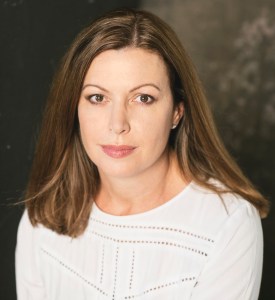
Isobel Blackthorn writes for life

A Prison in the Sun by Isobel Blackthorn

Isobel Blackthorn is an award-winning author of unique and engaging fiction. She writes dark psychological thrillers, mysteries, and contemporary and literary fiction. On the dark side are Twerk, The Cabin Sessions and The Legacy of Old Gran Parks. Her Canary Islands collection begins with The Drago Tree and includes A Matter of Latitude, Clarissa’s Warning, and A Prison in the Sun. Isobel’s interest in the occult is explored in The Unlikely Occultist: A biographical novel of Alice A. Bailey and the dark mystery A Perfect Square. Even her first novel,  Nine Months of Summer, contains a touch of the magical. Isobel is at work on her fifth Canary Islands’ novel, and has just published Voltaire’s Garden, which is both a tribute to and memoir of Cobargo, a small town in New South Wales recently devastated by the Australian New Year Bushfires.

Welcome, Isobel. What an impressive list of publications, which I am reading my way through (as you know, I love Clarissa’s Warning). It looks like you write in more than one genre?

I write mysteries, psychological thrillers, historical fiction, contemporary fiction and biographical fiction.

So impressive. Do you write full time?

I do. Short answer! Writing full time involves all the associated admin and promo of course. There is an awful lot of that. It is a very solitary existence, very absorbing. I am happiest when I am immersed in composing fiction with characters I am fond of, characters who make me laugh.

Yes, I think the admin takes longer than the writing – well, almost! You’re writing as a professional, then. Do you think that creative writing courses are valuable?

This is a difficult question. Initially, I was warned away. But then again, said gainsayer mentored me for six months and showed me numerous tricks of the trade. So I did receive ample training. Also, I am a natural self-learner. I enjoy distance education. After the mentoring, I taught myself to be the writer I am by studying the works of contemporary literary fiction giants, particularly the Europeans. I chose these works as I didn’t want to risk picking up bad habits and back then, I really had no idea who I could trust, other than my beloved Iain Banks, who I also learned a lot from. Also, I love literary fiction. It has become undervalued as elitist when really, the genre that is not a genre is simply different and requires a different attitude, a different state of mind.

In my quest to turn myself into the best writer I could possibly be I regarded my selection of fictional works as text books. I filled a notebook with turns of phrase, examples of syntax, that sort of thing. I studied the architecture of a novel. I studied opening paragraphs. I pored over descriptions of characters. I worked out how to write effective dialogue.

Years later I enrolled in a free, ten-week online writing course offered by the Open University, UK. I wanted to see how they approached the delivery in terms of content and style in preparation for a ten-week writing class I was giving. The OU course was great fun and well thought through and I got to see how things were done. I still think my self-learning method is best but only because it worked for me.

You’ve devoted yourself to your craft. Why is writing important to you?

Writing is my life, both fiction and non-fiction. I communicate. I suppose I also teach. My mind bursts with thoughts, runaway ideas. I get hot under the collar about a lot of issues and writing gives me a means of expression and a platform. For me, writing, including creative writing, serves a higher purpose, at least it does when we produce works of some depth and substance, works of moral value, and not simply writing for entertainment and wish-fulfilment alone. Writing encourages reading, we hope, and reading expands the mind, we hope. Writing is for me an occupation, a distraction, a partial escape, a way of steadying my mind and forging through hard times. We live in hard times, don’t we. Anyone with any sensitivity can see that.

The first book I wrote was a memoir. Back in 2007, I started writing the story of my sustainable lifestyle project involving the building of a house with B&B and the creation of a large garden on a fifteen-acre cattle paddock on the edge of Cobargo in one of the prettiest places on earth, a place safe from the ravages of climate change, or so I thought.

The memoir was almost published and then I shelved it when my marriage failed and I moved to Melbourne.

Then, last New Year’s Eve, the unthinkable happened and I was thrust back into my old home town through the devastating bushfire. My emotions were ragged. My family had lived in the community for over forty years. We knew all the people who died. I used to sort mail at the post office and so I knew everyone by name. It was trauma at a distance and I was ragged.

Voltaire's Garden by Isobel Blackthorn
Voltaire’s Garden by Isobel Blackthorn

In the end, it occurred to me that the best thing I could do with how I felt was to resurrect that old memoir. It would be a tribute to a very special location. Finding the manuscript in pretty good shape, I polished it up and wrote an epilogue which gave the memoir the meaning I knew it needed. It is called Voltaire’s Garden, and is in many ways an homage to philosopher Voltaire, who established his own sustainable lifestyle in exile in the late 1700s.


That one’s a very personal story. How much research is involved in your writing?

Research forms a large component of any story. From fleshing out original ideas to embellishing the details and informing plots and characters, research is key. I research setting – environment, history, culture, society – key events and histories. I research geography, climate, weather, food, customs, all kinds of things. I am forever looking something up. Thank goodness for the Internet. I think in the past I would have needed to pitch a tent in a large reference library as I doubt I would ever have left the building.

Book 4 in my Canary Islands collection, A Prison in the Sun, had me researching newspaper reports, blog posts and a couple of doctoral theses all in Spanish. The novel concerns a little-known concentration camp for gay men that ran for twelve years in the 1950s and 60s under General Franco. I had known of the camp since the late 1980s when I lived on the islands. Back then, the story was repressed. An academic broke the story in the noughties, but only in Spanish.

Rather than set an entire novel in a labour camp, I embedded the story in a mystery featuring a millennial ghost writer grappling with his sexuality, setting up an important juxtaposition between then and now, and throwing in some mystery elements – a rucksack full of cash, a dead body – for intrigue.

I love the way you layer your stories. What’s your writing goal for the next twelve months?

I have Book 5 of my Canary Islands collection to write. I’m currently at the research stage, and actually on the islands! And I hope to finish my family history novel this year. The project stalled two-thirds in due to frustrations with the genealogy. I decided to press pause while I paid a tidy sum to a professional genealogist to see what else could be discovered. I’m still waiting for the results.

Can we get your books as audio books?

You most certainly can. The Cabin Sessions, A Matter of Latitude and Clarissa’s Warning are all available in audiobook format. A Prison in the Sun will be in audio soon too.

Where do you get inspiration or ideas from?

Ideas come to me. They land in my mind like pebbles plopping in a pond. If I don’t have the inspiration, there is no book project. Sometimes I brainstorm ideas, and to do that I need a sounding board, someone to listen as I talk things through, pacing the floor. I came up with my latest book project this way. The ideas arose little by little, like lots of small pebbles rather than one big splash. I needed to brainstorm as I felt I needed a Book 5 for my Canary Islands collection.

Is it easy for readers to find your books?

Readers need to find my books online. I am published overseas by a terrific independent publisher with a strong online focus.

Do you send out newsletters to readers?

I do. I have a pop-up sign-up form on my website and most subscribers find me that way.

That’s great. Thanks so much for speaking with me today, Isobel. Keep those stories coming!


Isobel’s Links


Trevor Wood introduces The Man on the Street

The Man on the Street by Trevor Wood

Although Trevor Wood has lived in Newcastle for twenty-five years and considers himself an adopted Geordie, he still can’t speak the language. A successful playwright who has also worked as a journalist and spin-doctor for the City Council, Trevor served in the Royal Navy for sixteen years joining, presciently,  as a Writer. Trevor has an MA in Creative Writing (Crime Fiction) from the University of East Anglia.

Trevor’s widely-praised first novel, The Man on the Street, is set in Newcastle, and will delight readers of mystery thrillers – if you like Val McDermid and Ian Rankin, Trevor’s Jimmy Mullen series could be your next addiction.

Let’s discover a bit more about the writer behind Jimmy.

LWOTW: Welcome, Trevor, and thanks for talking to me on last Word of the Week. What was the first book you read for yourself?

TREVOR: Like most people my age I blame Enid Blyton for everything. The Secret Seven, Famous Five and the ‘Adventure’ series were undoubtedly my gateway drugs to a lifelong love of crime fiction. It’s no coincidence that my debut crime novel The Man on the Street features a dog. He’s a direct descendant of Timmy.

Author Trevor Wood
Author Trevor Wood

Once I’d put on my big boy pants it was difficult to know where to go next for something to read – YA fiction was barely a thing back in the day. The solution came to me on a terribly dull barge holiday on the Norfolk Broads with my cousin and his family. These days I’d love that kind of holiday – a glorified pub crawl on a boat being my kind of thing – but for a 14-year-old boy it was stupefyingly boring. The solution was galloping through the shelf full of books on the barge – all written by Agatha Christie. From that moment on it was crime all the way and it’s all due to Enid and Agatha (and maybe Scooby Doo).

Enid and Agatha provide a perfect pedigree, but I see you also have an MA in Creative Writing. Do you think that creative writing courses are valuable?

I have nothing but praise for the creative writing courses I’ve done and am certain that without them I wouldn’t now be a published author. I tried a couple of short, local courses in Newcastle first. From the first I ended up joining a small group of writers who meet up every three weeks to offer each other constructive criticism on our latest work in progress. It’s been an invaluable part of my process. My second course provided me with a great friend who also happened to be a retired senior cop, who is now not only a drinking partner but a sounding board for some of my more fanciful ideas regarding the police.

It was the third, however, that provided the major impetus to my writing career, such as it is. I was one of the guinea pigs on UEA’s inaugural Crime Writing MA, a two-year, part-time course with an end point of producing an 80,000 word crime novel. With visiting writers including Lee Child, Ian Rankin, Mark Billingham and Denise Mina, and ten other thoroughly-committed budding crime writers offering regular feedback on every 10,000 words produced, it was a total joy from start to finish. Not only did it make me a far better writer, it opened so many doors, with visits from agents, editors and several experts in their fields from pathologists to crime scene boffins, the whole thing was an inspiration. Out of the eleven students, five now have publishing deals and three more have agents with books in the pipeline.

If your ambition is to be a published crime writer then I urge you to SIGN UP NOW (I’m not on commission but maybe I should be?)

Yes, you should be! That sounds like a fabulous course.  Personal question now: are there any secrets hidden in your writing?

It’s not a secret really but a small in-joke for my own amusement that no-one has ever mentioned so this is basically a WORLD-WIDE EXCLUSIVE.  The main character in The Man on the Street, Jimmy, is a homeless veteran who is suffering from PTSD. He is particularly haunted by fire as a result of his experiences in the Falklands War. I have a cop in my book too, who may or may not be on Jimmy’s side, no plot spoilers here. The cop’s name is DS Burns. I did say it was a small in-joke.

But a world-wide exclusive small in-joke! LOL! Now, how do you feel about reviews?

Undoubtedly the best response I’ve had to The Man on the Street was from the ultra-talented writer Dominic Nolan, who I’m certain will soon be catapulted on to the A-list with his brilliant new book After Dark. All praise is, of course, deeply gratifying but when it comes from a master of his, and your own, craft it’s doubly so. I’ll leave this here:

Trevor has assembled a fine array of characters—each playing their part in the main narrative whilst remaining the heart of their own stories, and never once are they condescended to. The plotting is so deft—weaving the larger tapestry of social inequality and the wretchedly skewed priorities of collapsing instruments of state services with the more intimate darkness of personal crimes. It is the kind of thriller our times need and deserve.

Dominic Wood on The Man on the Street

cover

Of course, there will always be those who don’t like your work. I really don’t mind less-than glowing reviews as long as they are constructive and often find myself agreeing with some of the criticism. If you’re going to be a writer you really have to learn to take criticism because believe me you’re going to get it. It starts from the moment you begin submitting to agents and then, if you survive that ordeal, editors come next – and it never really stops. It’s a brutal rite of passage and you need to be resilient to get through it. That doesn’t mean you have to agree with everything that’s said about your work, far from it. But it does mean you have to be able to examine your work carefully and critically. I have a rule that if two people say the same thing then I need to have a good look at it but sometimes you have to go with your gut and stay strong if you’re convinced you’re right.  There will always be people who hate your work. Note it and move on quickly. I’ve co-written around a dozen plays and my favourite bad review was “the writers set the bar really low yet still manage to limbo dance under it.”  Which you have to admit is a funny line even when you’re the victim of it.

Oh dear, yes, that made me laugh out loud! Do you imagine specific actors playing your characters – which is possibly inevitable for a playwright?

I was very lucky with the audio version of The Man on the Street. As I’ve mentioned above, I’ve co-written several plays (and consequently worked with a lot of great actors.) My publishers sent me a link to listen to when they thought they’d found the right actor to take the job on and I didn’t even need to open it. It was the outstanding David Nellist, who had starred in one of my co-written plays Alf Ramsey Knew My Grandfather but is perhaps better known for playing Mike Stamford, the character who introduces John Watson to Sherlock Holmes in the re-boot of the TV series. As always, Dave has done a fantastic job with the book, bringing a real authenticity to the characters.

That’s wonderful. And is there more Jimmy Mullen to come?

Yes there is! A second book is well underway, and there might be bigger things in store for Jimmy.

That’s so exciting! Thanks for sharing with me today, Trevor, and all the best to you and Jimmy.

You can find Trevor on Facebook at

https://www.facebook.com/Trevor-Wood-Author-104885950924368/

and he tweets too: @TrevorWoodWrite

*******

The Man on the Street

When Jimmy, a homeless veteran grappling with PTSD, witnesses a murder, no-one believes him.

Even he hopes it’s another hallucination.

Then a newspaper headline catches his eye: GIRL IN MISSING DAD PLEA.

It’s time for Jimmy to stop hiding from the world. But telling the girl, Carrie, what he saw puts him at risk from enemies, both old and new

Jimmy has one big advantage though; when you’ve got nothing, you’ve got nothing to lose.

Bringing history to life with Caroline Warfield

Discovering Diamonds (independent reviews of historical fiction) first led me to award winning author Caroline Warfield, because her book Christmas Hope seemed a perfect match for my own The Stars in the Night. (Put them together for a perfect present!) Caroline excels at family-centred romance set in the Regency and Victorian eras.

Caroline has been many things: traveller, librarian, poet, raiser of children, bird watcher, Internet and Web services manager, conference speaker, indexer, tech writer, genealogist—even a nun.

She reckons she is on at least her third act, happily working in an office surrounded by windows where she lets her characters lead her to adventures in England and the far-flung corners of the British Empire. She nudges them to explore the riskiest territory of all, the human heart.

Welcome, Caroline, and thank you for speaking with me on Last Word of the Week. Can you tell us about the first book you read for yourself—or bought for yourself?

Caroline: All writers are avid readers—we have to be. I don’t remember not reading so this question is hard. A more vivid memory isn’t so much the first book I bought for myself but the moment I liberated myself from the children’s section of the public library. The door to that building was in the center, and for years I turned to the right to the children’s section when I came in. One day at twelve I turned left instead of right.  No one stopped me—it was a heady and powerful feeling. The book I took out that day was Jane Eyre.

How wonderfully liberating. What words of advice would you give an aspiring author?

The best advice I ever got was simple. If you want to be a writer, you have to write. Just sit down and do it. What is more to the point, keep doing it every day. Don’t diddle, talk, or dream about it. Do it.

Carol Roddy

Do it. Of course! Is writers block a thing for you?

Yes, although it is usually less dramatic than a complete block. I will cruise along writing 1-2000 words a day on a book, hit a speed bump and come to a screeching halt. Some of it is that I can’t envision the next steps of the plot, but I’m learning that the underlying issue is usually that I’ve failed to get well enough acquainted with the characters—their personality, life, wounds, scars, underlying goals…that sort of thing.  Once I know them well, and I’ve put them in a situation, the writing flows. When I hit a wall, it is time to go back to character charts and backstory for a while.

Character charts – why didn’t I think of that?! What’s the best response you’ve ever had to your writing?

My favourite praise is “I was up all night finishing your book.” SIGH


That is high praise indeed. Lovely! Your focus is on historical novels – how much research is involved in your writing?

Heaps—especially when I allow some impulse to set characters down in a setting and historical situation about which I know little. The worst was the time I sent a character to India and realized I knew nothing about the East India Company, the country itself or its culture. Research, research, research.

With a fabulous reason to do more of our favourite thing – reading! Do you get feedback about your story, before it’s published?

Always. I drop little excerpts of my WIP to reader groups on Facebook as I write, and I always get it to beta readers before I do one final self-edit before sending it to the publisher.

That sounds like a good feedback system. What’s your writing goal for the next twelve months?

I’m doing something a little different this year. I have two projects in process at once. Because readers like series, and they don’t like long waits between books, I’m holding on to finished manuscripts. But I’m writing two series at once. The first is a new set of books in my British Empire series using sons and daughters of characters in my earlier books. We’re up to about 1840 in that saga. Book one is finished in rough draft. That one, The Price of Glory, takes place primarily in Egypt and Nubia.  The other series is more of a traditional Regency world, it covers two interrelated families around a coaching inn in a village in the English Midlands. The hero of book one in that series is half-brother to both families, the innkeeper’s and the earl’s, who has been called home reluctantly in 1817 after leaving for good (he thought) fifteen years before.  My goal for 2020 is to have the two books in the Empire series and one in the other finished, with two other stories well under way

That’s a big year you have in front of you, but it sounds fascinating. What’s your favourite genre to read?

I read historical books. Mysteries, romance, straight up fiction, non-fiction, biographies—if its historical it will find its way on to my to-be-read pile.

I bet we have a few overlapping favourite authors. Where do you get inspiration or ideas from?

Often, ideas come to me from travel.  I once sat in a café in Rome and asked myself whether I could set a Regency novel in Rome. Turns out I could and Dangerous Secrets has become one of my favourites. I also rely on reading, on my own previous books, and, of course, bits of historical trivia.

Do you plan your books, or do you listen to your muse?

I rely entirely on the girls in the basement. I fill them with settings, history, and characters and they give me back stories. If I do my preliminary work regarding characters and setting, and we agree on some key turning points, the girls and I, it works. Over-planning puts them to sleep.

What a delightful process! Is it easy for you to meet other writers?

Not always but it is vital. Since I moved to the urban wilds of eastern Pennsylvania I no longer belong to a local chapter. Luckily, I have made some excellent friends online. We brainstorm, read each other’s work, and encourage one another. Every year we produce a collection of new stories with interrelated story elements. One year it was a house party overrun with kittens (Holly and Hopeful Hearts). One year it was a Valentine’s Day ball (Valentines from Bath). This year, timed for Valentine’s Day, it is Fire & Frost in which all five stories converge at the 1814 frost fair on the frozen Thames.

How marvellous! I must say, Caroline, I love your work. Thank you so much for sharing today.

You can see Caroline’s wonderful works one her bookshelf at https://www.carolinewarfield.com/bookshelf/

You can find more about the stories in Fire & Frost and links to various retailers here: https://bluestockingbelles.net/belles-joint-projects/fire-frost/

You can find all Caroline’s books here: https://www.carolinewarfield.com/bookshelf/

You can follow progress, find excerpts, and learn about her characters here: https://www.facebook.com/groups/WarfieldFellowTravelers/


Caroline’s other links:

Website

Amazon Page

Good Reads

Facebook

Twitter

Newsletter

BookBub

YouTube


When no one is watching … words arrive

Linathi Makanda is a young South African poet and author whose first book of brilliantly-realised love poetry was published last month. I reviewed When No One is Watching recently, full of enthusiasm for a new voice that so perfectly captures the heart of feeling, from first delight through to lonely despair. I consider that poetry is the perfect vehicle for emotion, and I haven’t felt so close to heartache-in-words since I first read Sappho’s fragments as a teenager.

Linathi Makanda
Author Linathi Makanda

I’m thrilled that Linathi has joined Odyssey Books, the wonderful publishing house that has done so much for me, and I’m very grateful that she has agreed to be first up in 2020’s Last Word of the Week series.

Welcome, Linathi! Can you tell me about the time you decided you are a writer?
Linathi: I started feeling like I was a writer when I started producing work that I felt like was authentically me, when it came naturally to me. I’ve always known that I wanted to write but struggled a lot when it came to finding my voice. So I internally identified as a “writer” when I was ultimately happy with the work I was producing.

When you writing spoke as you, that’s a good measure. What would readers never guess about you?
The fact that I’m very fearful of a lot of things. As an expressive, people often view you as bold. People would be really shocked to know how often I get anxious or nervous, especially when it comes to my writing.

You’re right, your nervousness doesn’t show. Your poetry has a beautiful, confident, authentic voice. Why is writing important to you?
Expression, in general, is important to me. I think it’s important for each generation to show how their forms of expression have evolved from the last. Books, writing and art in general have so much continuity and apart from us wanting to indulge in these crafts and enjoying them, it’s also equally important to make sure that we leave traces of ourselves for the next generations and I guess writing is my contribution to that bigger picture.

What five words would best describe your style?
Relatable – Emotive – Simple – Raw – Captivating / Gripping

I like the way you snuck in an extra word! What do you think about creative writing courses? Are they valuable?
They definitely are, especially for readers and writers of younger ages. As a young writer myself, it has become important to me that young children and writers are given the opportunity to explore themselves in creative spaces. Too often, reading and writing is boxed in in academia. It’s therefore important to show people that writing and reading can and does exist for purposes other than just for academics.

Well said. Is there anyone in your past who’d be surprised at your writing?
Funny thing is, I think everyone I’ve encountered would and is probably surprised about my writing. I’ve never really let people in on the fact that I write. It’s been a strange transition going from people not knowing that I write, to being a published author.

Processed with VSCO with g3 preset

Did you have a big break in writing? What happened?
My big break in writing has definitely been my book deal with Odyssey Books. As a writer, you dream of such things happening but they still seem very out of reach. Being the first South African author at an international publishing house means a lot to me as a writer and as an individual and I’m eternally grateful to my publisher, Michelle Lovi, for that opportunity.

Michelle is very special, and I find her very enabling. Congratulations on being published! What kind of reader would like your book?
I’d like to think my work is quite relatable and accessible to a range of people but more specifically, people who are highly in tune with their emotions, the lovers, the dreamers, the expressive and the people who aren’t scared to face their demons head on.

The lovers and the dreamers – I think I know a few! What would be a dream come true for you?
I’ve had a lot of my dreams come true at the end of 2019. My pictures were published on Vogue Italia and that really meant a lot for me as a self-taught photographer, I also got the book deal etc. But another one of my dreams would definitely be to see my poetry collection, When No One Is Watching, reach greater heights and to possibly venture into writing another book. Every writer definitely would like their bodies of work to gain traction and even though I didn’t necessarily write for recognition, the book itself doing well is something that I would really love to see happen.

Is it easy for readers to find your book/s?
Yes, definitely. When No One Is Watching is currently available on a wide range of platforms, namely Amazon, Barnes & Noble, the Odyssey Books website as well as on Goodreads.

And it comes highly recommended by me! If you could write a note to someone about to read your book, what would you say?
Well, I’ve already snuck a little note in there for my readers (wink), but more than anything, I’d want to say “breathe in and be ready to fully experience all forms of yourself.”

That’s perfect! Thank you so much for speaking with me today, Linathi, and I look forward to seeing more of your work in words and pictures.

Don’t Blame Science Fiction

The apocalypse is here, in the form of more fires, floods, and storms. Meanwhile, belief that democratic processes can find a solution is fading.

In difficult times like these, an outpouring of stories occurs. Witness the millions (literally) of books inspired by, based on, and discussing the Great War. A terrible experience gave birth to a never-ending strand of stories.

Now there is an explosion of science fiction: dystopian, cli-fi, and post-apocalyptic. Think Cormac McCarthy’s The Road, Suzanne Collins’ The Hunger Games, and Scott Westerfeld’s The Uglies, among many other examples. Australian Mark Smith’s fabulous Winter trilogy is right on topic.

Alongside the enthusiasm for such stories, there is a strain of dismissal. Dystopian science fiction is criticised for glorifying hardship, or for giving unrealistically happy endings, or for giving depressingly horrific unhappy endings, and especially for not providing answers. A recent article on the dystopian sub-genre called hopepunk (where continuing to fight for good is an affirmation of humanity) commented that such stories, validating the struggle rather than providing a solution, were simply telling the downtrodden that it’s their place to suffer.

Many of you know that my academic area of interest is Great War literature. War stories, too, have been criticised as glorifying war, revelling in misery, continuing the cultural expectation that life is harder for some than others, and worst – not preventing future war.

I have to ask whether that is the role of war fiction. Isn’t it rather like expecting murder mysteries to solve crimes? Romances to enable real-life happy endings? Fantasies to provide tangible proof of faeries?

I could go on about the role of literature (and I have elsewhere), and I could enter the discussion about the bourgeois nature of fiction (which, after all, is written by the literate for the literate). And I probably will go on a bit more soon. For now, though, let me say:

Don’t blame science fiction for the world’s ills. Science fiction can sound a warning, or point out current issues, or provide role models. Dystopian stories are like the traditional adventurer genre described by the poet Paul Zweig, too*. Such narratives imply action and purpose, and to my mind this is just as valid as feelings of hopelessness. Adventure stories show how to keep living in the face of peril.

This is not a new role for stories. In fact, I would argue that it is one of the original tasks of the storyteller, handed down from the first oral stories and continuing through the earliest written narratives of about 4000 years ago. Ancient stories such as The Odyssey and Gilgamesh reassuringly confirm ‘the possibility that mere [hu]man can survive the storms of the demonic world’ (Zweig 1974, vii); a powerful affirmation for readers in apocalyptic times.

I’ll no doubt write more about this. I see ample opportunities in the difficult future, sadly.

Until next time, read on!

*Paul Zweig (1974) The Adventurer: the fate of adventure in the western world.

The Middle Child Reads

2020 has begun with a great deal of destruction, loss and anxiety for us in Australia. I will write more  about this, but I also need to take it on board – it’s part of me now.

I wish it need not have happened in my time,

And I can still do bits and pieces – like this list of twenty positive actions.

This week, I’m looking over my shoulder, gathering strength for the times ahead.

Last year, 2019, was pivotal for me in many ways:

I could say that 2019 is the year that convinced me that I am writer. So that was quite affirming, as well as a huge relief! Looks like I can sort of do this thing I’ve always longed to do.

Middle Child Reads

Some of you know that I ‘suffer’ from Middle Child Syndrome. I’m not the eldest, or the youngest; I’m not the prettiest, or the most artistic; I’m not the most talented sportsperson, or the most charming bloke. Each one of those titles belongs to one of my six siblings. Three older, three younger. (Search Middle Child Memes – they’re hilarious!)

Your classic middle child, so they say, craves the attention that is lavished on their older and younger sibs. Mid kids are said to be overachievers as they try desperately to be noticed. I could call 2019 the year of overachievement.

But I won’t. I’d rather say that my defining characteristic is that  I’m the reader – reading is my superpower – and now I feel I can confidently say

I’m the writer!

Oooh, that felt good.

Thank you so much for your support and interest in 2019. Next week I’d better get my head properly around 2020.

Crisis Interruptis

I interrupt the regular run of Last Word of the Week with an explanatory story about Australian dystopian fiction and bushfires.

Apologies to anyone looking for my Middle Child post – that’s been rescheduled to next week. The national bushfire emergency is too high a priority.

I wish I’d never written that book

As the climate emergency continues, I’m forced to reflect on my writing. One social media post I saw described a bookshop as moving its post-apocalyptic fiction books to the current affairs section.

I feel the same.

The Chronicles of the Pale started with a dream – or nightmare – in which desperate refugees were shut out of a fenced compound, and those of us inside were prevented from bringing them in to safety. This dream arose from Australia’s harsh treatment of refugees, a policy condemned by the UN. Scott Morrison as the Minister for Immigration at the time introduced Operation Sovereign Borders, and his lack of empathy, his inhumanity, his stubborn conviction that he and only he was right, inspired the cruel characters who rule inside my fictional policosmos, the Pale. Jason the Senior Forecaster and Élin the Regent care only for themselves.

If Australia had been a more compassionate country, I would never have written The Pale. I truly wish that was the case – better a world with care for refugees than a world with one more dystopian novel in it. I wish I had never had to write that book.

ruins pale

And I wish I’d never written the next one

In Book 2, Broad Plain Darkening, it’s the discriminatory practices of the Settlement that come under the most scrutiny. It is no surprise to me, now, to reflect that this novel was written during the bitter gay marriage referendum debate that occupied Australians at the time. I was also extremely distressed by the live export controversy, and got nowhere with my communication to the then Minister for Agriculture Barnaby Joyce. Profit above all, no matter who or what suffers.

I can see my rejection of this every time one of my favourite characters acts in a compassionate way, every time they work against discrimination and cruelty. It’s sad to think that my fictional folk – humans and animals – have more heart than many of my fellow Australians. Brettin, the outrageously upright Lady of the Temple, represents all that distresses me about religion and prejudice. And that’s saying something.

Now that the current Federal Government is pushing through its religious ‘tolerance’ bill, allowing many acts of bigotry to flourish unchecked in the spurious name of religious freedom (ie freedom to discriminate against the LGBTI+ community), I’m sad that Book 2 also had to be written. A better world would never have the need for such a story.

BPD horses

If only I hadn’t written the third book!

And so we get to the climate.

The Chronicles of the Pale 3, The Ruined Land, is about my fictional world falling apart under the feet of all the communities that depend on it. Here’s what happens:

Volcanoes destroy the Shaking Land – and yes I did write that before White Island erupted just off the New Zealand coast.

Unchecked fires rage through the Broken Ranges and send smoke across the entire continent, with displaced and starving ursini (bear creatures) invading Broad Plain because their habitat is gone – yes I did write that before Australia burst into unprecedented flame.

Water floods the land as the temperature rises and the ice caps melt back into the sea … and I wrote that before Australia patted the Pacific islands on the head and told them not to panic. Does any of this sound familiar?

In my story, there is even a child – Jasper Valkirrasson – who does his best, at great personal cost, to warn the crusty old misanthropes at the old Settlement about the coming danger. I wrote Jasper’s courage and his big heart before I had even heard of Greta Thunberg, but if I hadn’t , she would certainly have been my model.

The Ruined Land was written at a time when – again and again – Australia turned its back on environmental reform in the name of money, and held the position that Australia had no desire or mandate to be a world leader in this field. True, our overall effect may be comparatively small, but we are also one of the countries most vulnerable to climate change. We should care more. Many of us do, and we take the small steps we can, because we can’t keep on pretending that how we live has no effect on the planet.

TRL fire

I hope to never write dystopia again

I would like to live in an Australia that was compassionate, ethical, and environmentally responsible. I would like us to spend our money on resettlement of refugees, on bushfire mitigation strategies and equipment, on sensible use of water, on transitioning away from live export, on responsible waste treatment, on public transport, on the preservation of wildlife habitat, and so much more. People will shout about the cost, but our current policies are just as costly in dollars, and much more costly in long-term damage to the Earth and its inhabitants, of all species.

I have to say that unfortunately I’m planning to have The Chronicles of the Pale #4 ready for late 2021.

This post is, and isn’t, about writing. Writing, for me, can’t be divorced from who I am and what I believe. All the same, the books can simply be read as a story. I’m just so sad that so much of it has come true.

Next week, current affairs permitting, I’ll be back to plain old talk about books!


No Rusty Nails? Try a book launch…

‘I’d always imagined attending a book launch would be something you’d only do if an opportunity to stick rusty nails into your cornea wasn’t available,” writes author Katy Colins in her blog #notwedordead

Luckily I read Katy’s fabulous piece about book launches before I prepared my speech for the unveiling of The Ruined Land, and laughed myself out of all my nerves. Book launches can be fun, and I have enjoyed every one that I’ve attended. Talking to booksy people about books? What could be better?!

I’m so grateful when people come to my launches. And kind of surprised. They must have run out of rusty nails…

How long should a launch speech be?

I aim for under four minutes, which for me is maximum 400 words.

Then I add a five minute extract (about 600 words), so under ten minutes in all.

Add 4-5 minutes for the lovely person who introduces me, and the official stuff is wrapped up in under 15 minutes. That’s my aim.

Here’s my latest, at 369 words, in case you’re interested.

1

Launch Speech for The Ruined Land

First up, some words of gratitude.

Thanks so much to Nat for those thoughtful words. I’m very appreciative of the love and support I have from my dear friends. I’m actually very grateful to have worked at UniMelb, because I met some of the world’s best people there.

My friends and family have been endlessly supportive, and I’m so glad many of you can celebrate with me tonight. My publisher, the cover designer, the editor – they’ve all been fab. As has Readings which has now hosted all four of my book launches.

A couple of special mentions – to my niece Kate, who along with Aveline my friend in London, is a fabulous beta reader if anyone wants a recommendation.

And my brother in law Bernard is responsible for the very cool maps which you now find inside all three books of the Chronicles of the Pale. He comes highly recommended too!

So. The book.

Having a book published is definitely a Dream Come True – something I imagined in primary school. But there’s a bit more to the dream than that. The Chronicles began with an actual dream in 2013, a dream of abandoned babies and refugees, people I couldn’t reach to rescue. In the dream, my German shepherd dog Dinny, long since departed, saved the day. The character Mashtuk is based on Dinny

This was back when PM Scott Morrison was the minister for immigration. I feel that now the world is much the same, or maybe even darker.

My dream became a short story, which became a novel, which became a series, which became some sort of fully populated, fully imagined world parallel to the real world. There are now even more stories there because this mirror world we live in hasn’t changed enough.

Dreams can come true, but I’d like some happier dreams.

OK, I’m going to read from the very beginning of Book 3. This is Mashtuk, the canini scout, recovering from the wounds he suffered when the ravine was attacked.

Here you can find the extract, if you wish to read it.

Until the next launch – I mean until next year* – be safe and happy, and read lots!

*The regular Last Word of the Week author Q&A returns in February 2020. In the meantime, I’ll be posting all sorts which I hope you’ll enjoy.

Laura E Goodin, vintage adventure and cracking characters

After The Bloodwood Staff by Laura E Goodin

Laura E Goodin’s first novel After the Bloodwood Staff is one of the most enjoyable reads I have ever encountered in quite a long and industrious reading career.

I’m a devotee of vintage adventure fiction and, let’s face it, adventure underpins many stories that are classified into other genres.

After the Bloodwood Staff is a treat. It’s witty and engaging, with cracking characters, and it takes the genre by the scruff of the neck and upends it with some panache.

If you love the kind of mystery, danger and excitement that infuses Sherlock Holmes, Agatha Christie, the Murdoch Mysteries, and Shakespeare & Hathaway, you will adore Laura’s books.*

In today’s Last Word of the Week, I have an early Christmas present for you: an extract from the novel. Meet two of my favourite all-time characters: the sedentary, impractical Hoyle and the irritable, no-nonsense Sybil.

And if you’re looking for a different kind of present for that special reader in your life, follow the links. It’s not too late!

After the Bloodwood Staff by Laura E Goodin

Chapter 1: In Which Hoyle Meets an Adventurer

The bookstore was a barn of a place. Hoyle thought it might have been an actual barn at one point, judging from the smell that underlay the scents of musty paper, old leather, and expensive coffee. He’d driven an hour from the DC suburbs to get here; a post on his favorite adventure-fiction forum had recommended it as a good source for overlooked authors. And he needed a change of scene. The pile of what looked like sawdust pellets that he’d found in a corner of the garage last week had filled him with a vague but relentless dread that somewhere in his house lurked a brood of termites. He’d been trying to get the nerve up to phone somebody for days. The dread had swooped again as soon as he had woken up. But it was Sunday. Can’t do anything about it today, he had thought almost jauntily. The bookstore would be the ideal distraction.

He could feel his mood lifting as he wandered along the first aisle, turning from dull worry to the bright eagerness of the hunt. He knew the look of the books he wanted; he almost didn’t have to read the spines anymore.

Oh, that one looked about right. He reached, and his hand was knocked aside by a painful swat.

“I saw it first,” snapped the woman who’d hit him. Her was hair slightly grey, like his. She was significantly shorter, but stocky enough to put a bit of sting in the swat.

“What the hell?” he cried. But she was already striding toward the cash register.

Hoyle felt a wave of loss and frustration. He rushed to the register. “Hey,” he called to the woman as she finished paying and carefully placed the book in her tote bag. “Hey, wait.” She gave him an annoyed look over her shoulder. “Please,” he said. He caught up to her. “Please. Just let me see what it was. I didn’t even get a chance …”

goodin_headshot3_medium

She hesitated, then drew the book out. After the Bloodwood Staff, by C.G. Ingraham. The cover was a faded mustard color, the title printed in an enticing Art Nouveau font. Without thinking, he ran one finger gently across the cover, feeling the rough cloth, and the slightly smoother lines of the title. The woman did not pull the book away.

“Ingraham,” murmured Hoyle. “Never heard of this one.”

“Fabulous stuff,” she said. “He was a bit of a maverick. Not many of them wrote about Australia. It was all Africa this and South America that and the South Sea Islands the other. I’ve been looking for this one forever.” She cleared her throat. “I’m sorry I was so rude.”

“That’s okay,” he said. On an impulse, he added, “Coffee?”

They stared at each other for a moment.

“Thanks,” she said.

Hoyle and the woman placed their orders at the cafe counter and looked for a table.

“There,” Hoyle said. “You go grab it.”

After The Bloodwood Staff by Laura E Goodin

Once he had the coffees, he twisted and shuffled through the chairs, holding the coffees at head height to keep his elbows safe from jostling. He had an uncomfortable feeling that raising his arms like this made him look paunchy. When he got to the table, he set the coffees down and sat.

“I’m Hoyle,” he said.

“What’s your first name?”

“That is my first name.”

“Your parents named you Hoyle?”

“Well, what’s your name?”

“Sybil.”

They sipped, not quite companionably. She kept glancing at him, then away, as if she were expecting something from him.

“So, um, you read a lot of adventure?” he ventured at last. Oh, God, what a stupid thing to say.

“Since I was little,” she said. “My grandfather got me started on one of Mundy’s novels.”

King, of the Khyber Rifles?”

She sat back, astonished. “How did you guess?”

Hoyle shrugged, feeling bashful. “It’s my favorite of his, that’s all. Thought maybe your grandfather might have felt the same.”

“What’s your favorite Conan Doyle?”

“I confess it’s the Brigadier Gerard stories.”

“Oh, don’t be embarrassed. Just because they’re obscure, doesn’t mean they’re not good.”

On the strength of this, he said, “Tell me about Ingraham.”

Sybil leant forward, suddenly eager. “It’s such a sad story. He spent years of his life as a sort of groupie of Conan Doylefollowed him around from one speaking engagement to another, never getting up the courage to introduce himself or even write Conan Doyle a letter. He did write Haggard once, in 1899at least, Haggard’s reply was found in Ingraham’s papers, although Haggard seems to have thrown out Ingraham’s letter. Typical.”

“What did Haggard say?”

Sybil closed her eyes. “‘My dear sir, your suggestion is entirely untenableindeed, bordering on the insaneand I trust you will seek out competent assistance. Please do not contact me or anyone associated with me again.'” She opened her eyes and took a sip of coffee. “That was all. What in the world could Ingraham have suggested? I’ve been reading his books for clues. He was prolific, toonearly thirty-five by the time he died. He starved himself to death. He’d become convinced that an evil parasite lived in his liver and the only way to kill it before it propagated was to starve itand, by necessity, himself.”

“Wow,” said Hoyle, feeling queasy.

“Oh, yes, you can look up the case study.”

“Was he English?”

“No, American, believe it or not.”

“I take it you’re doing a PhD on him or something?”

She blinked. “Oh, no. No.”

“But you know so much about him.”

“It’s a mystery, that’s all,” she said, suddenly irritable. “I want to know what his suggestion was.”

“Ah,” he said.

“That’s why I needed this book. It’s one of the last three I didn’t have. I’d checked out online sellers, everything. When I saw you reaching for it  …  sorry.”

“That’s okay.”

“Will it help make up for it if I let you in on a secret?”

“Really, it’s okay—”

She lowered her voice. “There is evidence that Ingraham travelled to Australia in the 1890s.” She sat back with an air of having given him something for which he should be very grateful.

“Wow,” he said again, somewhat more weakly.

She frowned. “Of course, wow. Youdon’t get the connection?”

“Nope.” He started drinking his coffee as quickly as he could.

“His letter to Haggard was written in 1899.”

“Okay.”

“Ugh! I’m glad I did nab Bloodwood, it would have been wasted on you. He’d found something in Australia and he wanted to mount a second expedition.”

Something in her voice made Hoyle say, “Whatever it was can’t possibly be there now. It’s been, what, over a hundred years?”

“Do you think I should go and find out? Or that I shouldn’t?”

“Well, it’s none of my business, is it?”

“Because if you’re thinking that I’m just a middle-aged woman who should stay home with her cats and her book club for a couple of decades until it’s time to go into a hospice and die, then you can just think again.”

“No! No, of course not, no, sorry.” The silence descended again. She finished her coffee and stood up.

Hoyle stood as well. “It’s been a pleasure talking with you.”

“Oh, no it hasn’t. Don’t patronize me. Oh, and thanks for the coffee.” He watched her go, then went back to the shelves. There was an unpleasant, dogged feel to his browsing now, but it was not entirely fruitless: he found a couple of Talbot Mundys he’d been looking for, and, over in the kids’ section, a copy of Richard Halliburton’s Complete Book of Marvels. He bought it, even though he had three copies already; there were nephews and nieces, and Christmas was less than two months away. The oldest of them was almost too old now for the book, and, to be frank, too interested in black nail polish, but maybe there was still time to instill a love of adventure.

Not that Hoyle himself had ever been on an adventure. In fact, he’d devoted a fair bit of effort over the years to arranging a calm life. A job that suited him, if it didn’t inspire him. A few friends, whom he saw at comfortable intervals. His sisters’ kids, when he wanted someone to give something to. The thought of trudging through a jungle somewhere, picking leeches off his privates and drinking blood from a cut on the neck of his packhorse to stay alive

Sybil, thoughshe seemed raring to go. Maybe she would go to Australia, find Ingraham’s secretor something else entirely. A thousand possibilities, straight out of a thousand musty books with frayed and mottled covers.

He drove home past the endless rows of bland, northern Virginia strip malls and office buildings, fast-food places and office-supply stores. What kind of adventures could he have here? Finding the best price on red peppers at the supermarket? Crossing the street to avoid a group of sullen teenagers?

He pulled into his driveway, got out of his car, and went inside. Sunday afternoons were for reading. But today he couldn’t settle in. Tea, then doing the breakfast dishes, then checking email, then more tea, then filing a few bills, then a walk to the convenience store for some milk, then more tea. After each task, he tried again to engross himself in one of the books he’d just bought. Each time, he was overwhelmed by the need to walk, to straighten, to do. He kept finding reasons to think of Australia.

Laura’s Links:

Email: info@lauraegoodin.com

Website: http://www.lauraegoodin.com

Facebook: https://www.facebook.com/Laura.E.Goodin.Writer/

Twitter: @lauragoodin

Insta: @lauraegoodin

Trailer for ATBS: https://vimeo.com/192767816

 *I recommend Laura’s second novel, Mud and Glass, for anyone who has ever darkened the portals of an institute of higher education, or loves cookies. Or both. Especially both.

Trailer for Mud and Glass:  https://vimeo.com/215929002

Goodin_book_covers

Kate Murdoch in the Grove, where status is survival

The Orange Grove by Kate Murdoch

The very talented Kate Murdoch exhibited widely as a painter both in Australia and internationally before turning her hand to writing. Her short-form fiction has been published in various literary journals in Australia, UK, US and Canada.

Her debut novel, Stone Circle, a historical fantasy novel set in Renaissance Italy, was released by Fireship Press in December 2017. Stone Circle was a First in Category winner in the Chaucer Awards 2018 for pre-1750’s historical fiction. You can see my review of Stone Circle here.

Kate’s second novel, The Orange Groveabout the passions and intrigues of court mistresses in 18th century France, was published by Regal House Publishing in October 2019. I absolutely love the cover! Isn’t it gorgeous?

9781947548220-Frontcover kern

Kate was awarded a Katherine Susannah Pritchard Fellowship at the KSP Writers’ Centre in 2019 to develop her third novel, The Glasshouse.

Welcome, Kate, and thanks for speaking with me today. Can you tell us something about yourself that you think anyone who reads your book/s really ought to know?

Kate: I’m an artist turned writer so I write visually. I’m also fascinated by human motivation, the complex relationship between peoples’ past and present circumstances/traumas, and their actions.

An artist! That explains a great deal. What is your favourite scene from your own writing? Why?

Hard to say but I wrote a black mass scene in The Orange Grove and that was fun both in terms of imagery and in creating a menacing atmosphere.

It must be! If I told one of your characters (you get to choose which one) that they were imaginary, how would they respond?

Duchesse Charlotte: What a heinous thing to say. I am most certainly real, and if you don’t believe me I’ll throw a vase at your head and set one of my Bichons on you!

Brilliant! Well done, Duchesse! Can you think of any books and/or writers who inspired you on your path to be an author? Can you tell us about that?

Kate Grenville has been an inspiration for the way in which she can, with few words, create vivid imagery and layered emotional nuance.

Gabriel Garcia Marquez has also been an influence and inspiration for my writing. His lyrical style, detailed description and romantic themes made an impact as did his ability to move me.

A couple of iconic writers there; great inspiration. Now take yourself back ten years – what would you like to tell yourself?

Relax a little. You can direct things more than you realise. Appreciate all the positives and more of them will arrive.

profile 2 large

Relax. Of course. What’s next for you in the world of writing?

I’m on the second draft of my third novel, The Glasshouse, about a girl orphaned in the Messina earthquake of 1908 and adopted by a wealthy Palermo family. I’ve also started work on a dual-timeline novel set in World War Two Croatia and 1960’s Melbourne, told from the perspective of three generations of women.

I’m doing a number of events for The Orange Grove and am looking forward to talking with readers.

And The Orange Grove is garnering some very enthusiastic reviews. Congratulations! I have it on my summer reading list. Now finally: Who would you be if you were a fictional character – one of yours, or someone else’s?

I’d quite enjoy being Romain de Villiers, the tarot reader in The Orange Grove. Aside from his money problems, he does what he likes, has numerous love interests and moves between the château at Blois and Versailles, mixing with lots of interesting people across the classes.

He sounds very interesting indeed. Thanks so much Kate for speaking with me today. Meet you in the Grove!


The Orange Grove:

When status is survival, every choice has its consequence.

Blois, 1705. The chateau of Duc Hugo d’Amboise simmers with rivalry and intrigue.

Henriette d’Augustin, one of five mistresses of the duc, lives at the chateau with her daughter. When the duc’s wife, Duchesse Charlotte, maliciously undermines a new mistress, Letitia, Henriette is forced to choose between position and morality. She fights to maintain her status whilst targeted by the duchesse who will do anything to harm her enemies.

The arrival of charismatic tarot reader, Romain de Villiers, further escalates tensions as rivals in domestic politics and love strive for supremacy.

In a society where status is a matter of life and death, Henriette must stay true to herself, her daughter, and her heart, all the while hiding a painful secret of her own.


Kate’s Links:

Website:  https://katemurdochauthor.com/

Blog: https://kabiba.wordpress.com/

Facebook: https://www.facebook.com/katemurdochauthor/

Twitter: https://twitter.com/KateMurdoch3

Pinterest: https://www.pinterest.com.au/katemurdoch73/

Instagram:  https://www.instagram.com/katemurdoch2/

Goodreads: https://www.goodreads.com/book/show/47583097-the-orange-grove

And The Orange Grove buy links:       

Regal House Publishing: https://regalhousepublishing.com/product/the-orange-grove/

Booktopia: https://www.booktopia.com.au/the-orange-grove-kate-murdoch/book/9781947548220.html

Angus & Robertson: http://bit.ly/2LmLy2U

Readings: https://www.readings.com.au/products/30372648/the-orange-grove

Boomerang Books: https://www.boomerangbooks.com.au/the-orange-grove/kate-murdoch/book_9781947548220.htm

Amazon: mybook.to/TheOrangeGrove

Book Depository: https://www.bookdepository.com/Orange-Grove-Kate-Murdoch/9781947548220

Kobo: https://www.kobo.com/nz/en/ebook/the-orange-grove-5

Barnes and Noble: https://www.barnesandnoble.com/w/the-orange-grove-kate-murdoch/1132202645?ean=9781947548220

Waterstones: https://www.waterstones.com/book/the-orange-grove/kate-murdoch//9781947548220

Foyles: https://www.foyles.co.uk/witem/fiction-poetry/the-orange-grove,kate-murdoch-9781947548220

Blackwells: https://blackwells.co.uk/bookshop/product/The-Orange-Grove-by-Kate-Murdoch-author/9781947548220